
How Much Does a Boat Cost? Prices by Type, New and Used
How much does a boat cost? What sets the price by type, new vs used, plus the yearly costs of slip, insurance, taxes and registration that follow the purchase.
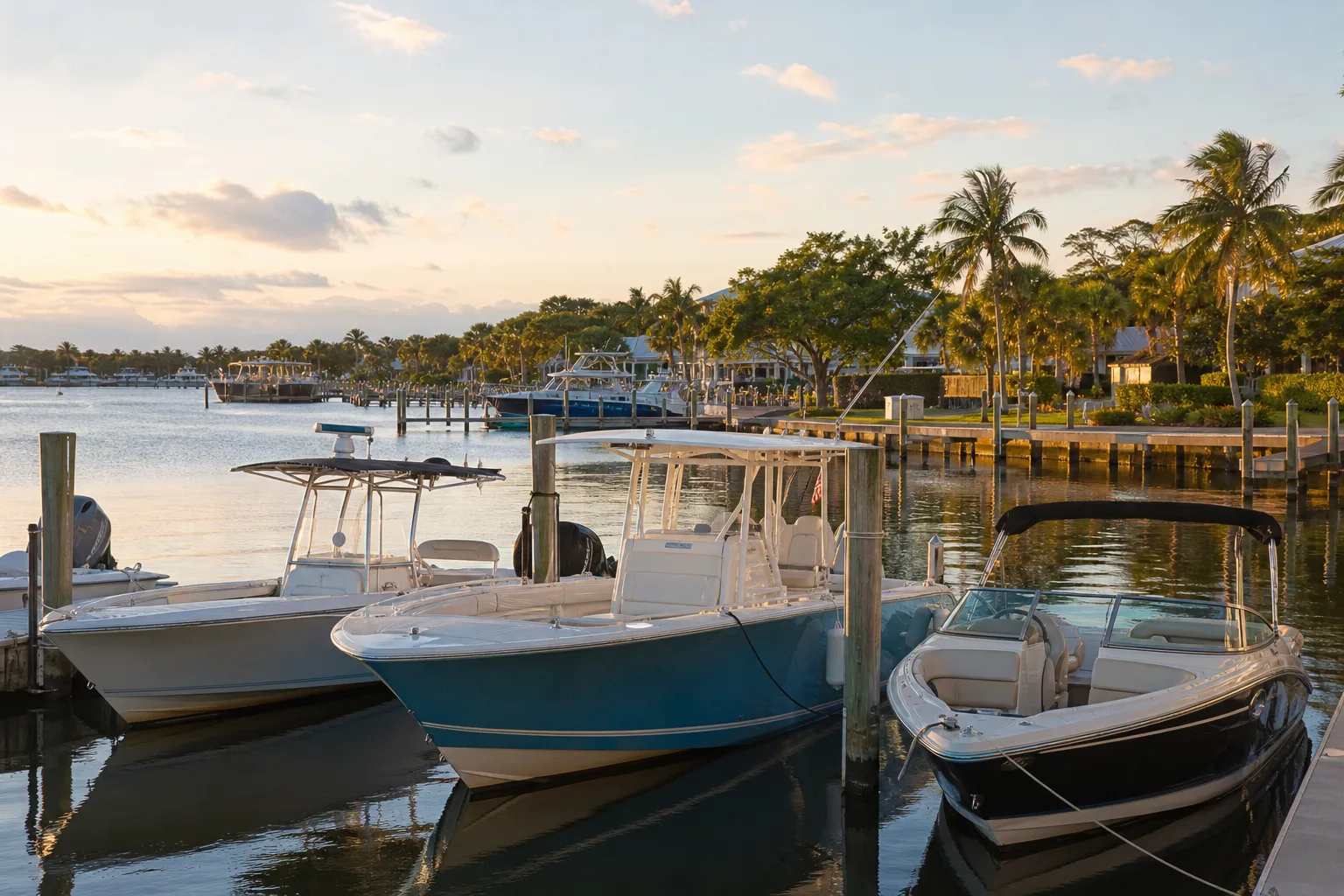
How much a boat costs depends mostly on its type, size, engine and age: a used jon boat or small fishing boat can be a modest purchase, while a new offshore center console or cruiser runs into six figures or more. The sticker price is only the first bill, because a slip, insurance, fuel, maintenance, taxes and registration come every year after.
No honest single "average boat price" exists, because a kayak, a pontoon and a 40-foot cruiser are different products. This guide explains what sets the purchase price for each type, how new and used boats compare, which taxes and fees apply in Florida and Texas, and how to see the yearly cost with real marina data before you buy. We do not quote model prices here unless a dated, published source exists; check a manufacturer's current price list for the exact boat you want.
What sets the price of a boat
Five things do most of the work, whatever the boat:
- Length and beam. More boat means more hull, more material and a bigger engine. Length also drives slip fees later.
- Engine and drive. Outboards, sterndrives and inboards differ in cost and in repair bills. A second or third outboard adds a lot. See inboard vs outboard.
- Build and brand. Hull construction, finish and brand reputation move the price, and they move the resale value too.
- Equipment. Electronics, trolling motors, canvas, a trailer, a bow thruster and similar options can add up quickly. Ask whether a quoted price includes the engine and trailer.
- Age and condition. A used boat's price depends on engine hours, maintenance records and where it lived (saltwater or fresh).
Purchase price drivers by boat type
Instead of inventing price bands, here is what pushes each common type up or down. Our guide to types of boats covers each in more depth.
| Type | What drives the price | Watch for |
|---|---|---|
| Kayaks, canoes, inflatables | Material, size, motor or pedal drive | Fishing-ready kayaks add accessories. See inflatable boats and dinghies. |
| Jon boats and small skiffs | Aluminum vs fiberglass, motor size, trailer | The motor can cost more than the hull. See jon boats. |
| Pontoon boats | Length, tube count, engine, layout and furniture | Covered in our pontoon cost guide. |
| Bay boats and flats boats | Hull length, outboard horsepower, poling platform, electronics | See skiff, bay boat and flats boat. |
| Center consoles | Length, number and size of outboards, offshore fishing gear | Twin or triple engines change the total a lot. See center console boats. |
| Cruisers and sailboats | Length, interior, engines, age, systems (generator, air conditioning) | More systems mean more maintenance. Survey before buying. |
New vs used
A new boat comes with a warranty, current design and no unknown history, but it loses value fastest in the first years. A used boat costs less to buy and has already taken most of that early drop, yet it can hide deferred maintenance. Neither is automatically the better deal.
The boat market is big on the new side: the NMMA reported 156,754 new powerboats sold in the United States in 2025, with pontoon boats leading unit sales at 33.6 percent of the total. The NMMA's price-trend report is sold separately, and the public press release gives no average prices, so we do not quote one.
When you buy used, do three things before you pay:
- Check value. Use how much is my boat worth to find valuation guides and to understand what a fair price looks like.
- Hire a marine surveyor and a mechanic for any boat with a significant price tag. A survey also helps with financing and insurance.
- Do the paperwork. A signed bill of sale, a clear title or registration history, and a lien check protect you.
The full cost of ownership
The purchase price is one line in a longer budget. Every year you will typically pay for:
- A place to keep the boat. A wet slip, dry stack, trailer storage or home storage. See boat storage options.
- Insurance. Required by most lenders and marinas. See boat insurance.
- Fuel. It depends on engine size and how many days you go out. Ethanol-free gas can cost more per gallon.
- Maintenance and repairs. Engine service, bottom paint, batteries, safety gear, haul-outs. See boat bottom paint and outboard motor maintenance.
- Registration and taxes. Covered below.
- Financing interest, if you borrow. See boat loan rates.
- Depreciation, the value your boat loses each year even if you spend nothing.
Trade-offs are large. A boat on a trailer in your driveway has no slip fee. A boat in a Florida marina has one that rises with length. Marinalo's own boat cost calculator combines a median slip price from real Florida rate sheets with adjustable insurance, maintenance, fuel and depreciation assumptions, so you can see a yearly total for your own boat. The boat loan calculator shows the monthly payment and total interest.
The slip is the biggest recurring surprise
For a boat kept in the water, the slip is often the largest fixed cost. In Marinalo data from October 2026, the median monthly rate for a Florida slip was $410 for a 20-foot boat, $675 for 30 feet and $976 for 40 feet, based on 21, 24 and 26 marinas with published rates. In Texas, the median annual rate for a 40-foot boat was $5,170, from 6 marinas. Those are medians of published rate sheets, not guarantees for your marina. See how much a boat slip costs for the method, and the Marinalo pages for 30-foot and 40-foot (Texas) boats.
Taxes and registration
Sales tax is paid on top of the price, and the rules differ by state.
| State | What the official source says |
|---|---|
| Florida | The Florida Department of Revenue says the state sales tax applies to the price, a discretionary county surtax applies only to the first $5,000, and total tax on a boat or vessel is capped at $18,000 (brochure GT-800005, revised 07/24). |
| Texas | The Texas Comptroller says boats up to 115 feet are taxed at 6.25 percent, with the tax on a single boat capped at $18,750. Outboard motors are taxed separately, and trailers fall under motor vehicle sales tax. TPWD collects the tax when you register or title the boat. |
Check the current rules on the agency sites, because caps and rates can change. Registration is a separate yearly or multi-year fee; see the Marinalo guide to boating license and registration in Florida. In Texas, most motorized boats must be registered with Texas Parks and Wildlife (TPWD); check its boat registration page for the current rules and fees.
How to keep the cost down
- Buy the smallest boat that fits how you boat. Slip fees, fuel and insurance all rise with size.
- Get quotes for the slip, insurance and a loan before you make an offer.
- If you boat a handful of days a year, compare owning with renting; see renting vs owning a boat.
- Budget for the first year's surprises: safety gear, a survey, and repairs the seller did not mention.
FAQ
How much does a boat cost on average?
There is no reliable single average across boat types. Price depends on type, size, engine and age. Use the type table above to see what drives each one, then check current prices for specific models from dealers or manufacturers.
How much is a boat per month?
Add the monthly slip or storage cost, insurance, fuel, maintenance and any loan payment. Marinalo data shows the median Florida slip at $976 a month for a 40-foot boat (October 2026), before any other cost.
Is a used boat cheaper than a new one?
Usually to buy, yes. But a used boat may need repairs or an engine, so a survey and sea trial matter before you pay.
Do I pay sales tax on a boat?
Yes in both Florida and Texas, with state caps. Florida caps total tax at $18,000 and Texas caps the boat tax at $18,750 per sale, per the agencies cited below.
Do I need a license to drive a boat?
Not a license as such in Florida, but some operators need a boating safety education card. See do you need a license to drive a boat.