
Renting vs Owning a Boat: The Real Math
How much to rent a boat vs own one? Rental types, what drives rental prices, how to find your break-even with a calculator, and Florida rules for renters.
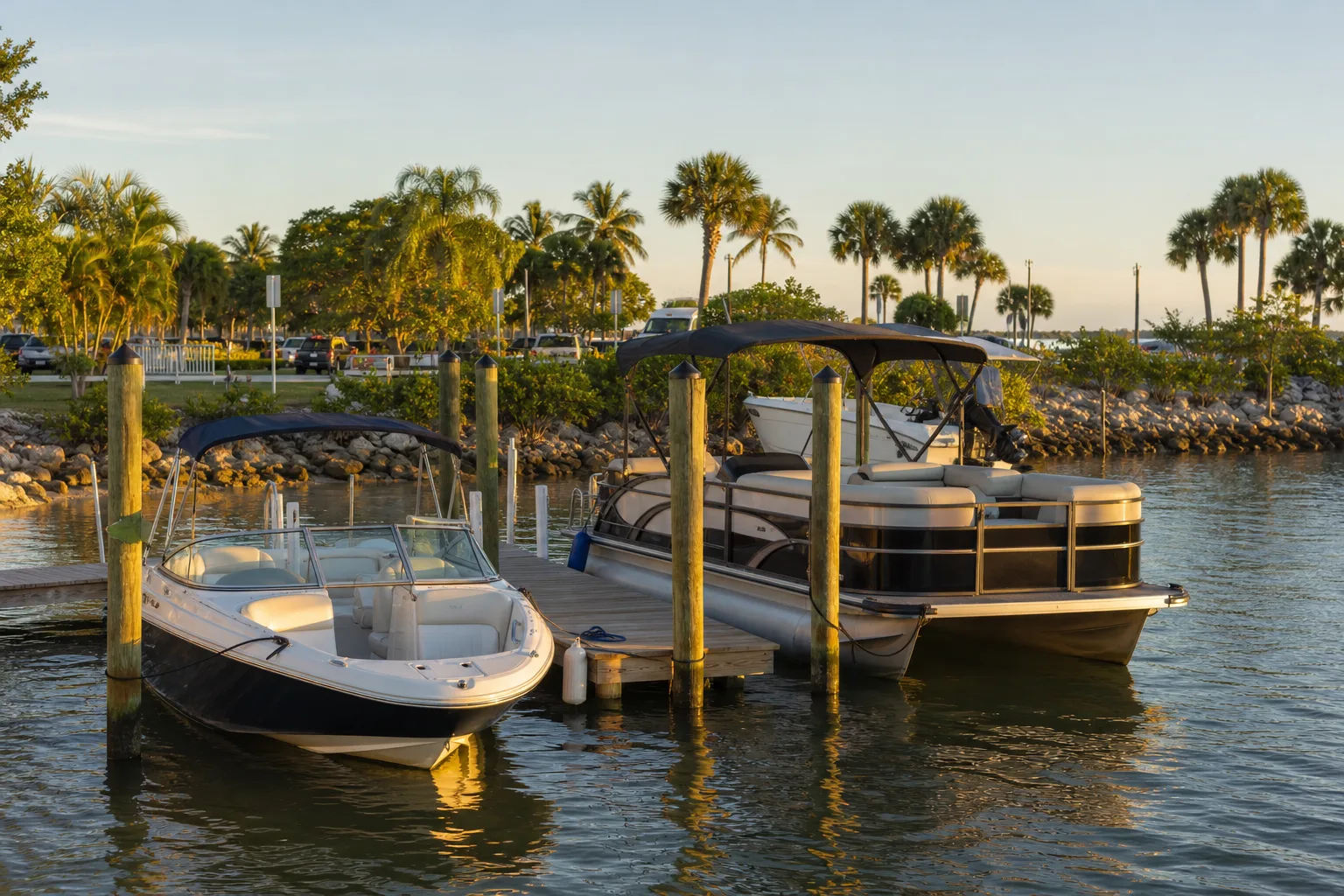
How much it costs to rent a boat depends on the boat, the place, the season and the length of the rental, and the price is quoted per hour, half day, full day or week by each rental company. Whether renting beats owning comes down to one number: how many days a year you would actually go out. Fewer days favor renting; many days favor owning.
We do not list rental prices here because they vary by operator and season, and no authoritative public source tracks them. What we can do is show you the method: add up the true yearly cost of owning, divide by the days you would use the boat, and compare it with what local operators charge per day. The numbers below that illustrate the method are hypothetical and labeled as such.
The four ways to get on the water without buying
| Option | How it works | Best for |
|---|---|---|
| Hourly or daily rental | A livery or marina rents you a boat (often a pontoon, bay boat or runabout) by the hour, half day or day. Fuel may or may not be included. | A few outings a year, visitors, trying a boat type |
| Boat club | You pay a membership (typically an initiation or deposit and a monthly fee) for booking access to a fleet. The terms are set by each club. | Regular boaters who want no slip, no maintenance and no resale worry |
| Peer-to-peer rental | Owners list their boats on a platform and you rent directly, with the platform handling payment and often insurance. | Variety and local boats, especially for a one-off day |
| Captained charter | You hire the boat and a licensed captain, usually for fishing trips, sunset cruises or sandbar days. | Beginners, groups, offshore fishing or unfamiliar waters |
Ask every operator what the quoted price includes. Fuel, taxes, cleaning, a security deposit, damage waivers and extra hours can change the real total.
What drives rental prices
- Boat type and size. A small skiff costs less to rent than a large pontoon or a center console with a big outboard.
- Location and season. Tourist areas, holiday weekends and winter in Florida are busier and usually dearer.
- Length of rental. Many operators discount a full day compared with the same hours rented one by one.
- Fuel policy. Some include fuel, others bill by the gallon or by engine hour.
- Captain or not. A captained charter adds the captain's time and licensing.
- Insurance and damage waivers. Required by operators and sometimes sold as an extra.
To compare apples to apples, convert every quote into one figure: cost per day on the water, all in.
The real math: finding your break-even
The break-even is the number of days where owning costs the same per day as renting. Follow these steps.
- Add up the yearly cost of owning. Include the slip or storage, insurance, maintenance, fuel for your expected days, registration, loan interest and depreciation. Our boat cost calculator does this using a median slip price from real Florida rate sheets and editable assumptions for insurance, maintenance, fuel and depreciation. The boat loan calculator covers the financing part.
- Divide by your days out. That gives your cost per day as an owner. The fewer the days, the higher the cost per day.
- Get the rental price per day. Ask two or three local operators for an all-in written quote for a similar boat.
- Compare. If your owner cost per day is higher than the rental, renting wins at that usage level.
Here is a hypothetical example, not a real price. Suppose a boat costs a total of $12,000 a year to own (an invented figure for illustration) and a similar rental costs $400 a day (also invented). Owning costs $400 per day at 30 days a year. At 10 days a year it costs $1,200 a day, three times the rental. At 60 days it costs $200 a day. Replace both numbers with your own and the answer changes, which is the point of doing it.
What the math leaves out
- Convenience. Owning means you can go on a perfect Tuesday morning without booking. Renting means a boat may not be free on the best day.
- Time and chores. Washing, winterizing, repairs and slip logistics take time, which a renter avoids.
- Resale. Boats lose value, but some hold it better than others; see how much is my boat worth.
- Different boat each time. Renting lets you try a pontoon one week and a bay boat the next before you buy. Our guide to types of boats helps you choose.
For the cost of buying, see how much does a boat cost. For the biggest recurring item, the slip, see how much does a boat slip cost. In Marinalo data from October 2026, the median monthly slip rate for a 30-foot boat in Florida was $675 from 24 marinas; check the 30-foot slip price page. A trailer boat launched at a public ramp skips that fee: see Florida boat ramps.
Insurance when you rent
Florida law sets insurance and instruction rules for boat liveries (section 327.54 of the Florida Statutes). A livery must hold insurance from a Florida-licensed carrier covering accidents, losses, injuries and property damage from operating its vessels, with at least $500,000 per person and $1 million per event. For the renter, the livery must either provide a policy covering the renter in those same amounts, or offer the renter the chance to buy it. If the renter declines, the livery must get a signed acknowledgment that says, in capital letters, that the renter may be personally liable for any damage or injuries during the rental. These renter-insurance rules do not apply to human-powered vessels.
Read the rental agreement for the damage waiver, deductible, and what happens if you hit the bottom, run aground or return the boat late. Your own boat insurance matters too if you own a boat, as covered in boat insurance.
Licensing and rules for renters in Florida
- Age. A livery may not rent a vessel to anyone under 18, except human-powered vessels (section 327.54).
- Boating safety education. Florida requires a Boating Safety Education ID Card for anyone born on or after January 1, 1988, with photo ID, to operate a vessel powered by 10 horsepower or more. The FWC applies this to renters, including visitors from other states, who can use a certificate from an approved course elsewhere. Details are on our Florida boating license and registration page and in do you need a license to drive a boat. The age cutoff has been the subject of proposed legislation, so confirm the current rule with FWC.
- Pre-rental instruction. The livery must give pre-rental or pre-ride instruction covering how the vessel handles, safe operation and right-of-way, operator responsibility, local hazards and emergencies like capsizing or falls overboard. The renter signs a statement that the instruction was given, which the livery keeps for at least 90 days.
Texas has its own rules and operators set their own requirements. Check with the operator and with Texas Parks and Wildlife before you book.
When renting makes sense, and when owning does
- Renting makes sense if you go out a few times a year, want to try different boats, live far from the water, or do not want to deal with a slip, maintenance and insurance.
- Owning makes sense if you go often, want to leave on short notice, fish early or late, or customize the boat. You can also lower the cost of owning with a smaller boat or trailer storage; see boat storage options.
FAQ
How much does it cost to rent a boat?
It depends on the operator, boat type, location, season and rental length. Get all-in written quotes from local operators and convert each to a cost per day.
Is it cheaper to rent or own a boat?
Renting is generally cheaper for a small number of days a year, owning for many. Use the break-even method above with your own numbers.
Do I need a license to rent a boat in Florida?
Florida has no boating license as such, but operators born on or after January 1, 1988 need a boating safety education ID card for a boat of 10 horsepower or more, per the FWC. Renters must also be 18 or older for motorized rentals.
Do I need insurance to rent a boat?
The livery must carry insurance, and must either cover you or offer you coverage; if you decline, you sign a statement that you may be personally liable.
Is a boat club worth it?
It can be if you go often enough and the terms (fees, booking limits, blackout days, damage charges) suit you. Run the same cost-per-day math using the club's total yearly fees.
Sources
- Florida Statutes section 327.54, Liveries; safety regulations
- FWC, Livery Regulations and Safety Information
- Marinalo data, October 2026: Florida slip prices, 30 ft
- Marinalo, boat cost calculator