
Boat Insurance: What It Costs and What It Covers
Boat insurance explained: agreed vs actual cash value, liability, hurricane deductibles in Florida and Texas, navigation limits, and what marinas and lenders require.
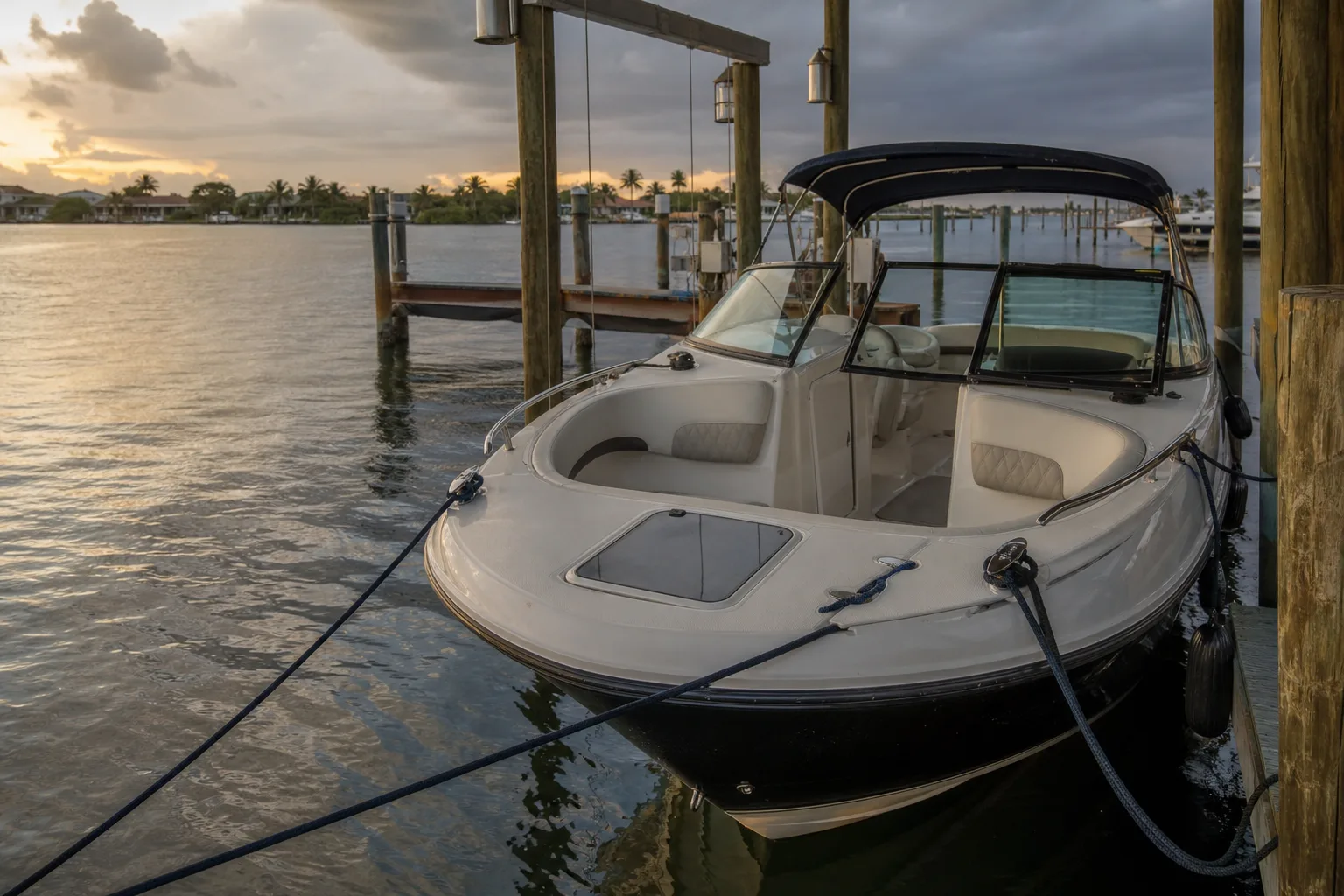
Boat insurance pays for damage to your boat and covers your liability if you hurt someone or damage their property. It is usually not required by state law in Florida or Texas, but lenders and most marinas require it, so almost every boat owner needs a policy. What it costs depends on your boat's value, engine, size, where it is kept, your experience and the coverage you choose.
We do not quote premiums here, because no authoritative public source gives a reliable figure for all boats. Quotes vary widely between insurers and between a 17-foot trailer boat and a 40-foot boat in a Florida marina. What we can do is explain how the coverage works, so you can compare written quotes on equal terms.
What a boat policy covers
- Hull (physical damage). Damage to the boat, engine and often the trailer from collision, fire, theft, vandalism, sinking or storms. Coverage for the engine, trailer, canvas and gear is sometimes listed separately.
- Liability. Injury to other people or damage to their property caused by your boat. This is the coverage most marinas ask to see.
- Medical payments. Medical costs for passengers hurt aboard, regardless of fault.
- Uninsured boater. Covers you if someone without insurance injures you or damages your boat.
- Towing, salvage and wreck removal. Cost of being towed, raising a sunken boat or removing a wreck. Limits vary, so read them.
- Personal effects and fuel spill. Often offered as options or small included limits.
Read the exclusions. Wear and tear, mechanical breakdown, corrosion, marine growth and racing are commonly excluded.
Agreed value vs actual cash value
This is the biggest choice in a hull policy, and it shows up in a total loss.
| Agreed value | Actual cash value (ACV) | |
|---|---|---|
| Total loss payout | The amount agreed when the policy starts | The boat's market value at the time of loss |
| Partial loss | Repairs, but some items such as sails, canvas, cushions and outboards can be paid at actual cash value | Repairs less depreciation |
| Cost | Usually higher premium | Lower premium |
| Best for | Newer or valuable boats, financed boats | Smaller or older boats and boats without a lien |
BoatUS describes agreed hull value this way: if you and the insurer agree on a $35,000 hull value at the start, you receive $35,000 on a total loss. It describes actual cash value as paying the boat's current market value, not the replacement value. Check how your policy treats salvage costs, because some insurers subtract them from the insured value. Keep your value current: an agreed value that is too low underinsures you, so see how much is my boat worth to set it.
Liability limits and what marinas require
BoatUS states that most marinas require proof of liability insurance before they accept a slip or mooring contract, and some want to be listed as an additional insured on your policy. A slip rental or storage agreement may also set a minimum liability limit. BoatUS lists liability limits of $100,000, $300,000, $500,000 and in some cases $1,000,000 in its program. A homeowner's policy generally won't satisfy a marina or lender, because it is usually limited to smaller or lower-value boats. BoatUS also warns that the marina's own insurance generally does not cover your boat.
Before you sign a slip contract, find the clause on insurance, note the required liability limit and whether it asks for additional-insured status, and ask your insurer for a certificate of insurance. See the slip cost guide, which also lists other fees to ask about. Florida marinas publish different rates, for example the median monthly rate for a 40-foot boat was $976 in October 2026 across 26 marinas on the Marinalo 40-foot page; your insurance is one more line beside that.
Is boat insurance required by law?
In general, no. Neither Florida nor Texas requires recreational boat owners to carry liability insurance for registration or operation, according to the sources we reviewed, but the rules for rental liveries, charter operations and specific waters or facilities differ. Florida law does require boat liveries to carry insurance (section 327.54), and we cover renters in renting vs owning a boat. Verify the current rule for your situation with FWC in Florida and Texas Parks and Wildlife in Texas.
The requirement that matters in practice comes from three other places:
- Lenders. A boat loan typically requires coverage, and the Discover Boating loan guide lists identifying and pricing boat insurance as part of getting a loan. See boat loan rates.
- Marinas and storage facilities. Most require liability proof, as above.
- Your own risk. Without liability coverage, you pay a claim from your own pocket.
Hurricane and named-storm deductibles
In Florida and Texas, the most important line in a policy may be the named-storm deductible. BoatUS says "storm deductibles," which raise your deductible for boat damage in a named storm, are common in recreational boat policies today. Some policies set it as a percentage of the insured value rather than a flat amount, which can leave little payout on a partial loss. Read your policy for the exact rule, and for when it starts (for example, once a storm is named, or when a watch or warning is issued).
What you can do:
- Ask your insurer before hurricane season (June 1 to November 30) what the named-storm deductible is and whether it can be reduced.
- Prepare the boat and document it. BoatUS notes that active preparation, such as hauling the boat, lashing it down and removing canvas, sails and other items that catch wind, can reduce your deductible with some insurers if you document it.
- Know the haul-out benefit. BoatUS says its policies reimburse 50 percent of the cost, up to $1,000, per event, for a professional haul-out or move before a NOAA named storm. Check your own policy.
- Check the policy area. Some policies limit coverage in hurricane zones, or require the boat to be hauled or moved to a named hurricane hole.
Our guide to hurricane prep for boat owners covers haul-outs, hurricane holes and marina contracts. Also read your marina contract, which may require you to leave or haul the boat before a storm.
Navigation limits and lay-up periods
Two policy clauses that surprise people:
- Navigation limits (cruising range). The policy defines the waters where the boat is covered, for example a coastal stretch of Florida and the Gulf, or inland lakes. Taking the boat beyond them, such as to the Bahamas, may need an endorsement, and a claim outside the limits can be denied. Ask before a long trip.
- Lay-up period. Some policies cover a boat only on land or in storage (and charge less) during a stated season. A boat in the water outside the permitted period may not be covered for the full range of risks. In Florida and Texas many boaters use boats year-round, so this matters most for northern-style storage seasons.
We found no authoritative public wording for these clauses, because they vary by insurer. Read the policy, and ask your agent to put any special permission in writing.
How to get a boat insurance quote
- Gather the boat details: year, make, model, length, hull material, engine and horsepower, trailer, value or purchase price, and the serial numbers.
- Note where the boat is kept (trailer at home, marina name, slip, dry stack) and the waters you plan to use.
- Have your boating history ready: experience, safety course certificates, past claims.
- Get at least three written quotes, with the same coverage, liability limit, deductibles and named-storm terms, so you can compare.
- Ask about discounts and what the policy excludes.
The Texas Department of Insurance suggests checking whether your homeowners insurance includes enough coverage for your boat and talking to your agent or insurer about the right coverage. Add the premium to the yearly cost in the boat cost calculator, where insurance is an editable assumption, and read how much does a boat cost for the full picture.
FAQ
How much does boat insurance cost?
It depends on the boat's value, type, size, engine, location and the coverage you choose. We do not quote a figure; get written quotes with identical coverage from several insurers.
Is boat insurance required in Florida or Texas?
Not generally by state law for private recreational boats. Lenders and most marinas require it, and Florida requires insurance for liveries.
Does homeowners insurance cover my boat?
Sometimes, for small boats, but BoatUS says homeowner's policies usually have limits on boat size or value and will generally not satisfy a lender or marina. Check your policy.
What is a named-storm deductible?
A higher deductible, often a percentage of the insured value, that applies to damage from a named storm. Ask what it is and when it starts.
What is the difference between agreed value and actual cash value?
Agreed value pays an amount fixed at the start in a total loss; actual cash value pays the market value at the time of loss, and costs less.
Sources
- BoatUS, Agreed Hull Value coverage
- BoatUS, Actual Cash Value coverage
- BoatUS, Do I Need Boat Insurance? (2013)
- BoatUS, Boat Insurance FAQ
- BoatUS, Claims information (named storm haul-out reimbursement)
- Florida Statutes section 327.54, Liveries
- Texas Department of Insurance, RV, pool or boat insurance (June 19, 2025)
- Discover Boating, Boat loan basics