
How Much Is My Boat Worth? Boat Values Explained
How to find your boat's value: valuation guides, comparable listings, marine surveys and appraisals, what changes the price, and how to sell.
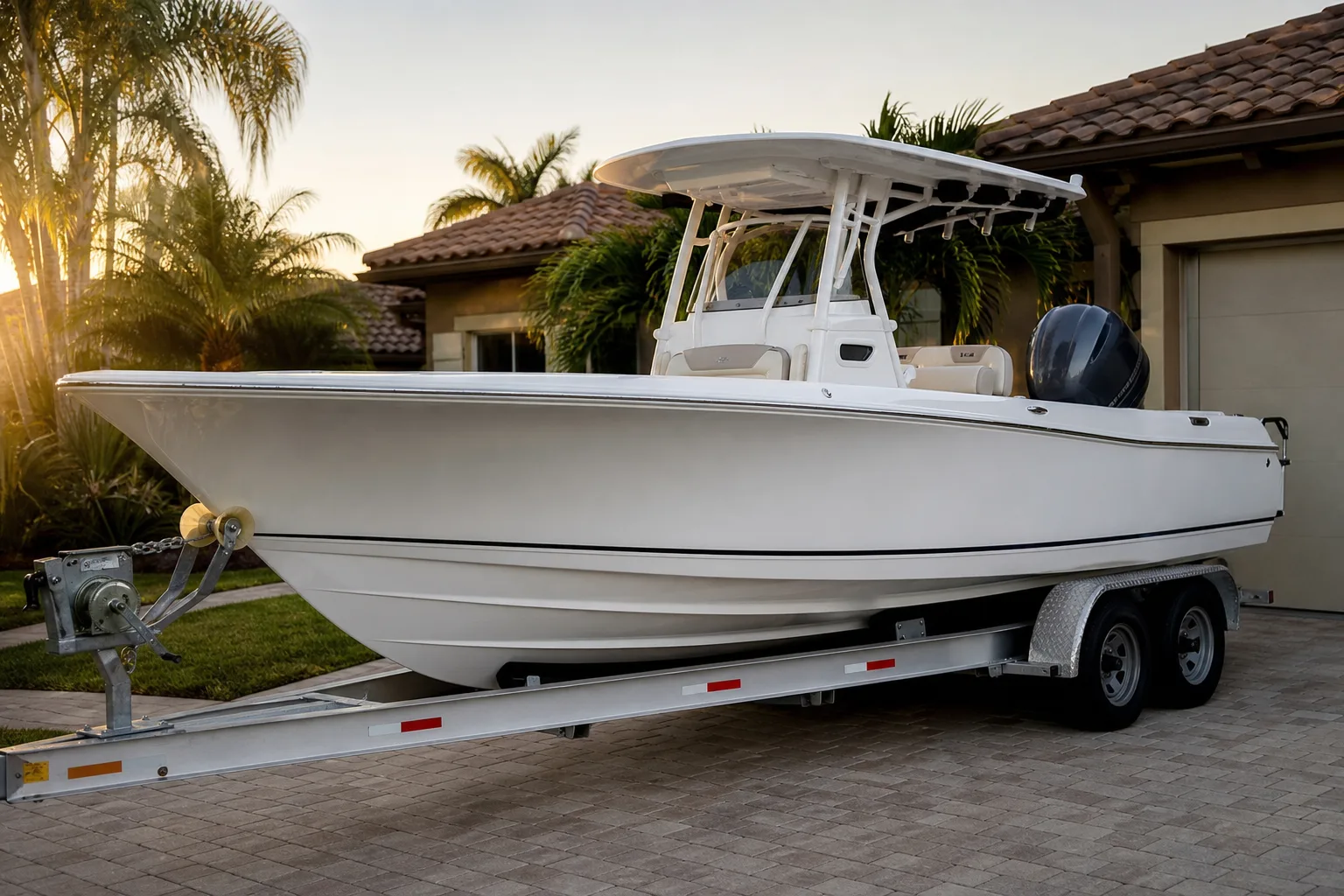
To find what your boat is worth, start with a valuation guide such as the J.D. Power Marine Appraisal Guide, then check what similar boats are actually listed and selling for, and adjust for condition, engine hours and equipment. If the sale, loan or insurance claim is large, a professional marine surveyor can give you a written appraisal. Boat values are an estimate until a buyer agrees to pay.
Three ways to value a boat
| Method | What it gives you | Limit |
|---|---|---|
| Valuation guide | A reference value by make, model, year and options | A starting point only; does not see your boat |
| Comparable listings | What similar boats are listed for in your area | Asking prices are not sale prices |
| Survey or appraisal | A written opinion from a professional who inspected the boat | Costs money and takes time |
Valuation guides
The best-known guide is the J.D. Power Marine Appraisal Guide, which covers the older NADA marine values. J.D. Power says it covers inboards, outboards, jet and stern drives, surface drives, sailboats, houseboats and yachts, with pricing for boats up to 60 feet in length. Its value types include used trade-in, average retail and high retail. The printed guide is updated on a set schedule through the year, and a mobile app is also offered.
Use these numbers as a reference. A guide does not know your boat's condition, how it has been maintained or what the local market is doing. Look at the trade-in value if you plan to trade the boat to a dealer, and at the retail values if you plan to sell privately.
Comparable boats
The most useful check is a comparison with similar boats. Look for the same make and model, within a few years of age, with similar engines and equipment, listed near you.
- Search online listings and dealer sites for your exact boat, then for close matches.
- Note the asking price, year, engine, engine hours and location.
- Look at how long boats have been listed. A boat that has sat for months is probably priced above what buyers will pay.
- Ask local dealers or brokers what similar boats have actually sold for.
- Adjust up or down for the differences between your boat and the others.
What changes a boat's value
- Engine hours and engine type. Lower hours on a well-maintained engine usually help. A newer repower can help too, and service records matter.
- Condition. Hull and gelcoat, upholstery, deck, canvas, electronics and the trailer all count. Soft spots, cracks or water in the hull cause big discounts.
- Equipment. Electronics, trolling motor, upgraded audio, a bimini top or a hydraulic steering system can add to the appeal, though extras rarely add their full cost.
- Region. Some boats are in higher demand in some places. Check listings in your own area.
- Season. Demand follows the boating season, so check how listings in your area move through the year.
- Trailer and storage history. A boat that was kept under cover or on a lift may look better than one left in the water. See our guide to boat storage options.
- Documentation. A clean title, registration and maintenance records make a sale easier. Check Florida boat registration rules if your boat is registered there, and browse Florida marinas if you need a place to keep it.
Boats also differ by type. A center console, a pontoon and a flats boat sell to different buyers, so compare like with like.
Marine surveys and appraisals
A marine surveyor inspects a boat and reports on its condition. Surveyors may also give a valuation for sale, insurance, financing or a claim. Two main organizations accredit surveyors in the U.S.
- SAMS (Society of Accredited Marine Surveyors) gives the Accredited Marine Surveyor (AMS) designation. Its path includes a number of surveys, a review and an exam, and members keep up continuing education.
- NAMS (National Association of Marine Surveyors) gives the Certified Marine Surveyor (CMS) designation, which requires experience, recommendations and an exam. Practical Sailor notes that NAMS members cannot sell or repair boats while working as surveyors, while SAMS members are not restricted in that way.
Ask a surveyor what is included in the report, how long it takes and how much it costs before you book. Fees vary, and we do not list a price here. A buyer's lender or insurer may require a survey, and if a sale price is in question, a survey valuation can settle it.
Boat values and financing
If you are buying, a valuation helps you see whether a price is fair, and a lender may base the loan on the guide value. Use our boat loan calculator to see what a payment would look like. If you owe more than the boat is worth, check your loan before selling.
Why the value matters
You may need a boat value for more than selling. A buyer uses it to judge a fair offer, a lender may use it to set the size of a loan, and an insurer may use it when it agrees the coverage on a policy. Ask your insurer how it defines the value of your boat and what proof it wants, such as a survey, receipts for upgrades or photos. If you plan to trade the boat in, remember that a dealer has to resell it, so the trade-in figure will normally sit below what you could get from a private buyer.
Common mistakes when pricing a boat
- Using asking prices as sale prices. Listings show what sellers hope for, not what buyers paid.
- Counting every upgrade at cost. New electronics or a repower may help a sale, but buyers rarely pay full price for them.
- Ignoring the trailer. A worn trailer with bad tires or bearings is a cost for the buyer, and buyers notice.
- Skipping the inspection. Hidden hull, transom or engine problems can erase a price that looked fair.
- Using an old guide. Values change, so use the latest edition of any guide.
How to sell your boat
- Set a price. Combine the guide value, the comparable boats and the condition. Be ready to negotiate.
- Clean and repair. A clean boat sells faster. Fix small problems before buyers see them.
- Gather records. Title, registration, service history and a list of equipment.
- Take good photos. Show the hull, deck, engine, electronics, trailer and any flaws.
- List it. Choose online listings, a dealer or a broker. A dealer may offer a trade-in value; a broker may charge a commission.
- Allow a sea trial. Buyers often ask for a test ride and a survey. Agree on who pays for each.
- Complete the paperwork. Transfer the title and registration according to your state's rules. Check the Florida or Texas agency for the steps.
FAQ
What is the best way to find my boat's value?
Use a valuation guide such as the J.D. Power Marine Appraisal Guide as a starting point, then compare it with similar boats for sale near you.
Is NADA still used for boat values?
The NADA marine guide is now published as the J.D. Power Marine Appraisal Guide. Many people still search for "NADA boat values."
Do I need a surveyor to value my boat?
Not for a rough estimate. For a large sale, insurance, a loan or a dispute, a written valuation from an accredited marine surveyor is more reliable.
How do engine hours affect boat value?
Lower hours and good service records generally help, and high hours or missing records can lower the price. The effect depends on the engine and its maintenance.
Is the asking price the same as the value?
No. A boat is worth what a buyer will pay. Asking prices are what sellers hope for.