
Types of Boats: 25 Common Boats Explained
A plain-English guide to 25 types of boats, from jon boats and skiffs to cruisers, sailboats, PWCs and kayaks, with what each is used for and where to read more.
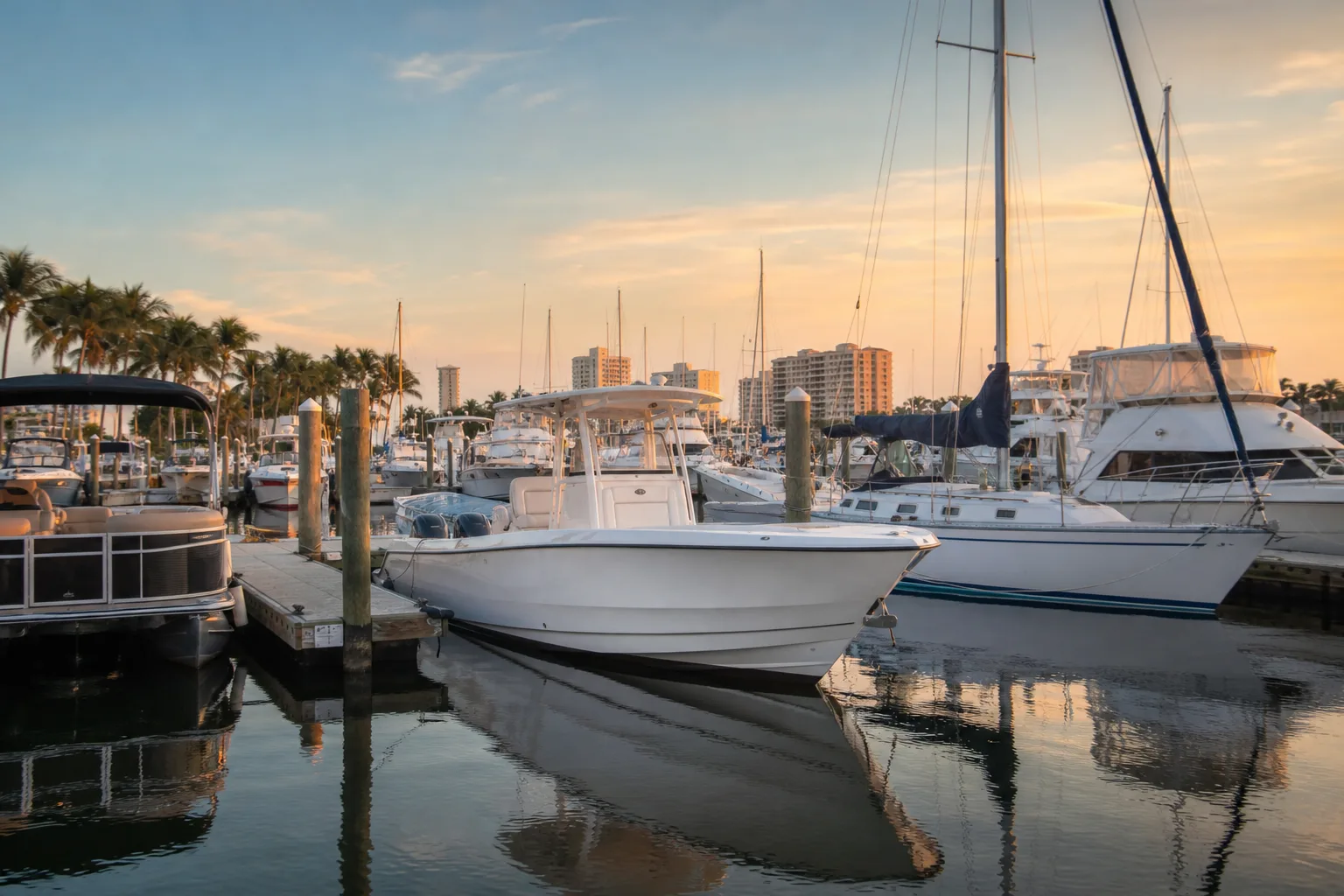
There are dozens of types of boats, but most recreational boats fall into a few families: small open fishing boats (jon boats, skiffs, bay boats, center consoles), family and fun boats (deck boats, pontoons, bowriders, ski boats), cruisers and houseboats, sailboats, personal watercraft, inflatables, and human-powered boats like kayaks and canoes. This guide explains 25 common types in plain language.
Boat names are not formal categories. Builders and anglers use them loosely, and the same hull can be called two different things in two different places. Use this guide to get oriented, then follow the links to our detailed articles.
Quick reference table
| Type | Power | Best known for |
|---|---|---|
| Jon boat | Small outboard or paddle | Shallow, calm water |
| Skiff / flats boat | Outboard, poling | Skinny-water fishing |
| Bay boat | Outboard | Open bays and nearshore fishing |
| Center console | Outboard(s) | Fishing, inshore to offshore |
| Deck boat | Outboard or sterndrive | Family fun, water sports |
| Pontoon / tritoon | Outboard | Relaxed group cruising |
| Bowrider | Sterndrive or outboard | Open family boating |
| Cruiser, trawler, houseboat | Inboard or outboard | Overnight and live-aboard use |
| Sailboat, catamaran | Sail (plus engine) | Wind-powered cruising |
| Inflatable / RIB, PWC | Outboard or jet | Tenders, fast and light fun |
| Kayak, canoe, paddleboard | Paddle | Quiet, low-cost access to the water |
Small fishing and utility boats
1. Jon boat
A flat-bottomed, usually aluminum boat with a square bow. It draws very little water, is light and cheap to run, and is popular for fishing and hunting in calm, shallow water. Read our jon boat guide.
2. Skiff
A small, light, open, shallow-draft boat. The term is loosely used, from a specialized poling skiff to any small back-bay boat. See skiff, bay boat or flats boat.
3. Flats boat
A low-profile boat with a nearly flat hull, casting decks and often a poling platform, built for the shallowest water. It is the choice for sight-casting in marshes, mangroves and lagoons.
4. Bay boat
A center console with a deeper V and higher sides than a flats boat, meant for open bays and nearshore water. It draws a little more water in exchange for a drier ride.
5. Center console
An open boat with the helm in the middle so you can walk around the deck. Sizes run from small inshore boats to large offshore boats with several outboards. See our center console guide.
6. Bass boat
A low, fast, open freshwater fishing boat with raised casting decks, livewells and a trolling motor, built for lakes and tournaments.
Family and fun boats
7. Deck boat
A V-hulled boat with a wide, open deck that maximizes seating. It handles chop better than most pontoons. See deck boat vs pontoon.
8. Pontoon boat
A flat deck on two aluminum tubes: stable, roomy, and easy to move around on. It is best in calm water.
9. Tritoon
A pontoon with three tubes instead of two, for more power, more weight capacity and a firmer ride. It is covered in the pontoon comparison.
10. Bowrider
A runabout with an open seating area in the bow, in front of the windshield. It is one of the most common family boats.
11. Cuddy cabin
A runabout or small cruiser with a small enclosed cabin in the bow, enough for storage or a short rest out of the weather.
12. Wakeboard or ski boat
A boat designed to tow riders, with a hull and ballast systems that shape the wake. Many have a tower or arch for tow ropes.
13. Personal watercraft (PWC)
A jet-propelled boat that you ride on like a motorcycle or sit in. It is legally a vessel, and the same rules on registration, life jackets and boating education that apply to boats generally apply to PWCs.
14. Houseboat
A floating living space, usually slow and wide, used on lakes and rivers for vacations or full-time living. For live-aboard options, see our Florida liveaboard marinas page.
Cruisers and live-aboard boats
15. Cabin cruiser
A powerboat with a cabin that has sleeping berths, a galley and a head. It is made for overnight trips and weekends.
16. Trawler
A displacement-hull cruiser built for efficient, slow, long-range cruising and comfort, often used by liveaboards and Great Loop cruisers.
17. Express cruiser and sportfisher
Larger powerboats with cabins, fast hulls and a cockpit or fishing deck. They need real slips and more maintenance.
Sailboats
18. Daysailer
A small, simple sailboat for day trips. It may be trailered, and it is a good first sailboat.
19. Cruising sailboat (monohull)
A sailboat with a single hull and a cabin. It heels under sail, and usually has an engine for harbors.
20. Catamaran
A twin-hulled boat, sail or power. Cats are wide and stable, with a lot of deck space. They need wider slips, and marinas usually charge accordingly.
Inflatables and human-powered boats
21. Inflatable boat and RIB
A boat with air-filled tubes (and in a RIB, a rigid hull). Light, stable and good as a tender. See our inflatable boats and dinghies guide.
22. Dinghy / tender
A small boat that carries people from a bigger boat to shore. It can be inflatable or rigid, rowed or motorized.
23. Kayak
A narrow, human-powered boat with a double-bladed paddle. Fishing models are covered in our fishing kayak guide, and inflatables in inflatable kayaks: pros and cons. For launches, see Florida kayak launches.
24. Canoe
An open, human-powered boat paddled with a single blade, with room for gear. See canoe vs kayak.
25. Paddleboard
A board you stand or kneel on while paddling. It is the simplest and cheapest way onto the water, though it is not a substitute for a boat in open or windy conditions.
How to choose between types
- Where will you boat? Skinny water points toward a jon boat, skiff or flats boat. Open water points toward a bay boat, center console, deck boat or cruiser.
- What will you do? Fish, tow riders, cruise, camp aboard or just get on the water.
- How many people? Pontoons and deck boats carry more than most fishing boats.
- How will you store it? A trailerable boat can live in a driveway or storage lot. Others need a wet slip. Browse our Florida and Texas ramps, compare 30-ft slip prices, and read boat storage options.
- What is the full cost? Use our cost calculator.
Rules that apply to nearly every type
Federal rules require a wearable life jacket for every person aboard any recreational vessel, plus a throwable device on boats 16 feet and longer (33 CFR 175.15). Monohull boats under 20 feet (except sailboats, canoes, kayaks and inflatables) must carry a capacity plate (33 CFR Part 183). Registration depends on your state: Florida requires titling and registration of all motorized vessels, and Texas requires registration of motorized boats regardless of length. See our Florida boating license and registration guide and our life jacket guide. If you are new to boating terms, start with parts of a boat.
FAQ
What are the main types of boats?
Powerboats, sailboats, inflatables and human-powered boats. Powerboats include fishing boats, family boats and cruisers.
What is the best type of boat for a beginner?
It depends on where and how you will use it. For calm, shallow water, a jon boat or small skiff is simple; for family outings, a pontoon or deck boat; for no engine at all, a kayak or canoe.
What is the difference between a boat and a ship?
There is no single legal definition. In everyday use, a ship is larger and goes to sea, while a boat is smaller.
What is the difference between a bay boat and a center console?
A bay boat is a type of center console. Not all center consoles are bay boats.
Which boats need registration?
Rules vary by state. In Florida and Texas, motorized boats need registration regardless of length.
Sources
- Discover Boating: Flats boats buying guide
- Boating Magazine: Flats boat vs. bay boat vs. hybrid
- Pontoon & Deck Boat magazine: Pontoons versus deck boats
- 33 CFR Part 183, Subpart B: Display of Capacity Information
- 33 CFR 175.15: Personal flotation devices required
- Florida Highway Safety and Motor Vehicles: vessel titling and registration FAQ
- Texas Parks and Wildlife Department: titles, registration and tax