
Parts of a Boat: Bow, Stern, Hull, Keel, Transom and More
Learn the main parts of a boat: bow, stern, hull, keel, transom, gunwale, deck and more, with plain definitions and a quick reference table for new boaters.
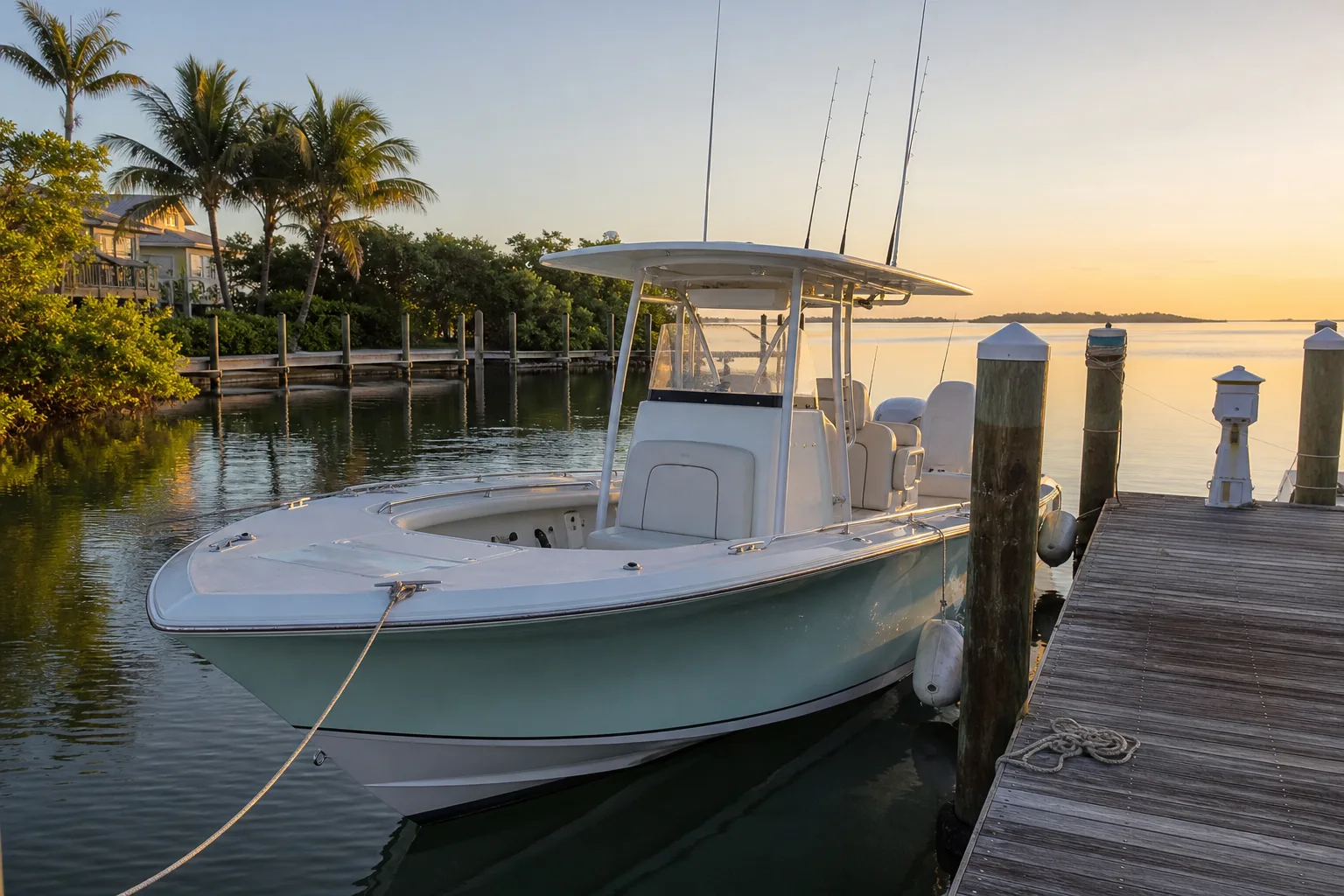
The main parts of a boat are the hull (the watertight body), the bow (the front), the stern (the back), the keel (the structural spine along the bottom), the transom (the flat panel across the stern) and the gunwale (the upper edge of the sides). Knowing these terms helps you read a manual, talk to a dockhand, call for help and follow a boat-ramp or fuel-dock conversation without guessing.
Quick reference: the parts of a boat
Here is the short version. Each term is explained in more detail below.
| Part | Where it is | What it does |
|---|---|---|
| Bow | The front of the boat | Cuts through the water and sheds waves |
| Stern | The back of the boat | Holds the engine or rudder area and the rear deck |
| Hull | The main body, below and at the waterline | Keeps water out and provides buoyancy |
| Keel | Along the centerline of the bottom | Adds strength and helps the boat track straight |
| Transom | The flat panel across the stern | Carries an outboard motor on many boats |
| Gunwale | The top edge of the hull sides | Stiffens the hull and gives you a place to hold on |
| Deck | The walking surface | Covers the hull and gives you a place to stand or sit |
| Beam | The widest point of the boat, side to side | Sets how wide the boat is and affects stability |
| Draft | The vertical distance from the waterline to the lowest part of the boat | Tells you how much water you need to float |
| Freeboard | The height of the sides above the waterline | Keeps waves out of the boat |
The big picture: bow, stern and sides
Bow
The bow is the front of the boat, the end that points the way you are traveling when you go forward. On many boats the bow is pointed or sharply shaped so it pushes waves aside rather than slamming into them. The area near the bow often holds an anchor, a bow cleat for tying up, and sometimes a bow rail or a small casting deck for fishing.
Stern
The stern of a boat is the back end. Boaters use "stern" and "aft" loosely to mean the same direction: toward the back. Moving toward the front is "forward." The stern is where you normally find the engine on an outboard boat, the swim platform on many family boats, and the stern cleats you use when you tie up at a dock.
When you pull alongside a fuel dock, you will usually be asked to secure a bow line and a stern line. If you want to see where the docks are, browse our Florida marina fuel docks.
Port and starboard
Left and right, as you face the bow, are called port and starboard. That is all this article will say on the subject, because the pair deserves its own guide: Port vs Starboard.
Hull, keel and the shape of the bottom
Hull
The hull is the watertight shell that floats. Everything else is built on top of it or inside it. Hulls come in several basic shapes:
- Flat-bottom: simple, stable at rest, and able to float in very little water. Jon boats are the best-known example.
- V-hull: a bottom that slopes up from a center line toward the sides. It cuts through chop more smoothly than a flat bottom.
- Displacement hull: pushes water aside as it moves, as in most sailboats and trawlers.
- Planing hull: designed to rise up and skim along the top of the water at speed, as in many powerboats.
- Multihull: two or more hulls joined together, such as a catamaran or pontoon boat.
The right shape depends on how and where you boat. Calm bays and shallow flats suit one type, and open water suits another.
Keel
The keel runs along the centerline of the bottom, from front to back. It is part of the boat's backbone. On a sailboat, a deep, weighted keel resists the sideways push of the wind and helps keep the boat upright. On many powerboats the keel is a much smaller feature that adds strength and helps the boat hold a straight line. Some small boats have almost no visible keel at all.
A deep keel also means deeper draft, so a boat with a deep keel can run aground where a flat-bottom boat floats freely.
Bilge
The bilge is the lowest interior part of the hull, where stray water collects. It matters, but it has its own article: What Is a Bilge?
Chine
The chine is the line where the bottom of the hull meets the side. Hard chines make a visible angle, while round chines blend smoothly.
The transom
The transom is the flat, vertical panel across the back of the hull. On most outboard boats, the engine is bolted to the transom, so it must be strong. When you hear someone say "check the transom" before buying a used boat, they mean inspect it for soft spots, cracks or water damage, because repairing a rotten transom is a major job.
The transom also has a regulatory purpose. Federal rules for boats built for use in the United States require a hull identification number (HIN), a 12-character code permanently marked on the hull. On most boats it appears on the upper starboard side of the transom. You need it when you register or title a boat. Our Florida boating license and registration guide explains what the state asks for.
Above the waterline: gunwale, deck and cockpit
Gunwale
The gunwale (pronounced "gunnel") is the upper edge of the hull's side. On open boats it is the rail you grab as you step aboard. On small boats it also stiffens the sides so they do not flex. A rub rail along the outside of the gunwale protects the hull from bumps at the dock.
Deck
The deck is the floor you stand on. Many boats have a foredeck at the front, a cockpit in the middle or back, and a cabin or console somewhere in between. Non-skid texture on the deck helps keep your feet from slipping when it is wet.
Cockpit
The cockpit is the open area where the crew sits or works, usually toward the stern. On a fishing boat, it is where you will spend most of your time.
Console and helm
The helm is the place where the boat is steered. On a center-console boat, the console holds the wheel, throttle, electronics and often a windshield. The person steering is the helmsman.
Cleats, rails and hatches
- Cleat: a metal or plastic fitting, usually horn-shaped, where you tie a line.
- Rail: a railing along the edge of the deck for handholds and safety.
- Hatch: a covered opening in the deck that gives access to storage or the engine.
- Fender: a cushion hung over the side to protect the hull when docking.
Propulsion and steering
Boats are pushed and steered in a few common ways:
- Outboard motor: an engine mounted on the outside of the transom. The lower unit under the water holds the propeller.
- Inboard engine: an engine inside the hull, driving a shaft and propeller.
- Sterndrive (inboard/outboard): an engine inside the hull with a drive unit outside the transom.
- Rudder: a flat blade, usually near the stern, that turns to steer the boat.
- Tiller: a lever that you push to steer, attached to a rudder or an outboard motor.
- Propeller: the spinning blades that drive the boat through the water.
Measurements that matter
Several terms describe the size and shape of a boat. They show up in specifications, ramp planning and marina contracts.
- Length overall (LOA): the full length from the tip of the bow to the stern. Marinas usually ask for this when pricing a slip.
- Beam: the width at the widest point.
- Draft: how deep the boat sits in the water. A boat can only travel where the water is deeper than its draft.
- Freeboard: the height of the sides above the water.
Manufacturers publish length, beam and draft for each model, so look at the spec sheet for your boat instead of estimating.
These details matter when you launch. Before you go, check the Florida public boat ramps or the Texas public boat ramps for your area and think about whether your boat's draft suits the local water.
Why the vocabulary matters
Using the right words is more than a matter of sounding like a sailor. If you radio for help, a clear description such as "the boat is taking on water at the stern" gives responders something specific to work with. Marina staff, mechanics and ramp attendants use these terms every day. A few of them also appear in written rules: the HIN on the transom, the length of the vessel for registration and equipment requirements, and the capacity plate that tells you how many people and how much weight the boat is designed to carry.
FAQ
What is the back of a boat called?
The back of a boat is called the stern. The flat panel across the stern is the transom, and "aft" means toward the stern.
What is the front of a boat called?
The front is the bow. "Forward" means toward the bow.
What is the difference between the hull and the keel?
The hull is the whole watertight body of the boat. The keel is a structural part along the centerline of the bottom that adds strength and, on many boats, helps with tracking or stability.
What is a transom on a boat?
It is the flat, vertical panel across the stern. On outboard boats, the motor is mounted to it, and the hull identification number is usually marked on it.
What is a gunwale on a boat?
It is the top edge of the hull's side, where the hull meets the deck or the open interior. It is pronounced "gunnel."
What is the difference between draft and freeboard?
Draft is how deep the boat sits below the waterline. Freeboard is how high the sides rise above the waterline.