
Port vs Starboard: What They Mean and How to Remember
Port is the left side of a boat and starboard is the right, when you face the bow. Learn where the words come from, light colors, and simple ways to remember.
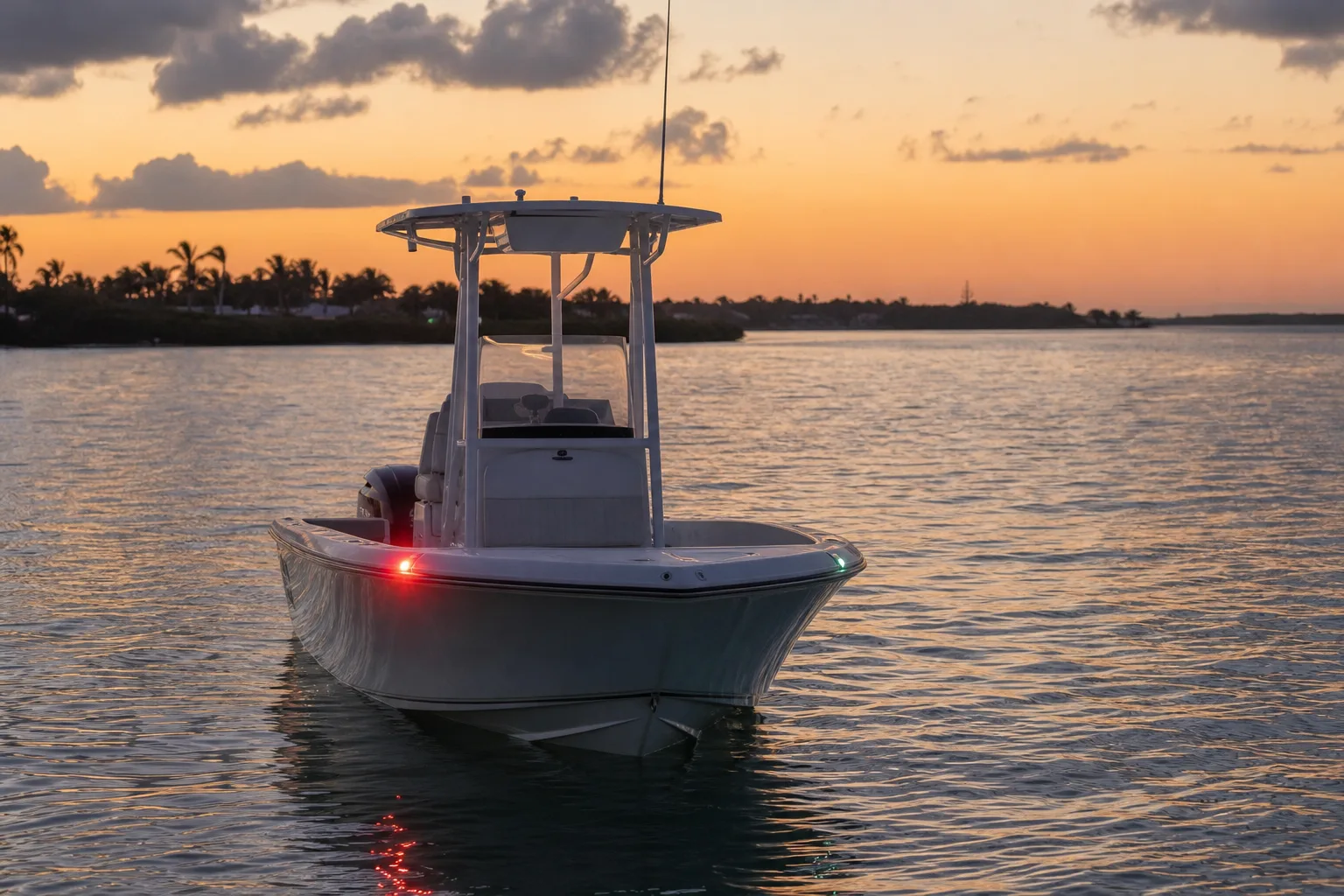
Port is the left side of a boat and starboard is the right side, as you look from the back toward the front (the bow). The words never change with the direction you are facing, which is why boaters use them instead of "left" and "right." A red light marks the port side and a green light marks the starboard side.
Port vs starboard at a glance
| Port | Starboard | |
|---|---|---|
| Side of the boat | Left, facing the bow | Right, facing the bow |
| Navigation light color | Red | Green |
| Memory trick | "Port" and "left" both have four letters | "Starboard" is the longer word, and it is the side that is not "left" |
| Buoy side when returning from sea (US) | Green marks on the port side | Red marks on the starboard side |
Why boaters say port and starboard instead of left and right
"Left" and "right" depend on which way a person is facing. Two people on the same boat can point in opposite directions and both be correct. Port and starboard are fixed to the boat itself. Once you know the bow (front) from the stern (back), the sides are never in doubt, even in a crowded cockpit or a radio call.
That matters in practice. "Fender on the starboard side" means the same thing to everyone aboard, whether they are at the helm, at the bow or in the cabin. It also matters when you tell another boater where you plan to pass, and when a crew member warns you about a crab trap float, a piling or a sandbar.
This article only touches the bow and stern. For the rest of the vocabulary, look up a general guide to the parts of a boat.
Where the words come from
Old sailing vessels were steered with a large oar or "steering board" hung over the side of the stern. Most sailors were right-handed, so the steering oar sat on the right side. "Starboard" comes from the old word for that steering board, the "steerboard."
Because the steering oar was in the way on the right, boats were tied up to the dock with their other side against it. That side became the one where cargo was loaded, and it was called the "larboard" (often explained as the "loading side"). Over time the word "port" took over for the left side, because the harbor was on that side when a ship docked.
The reason for the change is practical. "Larboard" and "starboard" sound alike, especially in wind and noise, and mixing them up on a crowded deck is dangerous. Today "larboard" is a historical term, and "port" is the standard word.
How to remember which is which
- Letter count. "Port" and "left" both have four letters. Starboard is the other side.
- Port wine is red. Port is red, and so is its navigation light. Starboard is green.
- "Left" has no R, and neither does "port" has... Skip this one. It is more confusing than helpful.
- Face the bow first. Always start by pointing toward the front of the boat. The left hand is port, the right hand is starboard.
- Left over, then right. "Port" and "left" are the shorter words. "Starboard" and "right" are the longer pair. Short goes with short, long goes with long.
If you only keep one memory aid, pick the one that clicks quickly for you and practice it on the dock. Saying "port side" and "starboard side" out loud while you walk around a boat is the fastest way to make it automatic.
Red and green navigation lights
Port and starboard are not just vocabulary. They are built into the lights a boat shows at night. Under the Navigation Rules, a boat underway shows a red sidelight on its port side and a green sidelight on its starboard side. Each sidelight shows an unbroken light over an arc of 112.5 degrees, from straight ahead to 22.5 degrees behind the beam on its own side.
What that means for you at night:
- If you see a red light, you are looking at the other boat's port side.
- If you see a green light, you are looking at the other boat's starboard side.
- If you see both red and green together, the other boat is probably coming toward you, because you are seeing both of its sidelights at once.
Lighting requirements vary with the size and type of the boat, and a vessel can show additional white lights. Check the full rules for your boat before you go out after dark. Tide and current also change what you can see and how quickly you close on another boat, so it is worth checking tide times before a night or dawn trip.
Who gives way: the crossing rule
The Navigation Rules also use starboard to decide who gives way when two power-driven boats cross paths and there is a risk of collision. The boat that has the other boat on its starboard side must keep out of the way. It should also avoid crossing ahead of the other boat if the circumstances allow.
A simple way to apply it: if you see a green light, or any part of another boat's starboard side facing you, you must give way. If you see a red light, you are the stand-on vessel, which means you keep your course and speed, but you still must act if the other boat does not give way.
Some points to keep in mind:
- Other situations have their own rules, such as meeting head-on and overtaking. Those are separate from the crossing rule.
- Different kinds of boats can have priority over others in some situations. For example, sailboats and power boats have different rights, and so do boats restricted by their draft in a channel.
- On the Great Lakes, Western Rivers and some designated waters the Inland Rules include exceptions. Florida and Texas coastal waters are mostly under the standard Inland or International rules, but check the chart or local rules for where you boat.
- Whatever the rules say, the safest answer is always to avoid a collision. Slow down, make clear early moves, and use a sound signal if needed.
Port and starboard on the water: buoys and docks
Port and starboard also appear in channel markers. In the United States the rule is "red, right, returning": when you return from sea or head upstream, red markers are on your starboard side and green markers on your port side. Going the other way, the sides reverse. Knowing which side of your own boat is which makes it easy to apply.
At the dock, you may hear "port side to" or "starboard side to," meaning which side of your boat will lie against the pier. Before you arrive, hang your fenders on that side. If you are heading to the pump, check which side the hose will reach before you pull in. The Florida fuel docks and Texas fuel docks directories can help you plan your stop.
Practice on the dock
Before your first outing of the season, walk around the boat and name each side out loud. Find the red and green light fixtures on the bow, the fuel fill, the cleats and the ladder, and note which side each one is on. Many boats have a fuel fill on one side only, so you will use this at the pump. When you brief new passengers, show them the port and starboard sides physically rather than just naming them. A few minutes on the dock saves confusion once you are underway.
It also helps to practice with a helm in hand. Turn the wheel to starboard and watch the bow swing right; turn it to port and the bow swings left. Call out each turn as you make it. Repeating the words while you do the action builds the habit faster than any rhyme.
Common mistakes
- Using left and right from where you stand. If you are facing the stern, your left hand is starboard. Face the bow before you answer.
- Mixing up the light colors. Red is port and green is starboard on the boat. Seen from another boat that is facing you, the colors appear on the opposite sides of your view.
- Not warning guests. Tell passengers which side is which before you leave the dock. A short briefing avoids confusion when you call out a hazard.
FAQ
Is port left or right?
Port is the left side of the boat when you face the bow (the front).
Is starboard left or right?
Starboard is the right side of the boat when you face the bow.
What color is the port light and the starboard light?
The port light is red and the starboard light is green.
Why is it called starboard?
The word comes from the old "steerboard," the steering oar that hung over the right side of early boats.
What was larboard?
Larboard was an older word for the left side. It was replaced by "port" because it sounded too much like "starboard."
Which boat gives way in a crossing situation?
For two power-driven boats crossing with a risk of collision, the one that has the other on its starboard side gives way.