
Canoe vs Kayak: Differences and Which Is Right for You
Canoe vs kayak compared: paddles, seating, capacity, gear hauling, rivers vs open water, transport, and Florida and Texas registration rules for paddlecraft.
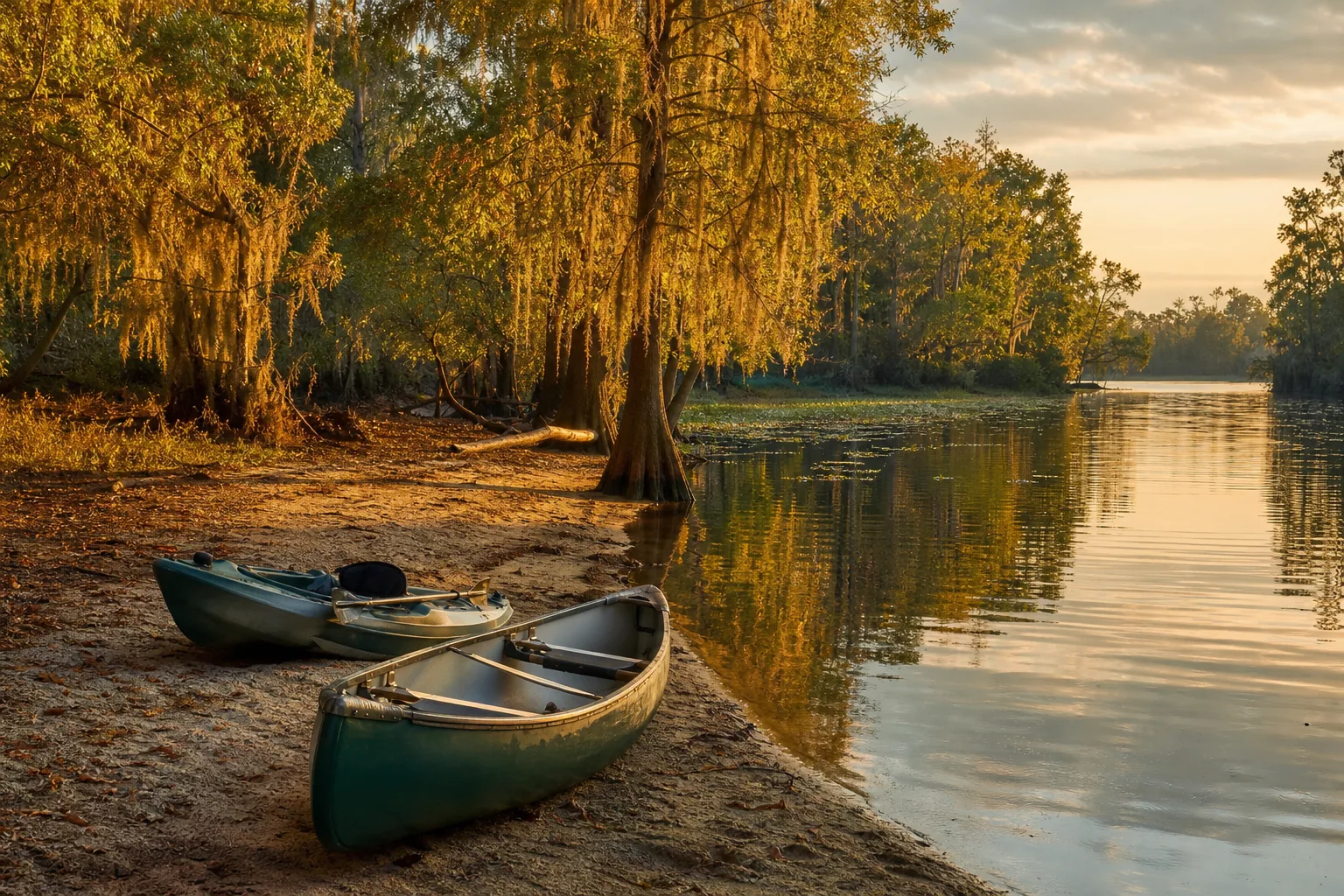
A canoe is an open boat you kneel or sit in on a raised seat and drive with a single-blade paddle. A kayak is a closed or decked boat you sit low in and drive with a double-blade paddle. Canoes carry more gear and people and suit calm water and camping; kayaks are faster, more wind-resistant and better in open water. In Florida and Texas, non-motorized canoes and kayaks are generally exempt from state registration, but life jacket rules still apply.
The core differences
Both are human-powered paddlecraft, and for a day on a calm lake either will do. The differences show up when you add wind, distance, gear or passengers. A canoe is higher, wider and open, so it is roomy but catches the wind and takes on water in waves. A kayak is lower and narrower, often with a deck that keeps spray out, so it handles open water better but holds less.
Quick comparison
| Feature | Canoe | Kayak |
|---|---|---|
| Paddle | Single blade, one hand on the grip and one on the shaft | Double blade, both hands, alternating sides |
| Seating | Bench seat or kneeling, higher off the water | Low seat, legs forward (sit-in or sit-on-top) |
| People | Often two or three, plus a dog or a child | Usually one; tandem models exist |
| Gear | Large open hull, easy to load and reach | Smaller; hatches keep gear dry but limit bulky items |
| Wind and waves | Catches wind, ships water in chop | Cuts through wind and chop better |
| Speed | Slower for most designs | Usually faster and easier to track straight |
| Learning curve | Steering strokes take practice, easy to tip when standing | Easy to start; skills like re-entry matter |
| Best for | Calm lakes, slow rivers, camping, fishing from a stable platform | Bays, open water, longer day trips, solo paddling |
Paddles and how you move
A canoe paddle has one blade. You work on one side and use steering strokes, such as a J-stroke, to keep from veering. A pair of paddlers usually sit at opposite ends so one steers while the other powers. A kayak paddle has a blade at each end, so you alternate sides, which pulls the bow straight and feels more natural to beginners.
Because you face forward in a canoe and kneel or sit on a bench, you can stand up for a quick look around or a cast, though doing so raises the risk of tipping. In a kayak you are held lower and more stable, with your legs supporting you.
Capacity and hauling gear
A canoe is the better pack animal. The open hull takes coolers, tents, camp chairs and a second person, and you can reach everything from your seat. Many outfitters rent canoes for overnight trips for this reason. Every boat has a manufacturer capacity label or listed weight limit; stay well under it, because adding weight lowers freeboard (the distance between water and the top of the hull) and makes tipping or swamping more likely.
A kayak holds less, but hatches and bulkheads keep dry bags protected, and the lower center of gravity helps stability in wind. If you plan to camp from a kayak, pack in small dry bags rather than a few large ones, so they fit through hatches.
Rivers, lakes and open water
On slow rivers and swamps, both work. A short kayak turns more easily in tight bends, while a canoe lets you carry more for a multi-day river trip. On open bays or the Gulf, a kayak is usually the safer choice: it is lower, less affected by wind and often has a deck that keeps waves out of the boat.
Tides matter in coastal rivers and bays. Moving water can run against you, so check the tide table and, where available, tidal current predictions before you go. Our Florida tide pages and Texas tide pages give you high and low times, and our guide to ebb, flood and slack tide explains how to use them for paddling.
Transport and storage
Canoes tend to be long and bulky, but many are light enough to carry overhead by one or two people, and they stack on a roof rack easily. Kayaks are often shorter, but a heavy sit-on-top fishing model can be a lot to lift alone. Either needs good tie-down straps on the roof, plus bow and stern lines if the manufacturer or vehicle recommends them. Inflatable boats solve storage problems at a trade-off; see inflatable kayaks: pros and cons.
If you are deciding between kayak types, our comparison of sit-on-top vs sit-in kayaks covers stability and re-entry.
Registration and rules in Florida and Texas
Rules change, so confirm with the agency before you launch. Here is what the official sources currently say.
Florida
In Florida, vessels powered by a motor generally must be registered with the county tax collector. The Florida Highway Safety and Motor Vehicles procedure for vessel registration lists non-motor-powered canoes, kayaks, racing shells and rowing sculls as exempt regardless of length, and other non-motor-powered vessels under 16 feet as exempt. If you add a motor, the exemption no longer applies. Life jacket rules still apply to paddlers. See the Florida boating license and registration page and the FWC boating pages for details.
Texas
Texas Parks and Wildlife says non-motorized canoes, kayaks, punts, rowboats or rubber rafts are exempt from registration regardless of length, and other vessels under 14 feet are exempt when they are paddled, poled, oared or windblown. Adding an outboard or trolling motor removes the exemption, and non-motorized vessels, including sailboats, 14 feet or longer must be registered. Life jacket and equipment rules still apply, so check the TPWD boating regulations.
Life jackets
Carry a Coast Guard approved life jacket for each person aboard and wear it. Our guide to Coast Guard approved life jackets explains the types and fit. Children have additional wearing requirements in both states, so check FWC and TPWD for the current age rules.
Where to launch
You do not always need a ramp. Canoes and kayaks launch from sandy banks, docks and small paddle launches. For Florida, use the kayak launches page. For Texas, public ramps are listed on our Texas boat ramps page.
How to choose
- Choose a canoe if you paddle with a partner, child or dog, want to carry camping gear, or paddle calm lakes and slow rivers.
- Choose a kayak if you paddle alone, want speed and wind resistance, or paddle bays and open water.
- Rent both first. The right choice becomes obvious after a few hours on the water.
FAQ
Is a canoe or a kayak easier for beginners?
Kayaks are usually easier to paddle straight with a double-blade paddle. Canoes are very stable when seated low but need more practice to steer, especially solo.
Which is more stable, a canoe or a kayak?
Both can be very stable. A wide, flat-bottomed canoe feels steady when seated and loaded low, and a wide recreational or sit-on-top kayak feels steady too. Standing is riskier in either.
Can two people use a kayak?
Tandem kayaks exist for two paddlers. A canoe is more naturally suited to two people and gear.
Do I need to register a canoe or kayak in Florida or Texas?
Non-motorized canoes and kayaks are exempt from registration in both states according to official sources, but a motor removes the exemption. Confirm with FWC and TPWD.
Which is better for fishing?
Both work. Canoes give space for gear, while sit-on-top kayaks are more popular because they are stable and easy to rig. See the fishing kayaks beginner's guide.