
Ebb, Flood and Slack Tide Explained
What is ebb tide, flood tide and slack tide? Learn how tidal current differs from tide height, why slack water is not always at high or low tide, and how to plan around it.
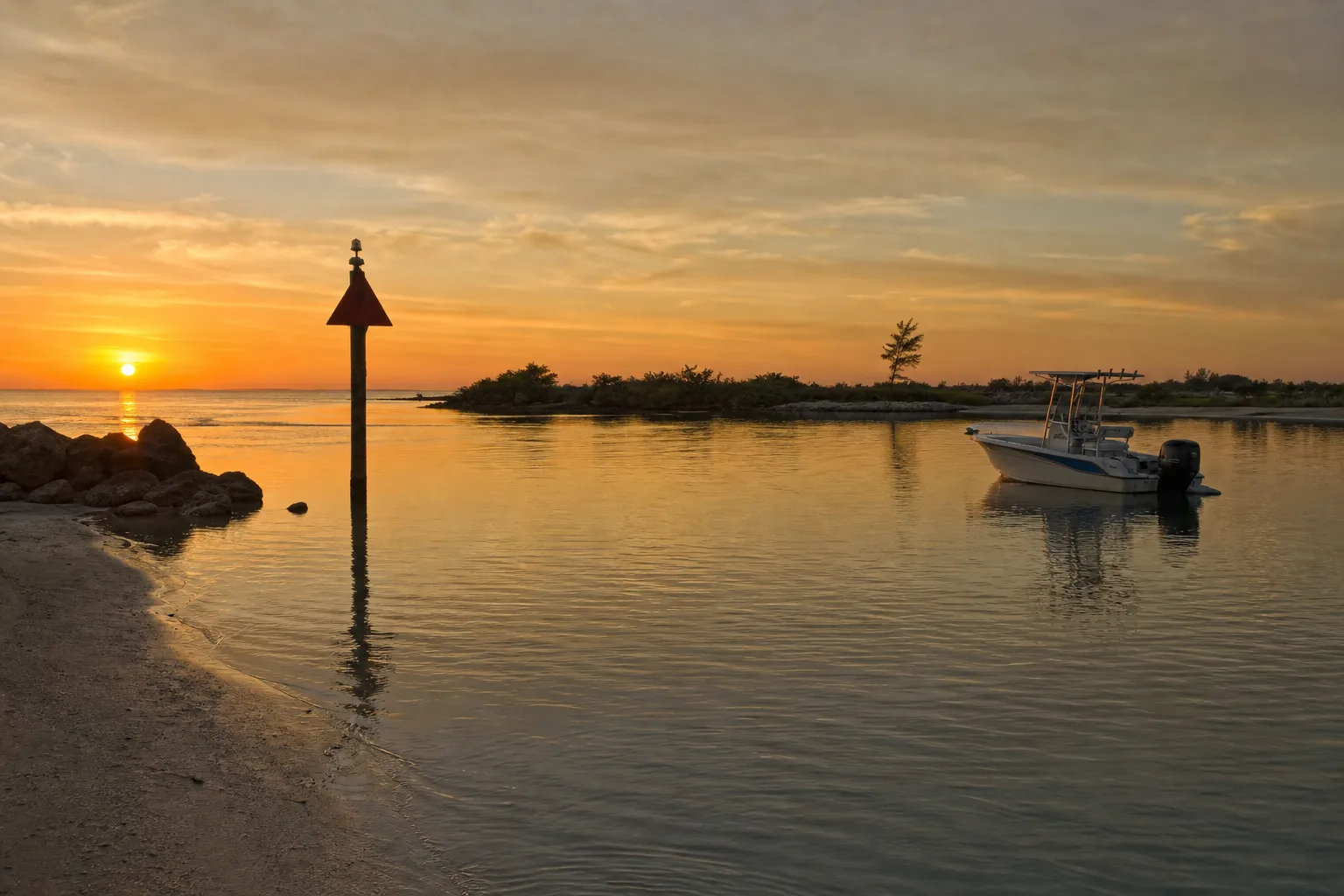
Slack tide, or slack water, is the short period when a tidal current slows to near zero and changes direction. Flood tide is water moving toward shore as the tide rises (an incoming tide), and ebb tide is water moving away from shore as the tide falls (an outgoing tide). Slack water does not always happen at high or low tide, so check the current predictions, not only the tide table.
Tide height vs tidal current
Most people read a tide table and see high and low times. That tells you the water level. But boating is often about the water movement, called the tidal current. NOAA draws this distinction: the tide is the rise and fall of ocean water caused mainly by the gravitational pull of the moon and sun, while a tidal current is the horizontal water movement that the tide produces near shore and in bays and estuaries.
Think of the tide as the height of the bathtub and the current as how fast the water is rushing in or out of the drain. At an inlet, the water level can look nearly the same one minute apart, while the current is running hard. That is why a boater can find a calm anchorage at low tide and a hard-running current in the same spot a few hours later.
Flood, ebb and slack: the definitions
| Term | Meaning | Everyday words |
|---|---|---|
| Flood tide | Tidal current moving toward the shore or up an estuary as the water rises | Incoming tide, rising tide |
| Ebb tide | Tidal current moving away from shore or down an estuary as the water falls | Outgoing tide, falling tide |
| Slack water | The moment a reversing current has near-zero speed while it changes direction | Slack tide |
| High tide / low tide | The highest and lowest water levels in a cycle | High water / low water |
So if you have asked "what is ebb tide?", it is the outgoing phase: the sea level is dropping and water is flowing out of bays, rivers and inlets toward the open ocean. Flood tide is the opposite. In between lies slack water, when the flow stops, reverses and then builds again.
These words describe the current, not just the level. Some old sailing books use "flood" for the rising part of the tide and "ebb" for the falling part, and that usage is still common, so read the context.
Why slack water is not always at high or low tide
This surprises many boaters. It seems logical that the water stops moving at high and low tide. Sometimes it does, but often it does not. According to NOAA's explanation of tidal current types, the relationship depends on how the tide moves through a place:
- Standing-wave type: slack water happens at about the same time as high and low tide, and the strongest currents come midway between them.
- Progressive-wave type: the pattern reverses. The strongest currents are near high and low tide, and slack falls between them.
- Hydraulic currents: where two bodies of water are connected by a narrow channel, current is driven by the difference in height between the two ends. Flow peaks when the difference is largest, and slack comes when the two levels are nearly equal.
The result: in an inlet, the current may keep flowing out for a while after the tide has started to rise outside, and slack water may fall well after the high or low you see on the tide table. The only reliable source is a current prediction for that location. NOAA publishes predicted slack times separately from predicted maximum flood and ebb times for many stations in its Tides and Currents tables.
How to read the numbers
On NOAA current predictions, flood current is shown as a positive speed and ebb as a negative speed, and the table lists the time and speed of maximum flood, maximum ebb and each slack. Use these three steps:
- Find the station closest to your route and check that it is a current station, not only a tide station.
- List slack times and maximum current times for your day.
- Compare the strength of the current with what your boat and your skills can handle.
Where there is no current prediction, a tide table helps as a rough guide, but treat it as less precise. Our tide pages show high and low times, heights and the daily range; the Key West page, for example, uses tide offsets published by NOAA. They are not a substitute for the NOAA current tables or for local knowledge, and they are not for navigation.
Wind and rain matter as well. A strong wind blowing against the current stacks up short, steep waves, and heavy rain upstream can lengthen the ebb and shorten the flood in a river.
Planning an inlet passage
Inlets are where tidal current and waves meet. When the ebb runs out against an incoming swell or onshore wind, the waves can become steep and breaking. A common rule among experienced captains is to enter or leave an inlet near slack water, or on the flood when you are coming in with the current and swell, instead of fighting an ebb against waves. Always check the local forecast and ask local captains, harbor masters or marinas, since the dangerous conditions differ from inlet to inlet.
- Plan to be at the inlet at or just after slack, using the current prediction for the nearest station.
- Avoid running out against a strong ebb when the wind and swell are onshore.
- Watch the channel markers. A buoy leaning heavily or with a wake behind it tells you the current's direction and strength.
- Have a plan B if the conditions look rough from the water, such as a different inlet or waiting for slack.
Our guide on special marine warnings vs small craft advisories explains the forecast warnings that matter most when a strong current meets wind.
Launching, anchoring and docking
Current affects ramps and docks more than most people think. At a ramp in a tidal river, the incoming or outgoing current may push your boat sideways as you load. Try to launch near slack water, and keep a line on the boat. When docking, approach into the current if possible, because it gives you steerage with less speed.
Plan for water depth too. At low tide, a ramp may be steep and slippery or end in shallow mud. Use the Florida boat ramps and Texas boat ramps pages to find your launch, and check the Florida tide times or Texas tide times before you go.
Fishing around slack water
Anglers care about current because it moves bait. Many fishermen like moving water, and some species bite hardest when the current is running, while slack water can be slow for some fishing and good for others, such as presenting a bait or fly with control. Local knowledge matters, and the answer depends on species, place and season. Many anglers use the changes in current, not just high and low tide, to plan a spot.
Two more tools help. The guide to how the moon affects tides explains why the timing and size of tides change, and the spring and neap tide guide shows when currents run strongest and weakest through the month. Both help you pick days.
Kayaks and small boats
For paddlers, slack water is the safest time to cross an inlet or a channel. A kayak's top speed is only a few miles per hour, so a current of a knot or two can stop you. Paddle with the current where possible and plan a return trip that matches the next tide. If you are new to this, our fishing kayaks guide covers the basics of planning a paddle.
FAQ
What is ebb tide?
Ebb tide is the outgoing phase of the tide, when the water level falls and the current flows away from shore or down an estuary toward the sea.
What is flood tide?
Flood tide is the incoming phase, when the water level rises and the current flows toward shore or up a river or bay.
Is slack tide the same as high tide?
Not always. In some places slack water occurs near high and low tide, but in others the strongest currents occur near high and low tide and slack falls in between.
How long does slack water last?
It varies by location and by how fast the current changes. It can be short, so plan to arrive early and use NOAA current predictions for the nearest station.
Is an incoming tide the same as flood?
Yes. Incoming tide, rising tide and flood tide refer to the same phase. Outgoing tide, falling tide and ebb are the opposite.
Sources
- NOAA National Ocean Service, Currents tutorial
- NOAA CO-OPS, Current Predictions User Guide
- Marinalo tide pages (offsets published by NOAA), October 2026