
Special Marine Warning vs Small Craft Advisory: NWS Alerts
What a special marine warning and a small craft advisory mean, how they differ, and a table of NWS marine alerts with the wind and wave triggers for each.
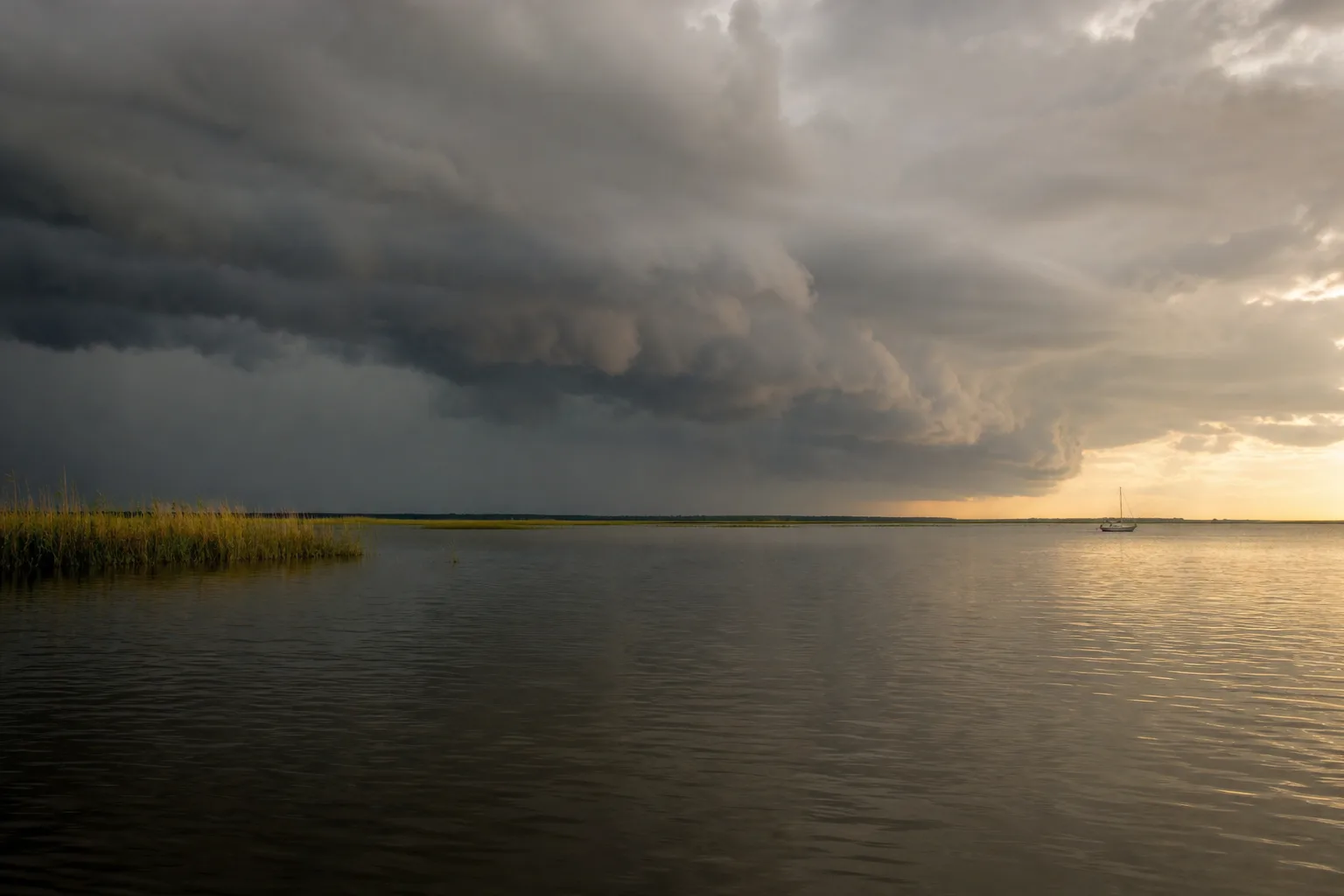
A Special Marine Warning is a short-term warning from the National Weather Service for a hazard that usually lasts up to 2 hours, such as thunderstorm winds or gusts of 34 knots or more, hail of three-quarters of an inch or larger, or waterspouts. A Small Craft Advisory is a broader advisory for winds or seas that are hazardous to small boats, and its thresholds vary by region.
The short answer: warning vs advisory
The National Weather Service (NWS) uses different words for different levels of risk. A warning is for hazardous conditions that are expected or occurring. An advisory is for conditions that are less severe but still a problem for some boats. In practice:
- A Special Marine Warning is about a sudden, short-lived danger, most often a thunderstorm moving over the water. It can be issued at any time and for a small area.
- A Small Craft Advisory is about a longer period of strong wind or rough seas that can be dangerous for smaller vessels. It can cover a whole forecast zone for many hours.
What is a Special Marine Warning?
According to the NWS, a Special Marine Warning is issued for hazardous weather conditions, usually of short duration (up to 2 hours), that are not already covered by an existing marine warning. The NWS criteria are:
- Sustained thunderstorm winds or gusts of 34 knots (39 mph) or greater
- Hail three-quarters of an inch in diameter or larger
- Waterspouts
Use our knots to mph converter if you think in miles per hour. A Special Marine Warning often comes in the summer, when afternoon thunderstorms are common on Florida and Gulf Coast waters. If you are on the water and one is issued for your area, the usual advice is to get to shore or the nearest safe harbor, secure loose gear and put on life jackets.
What is a Small Craft Advisory?
A Small Craft Advisory is issued by NWS offices that produce coastal waters or nearshore marine forecasts when winds or seas are expected to be hazardous to small vessels. The NWS does not use one national number. The thresholds are set by region and sometimes by local office, and the NWS marine definitions page lists them by region.
| NWS region | Small Craft Advisory criteria listed by NWS |
|---|---|
| Eastern (Maine to South Carolina, Lake Erie) | Sustained winds or frequent gusts of 25 to 33 knots (lower, 20 to 25 knots, in some areas) and/or seas of 5 to 7 feet or more, depending on the area |
| Central (Minnesota to Ohio, Great Lakes) | Sustained winds or frequent gusts of 22 to 33 knots, and/or waves greater than 4 feet |
| Southern (Georgia to Texas and the Caribbean) | Sustained winds of 20 to 33 knots, and/or forecast seas of 7 feet or greater expected for more than 2 hours |
| Western (Washington to California) | Sustained winds of 21 to 33 knots, and/or wave heights exceeding 10 feet, or wave steepness above local thresholds |
| Alaska | Sustained winds or frequent gusts of 23 to 33 knots |
| Pacific (Hawaii, Guam, American Samoa) | Sustained winds of 25 knots or greater and seas of 10 feet or greater, with different criteria in Guam and the northern Mariana Islands |
For boaters in Florida and Texas, the Southern region criteria are the relevant ones, according to the NWS listing: sustained winds of 20 to 33 knots, and/or forecast seas of 7 feet or greater expected for more than 2 hours. Local offices can add detail, so read the text of the alert itself. "Frequent gusts" generally means gusts expected for more than 2 hours, according to the NWS.
A Small Craft Advisory says "small craft" but the NWS does not define a boat length cutoff. A boat that is safe in one set of conditions may not be in another. Your own judgment about your boat, your experience and your passengers matters more than a label.
Table of NWS marine alerts
Here are the main NWS marine alerts, with what triggers each one according to the NWS. Wind speeds are in knots, with miles per hour in parentheses where the NWS gives them.
| Alert | What triggers it |
|---|---|
| Small Craft Advisory | Winds and/or seas hazardous to small boats. Thresholds vary by NWS region (see above). |
| Dense Fog Advisory | Fog that reduces visibility to local limits, not to exceed 1 nautical mile |
| Gale Warning | Sustained surface winds or frequent gusts of 34 to 47 knots (39 to 54 mph), not associated with a tropical cyclone |
| Storm Warning | Sustained surface winds or frequent gusts of 48 to 63 knots (55 to 73 mph), not associated with a tropical cyclone |
| Hurricane Force Wind Warning | Sustained winds or frequent gusts of 64 knots (74 mph) or greater, not associated with a tropical cyclone |
| Hazardous Seas Warning | Wave heights and/or wave steepness meeting or exceeding locally defined warning criteria |
| Special Marine Warning | Thunderstorm winds or gusts of 34 knots or more, hail three-quarters of an inch or larger, and/or waterspouts |
| Low Water Advisory | Water levels significantly below average that create a navigation hazard (no numeric threshold given by the NWS) |
| Marine Weather Statement | A text product the NWS uses to give marine weather information. It does not have fixed wind or wave thresholds in the NWS definitions. |
Tropical systems have their own watches and warnings from the National Hurricane Center, including Tropical Storm Warnings and Hurricane Warnings, which are separate from the gale, storm and hurricane force wind warnings above. Check the National Hurricane Center during hurricane season.
Notice that a gale warning begins at 34 knots, the same wind speed that triggers a Special Marine Warning for thunderstorm winds. The difference is the cause and the length: a gale is a broader weather pattern, and a Special Marine Warning is a short-lived storm.
What to do when an alert is issued
Small Craft Advisory
Think hard about whether to go out at all. If you do, stay close to shore or a safe harbor, check the forecast again before you leave and let someone know your float plan. A boat that handles five-foot seas well in open water may still be unsafe in an inlet where wind meets an outgoing tide. Look at tide times before you plan your trip, because current against wind can steepen waves.
Gale, Storm or Hurricane Force Wind Warning
For a recreational boat, these are conditions to stay ashore for. If you are already out, head for the nearest safe shelter.
Special Marine Warning
Do not wait. Move toward shore, secure loose items, put on life jackets and slow down if waves build. Stay away from open water, tall masts and lightning. Waterspouts can look small from far away, so keep a good distance.
How to get marine alerts
- VHF radio and NOAA Weather Radio: The NWS broadcasts marine forecasts and alerts on dedicated frequencies. Many marine VHF radios have a weather channel.
- The NWS website: Marine forecast pages show active alerts for coastal waters zones.
- Phone alerts: Wireless Emergency Alerts can warn you about severe weather, but cell coverage may fade offshore, so a VHF radio is a good backup.
Check the forecast on the morning you go. If you launch from a public ramp, our directory of Florida boat ramps and Texas boat ramps can help you find a launch near your route and a place to retreat if the weather turns.
FAQ
What does a Small Craft Advisory mean?
It means winds and/or seas are expected to be hazardous to small vessels. The exact wind and wave thresholds vary by NWS region. In the Southern region (Georgia to Texas), the NWS lists sustained winds of 20 to 33 knots and/or forecast seas of 7 feet or greater lasting more than 2 hours.
How long does a Special Marine Warning last?
The NWS says Special Marine Warnings are usually of short duration, up to 2 hours.
What wind speed triggers a Special Marine Warning?
Thunderstorm winds or gusts of 34 knots (39 mph) or greater, hail of three-quarters of an inch or larger, or waterspouts.
Is a Small Craft Advisory more serious than a Special Marine Warning?
Not in the sense of one being "above" the other. A warning generally signals a more immediate or serious hazard than an advisory, and a Special Marine Warning is a warning. They describe different hazards and different time scales.
What is the difference between a Gale Warning and a Small Craft Advisory?
A Gale Warning is for sustained surface winds or frequent gusts of 34 to 47 knots. A Small Craft Advisory covers lower winds and/or hazardous seas, with thresholds that vary by region.
Can I go boating during a Small Craft Advisory?
It is not illegal, but the advisory exists because conditions are hazardous for small boats. Many boaters stay in, and anyone who goes out should have a larger, well-equipped boat, stay near shelter and be experienced.