
Sit-on-Top vs Sit-In Kayak: Which One Should You Choose?
Sit-on-top or sit-in kayak? Compare stability, re-entry, warm vs cold water, storage, fishing and scupper holes to pick the right kayak for Florida and Texas waters.
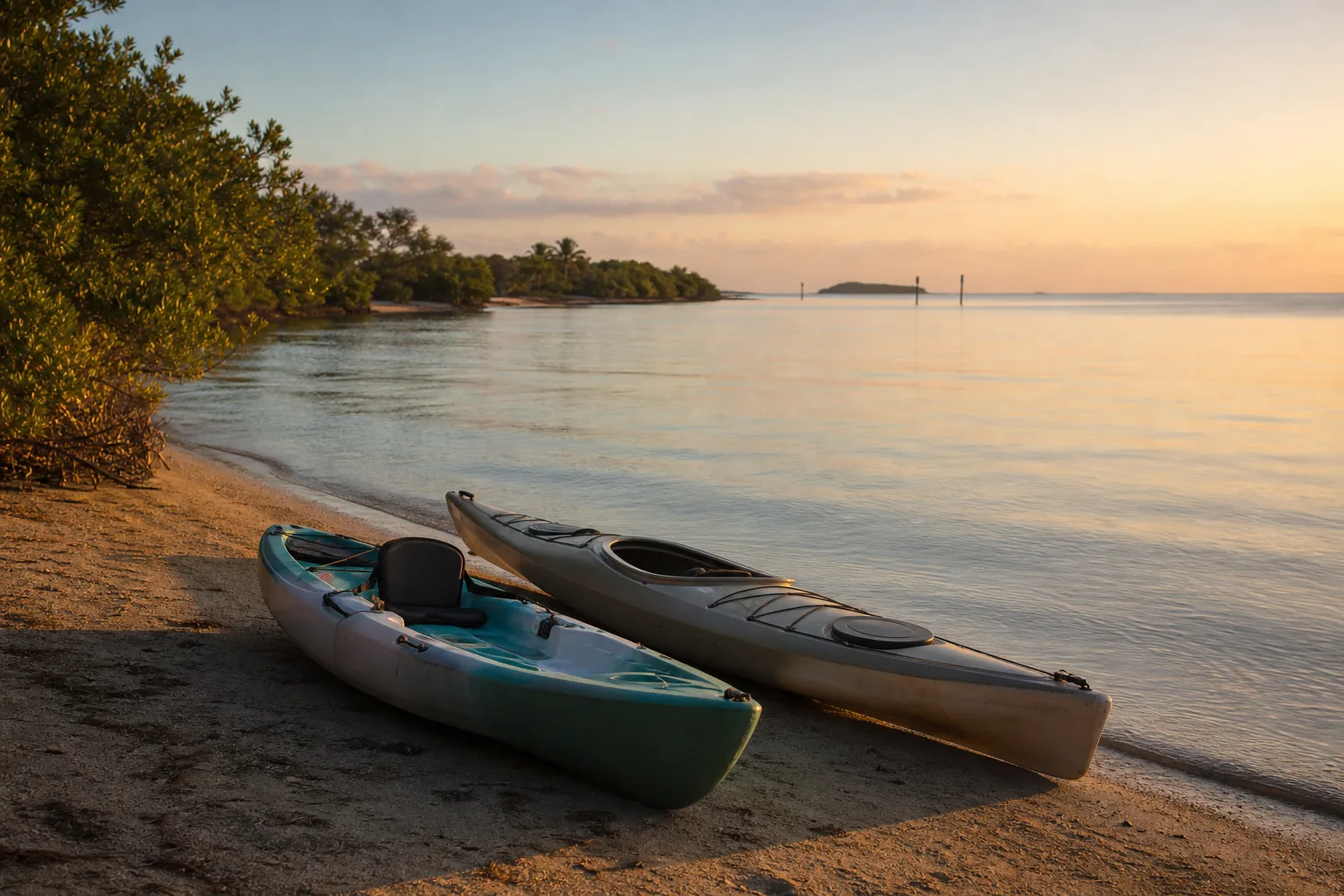
A sit-on-top kayak has an open deck where you sit on the hull, so it is easy to get on and off, drains itself through scupper holes and feels stable and forgiving. A sit-in kayak has a cockpit that puts your legs inside the hull, which keeps you drier, warmer and often faster. For most beginners paddling warm Florida and Texas water, a sit-on-top is the easier and safer first kayak; a sit-in suits cooler water and longer, drier trips.
The basic difference
The two designs differ in where your body sits relative to the hull. On a sit-on-top kayak, you sit on a molded seat on top of a closed hull and your legs rest in footwells or on foot braces. There is no cockpit to fill with water. On a sit-in kayak, you slide your legs into an enclosed cockpit and sit low, with the deck above your thighs. Many sit-in models accept a spray skirt, a flexible cover that seals the cockpit around your waist.
Neither design is "better" in general. Each trades something: the sit-on-top gives you freedom and simplicity, the sit-in gives you protection and efficiency. The right choice depends on water temperature, how you plan to use the boat and how comfortable you are in the water.
Side-by-side comparison
| Feature | Sit-on-top | Sit-in |
|---|---|---|
| Feel for beginners | Open, easy to enter and leave | Enclosed, takes a little getting used to |
| Stability | Usually wide and very stable | Often narrower; stable once you learn it, but tippier at first |
| Getting back aboard | Climb back on from the water | Needs a rescue technique or a helper |
| Staying dry | You get wet from splash and drips | Drier, especially with a spray skirt |
| Warm water use | Excellent, you stay cool | Can feel hot in summer sun |
| Cold water use | Poor without a wetsuit or drysuit | Better, with a skirt and layers |
| Water in the boat | Drains through scupper holes | Stays until you pump or sponge it out |
| Fishing | The common choice | Possible, but gear access is harder |
| Storage on board | Open deck and tank well; gear is exposed | Dry hatches and bulkheads inside the hull |
| Speed and tracking | Often slower and wider | Often more efficient |
Stability and confidence
Stability comes from hull width and shape more than from the "sit-on-top" or "sit-in" label, but in practice sit-on-top kayaks tend to be built wide and flat. That makes them feel steady when you step in, shift your weight or cast a line. Sit-in kayaks are often narrower and rounder, which helps them glide, but can feel wobbly to a first-timer.
There is also a difference in how a capsize feels. If a sit-on-top flips, you fall off it and can simply flip it back. If a sit-in flips, you may have to exit the cockpit upside down and then deal with a boat full of water. Skilled paddlers practice this, but many beginners prefer not to rely on skill they do not yet have.
Whichever you choose, wear a life jacket. The rules for life jackets on paddlecraft are summarized in our guide to Coast Guard approved life jackets, and you can compare registration rules in canoe vs kayak.
Getting back on after a fall
This is the biggest practical gap between the two designs. On a sit-on-top, you swim to the side or back, pull yourself across the deck and turn to sit. It takes practice, but it works in open water on your own. Wide, stable models make this easier; very narrow or short ones can be harder to climb onto.
On a sit-in kayak, re-entering in open water is a skill that usually involves a paddle float, a partner, or an assisted rescue. Some paddlers learn the "roll" so they never leave the boat at all. If you are paddling alone, in a current or far from shore, being able to re-enter your kayak matters a great deal. Practice in shallow, calm water close to shore with a friend nearby before you need it.
Warm water vs cold water
This is where location changes the answer. In Florida and along the Texas Gulf Coast the water is warm for much of the year, so getting splashed is comfortable and a sit-on-top keeps you cool in summer heat. A sit-in kayak with a closed cockpit can feel hot in direct sun, although the shaded cockpit and the ability to dunk a hand in the water cool you if you choose.
In cold water, or when the air is cool and windy, a sit-in kayak with a spray skirt protects your lower body from spray and wind. On a sit-on-top you will be wet all day, and in cold water you need proper exposure protection such as a wetsuit or drysuit. Cold-water immersion is dangerous and can be life-threatening quickly, so dress for the water temperature, not the air temperature. Water temperatures vary, so check conditions on the day from the National Weather Service marine forecast and local sources.
Winter cold fronts in Florida and Texas can drop air and water temperatures enough to change this advice for the season, so do not assume warm water just because you are on the Gulf.
Scupper holes and self-bailing
Scupper holes are open channels that run from the deck through the hull of a sit-on-top kayak. Water that splashes aboard, or comes from rain or waves, drains down through them. Because the hull itself is sealed, the boat does not sink if water gets on deck. This "self-bailing" design is a major reason beginners like sit-on-tops.
Some practical points about scuppers:
- You will get a little water coming up through the holes when you are heavily loaded. Some paddlers put in scupper plugs to stay drier in cooler weather.
- In calm water, plugs help keep your seat area dry. In waves or surf, unplug them so water can drain.
- Keep gear tied down. Anything loose on an open deck can float away if you flip.
A sit-in kayak has no scuppers. Water that gets in stays in the cockpit until you pump, sponge or empty it. Many sit-in kayaks have bulkheads and hatches that keep the hull dry and buoyant even if the cockpit floods, but you still need to remove the water from the cockpit to paddle comfortably.
Storage and gear
On a sit-in kayak, your gear is protected by the deck, and bulkheads and hatches create dry compartments for clothes, food and electronics. That makes sit-in boats popular for camping and day trips in changeable weather. On a sit-on-top you usually have open storage, such as a rear tank well and bungee cords, and some models add round or oval hatches. Anything that must stay dry should go in a dry bag.
Storage at home matters too. Both types can be kept on a rack, wall hooks or a trailer. Sit-on-tops are often wider and heavier, and a sit-in may be longer. Measure your garage or vehicle roof before buying. Inflatable models are a different compromise, covered in inflatable kayaks: pros and cons.
Fishing from each type
Sit-on-top kayaks dominate fishing because you can sit, kneel or (in stable models) stand, drop an anchor, reach rods and crates without twisting, and move around the deck. Rod holders, tracks and tank wells are standard accessories. If you are shopping specifically for fishing, read our fishing kayaks beginner's guide.
You can fish from a sit-in kayak, and some anglers prefer it for cooler weather or long, windy crossings where a lower seat and a drier ride matter. Access to tackle and landing fish is harder, and it is more awkward to deal with a hooked fish near your lap. For most beginners the sit-on-top is the practical option.
Where to launch
Both types launch from sand, ramps and soft kayak launches. Florida has a growing network of paddle launches; browse them on our Florida kayak launches page or use the Florida boat ramps list. Before you go, check the water level and time your trip using our Florida tide pages, because tidal current can turn a short paddle into hard work.
Rules on registration and life jackets differ by state. For Florida, see our boating license and registration page.
How to choose
- Choose a sit-on-top if you are a beginner, paddle in warm water, want to fish or swim from the boat, want easy re-entry, or like an open design.
- Choose a sit-in if you paddle in cool conditions, want to stay dry, plan longer trips with dry storage, or want to learn skills like rolling and edging.
- Demo before you buy. Many outfitters and paddling shops offer rentals or demo days. A boat that feels right in a parking lot may feel different on the water.
FAQ
Is a sit-on-top kayak safer than a sit-in kayak?
For beginners it is generally more forgiving, because you can fall off and climb back on without being trapped in a cockpit. Safety still depends on a life jacket, weather judgment and skills.
Which kayak is more stable?
Stability depends more on hull width and shape than on type, but sit-on-top kayaks are often built wider and feel steadier. A wide sit-in can be as stable as a narrow sit-on-top.
Do sit-on-top kayaks sink?
Their hulls are sealed, so they are buoyant even if water gets on deck. Water drains through scupper holes. A sealed hull can still be damaged and take on water, so inspect it for cracks.
Can you fish from a sit-in kayak?
Yes, but sit-on-tops are easier for fishing because of open decks, easier gear access and the option of standing in stable models.
What is a scupper hole?
A scupper hole is an opening that runs from the deck through the hull so water on deck drains out. It is what makes a sit-on-top self-bailing.