
Ethanol-Free Gas for Boats: Why It Matters and Where to Find It
Ethanol-free gas for boats explained: E10 vs E15, why E15 is not for marine engines, phase separation, storage tips and how to find ethanol free gas near you.
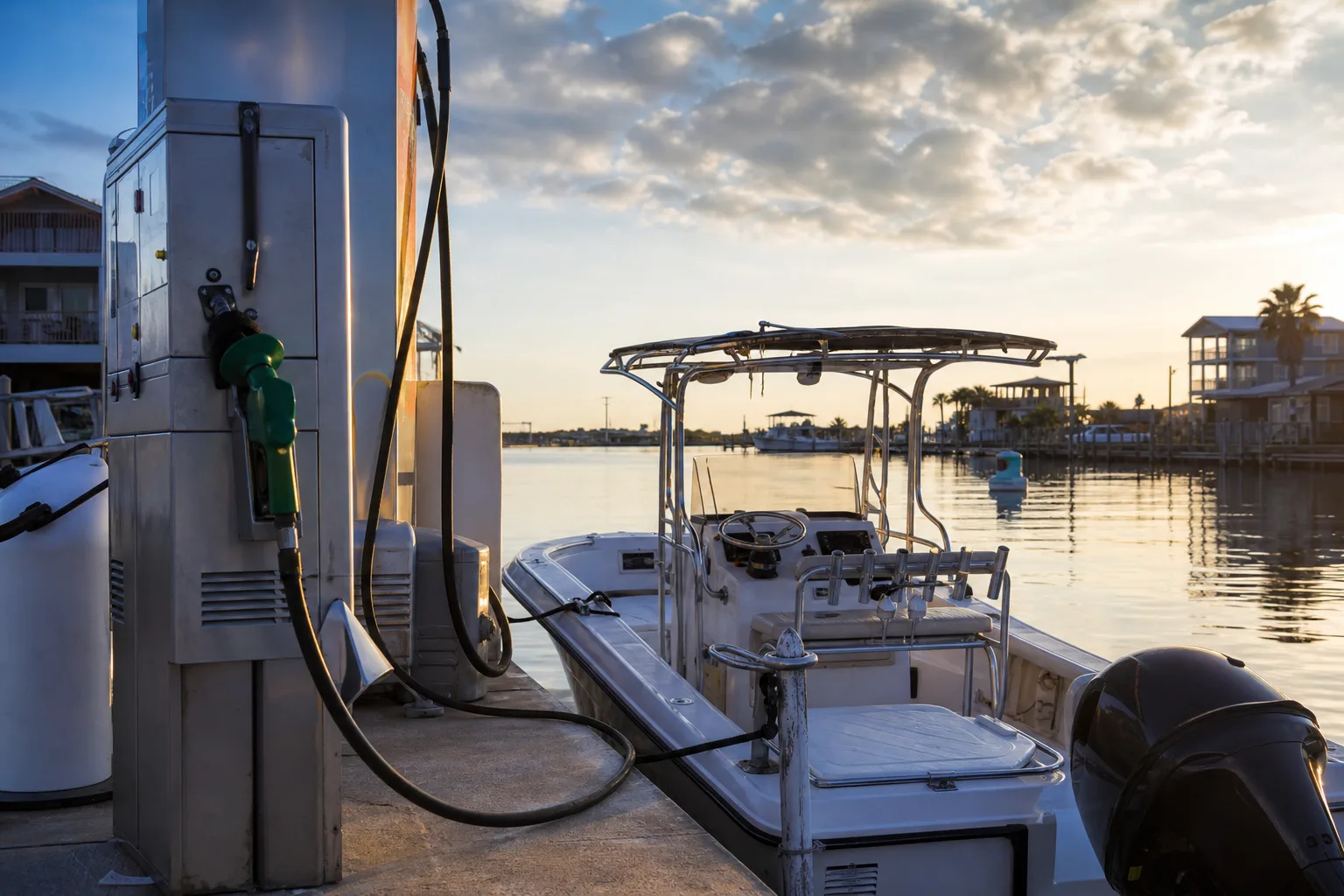
Ethanol-free gas (often called E0 or "non-ethanol gas") is gasoline with no ethanol blended in. Most regular pump gas in the United States is E10, which contains up to 10 percent ethanol. Many boaters prefer ethanol-free gas because ethanol attracts water and can cause trouble in boat fuel systems, but E10 is generally the highest blend that is legal to use in a boat. E15 is not.
What E10, E15 and E0 mean
The number after the "E" is the percentage of ethanol in the fuel. Ethanol is an alcohol made mostly from corn in the United States, and it is blended into gasoline.
| Label | Ethanol content | Use in a boat |
|---|---|---|
| E0 (ethanol-free, non-ethanol gas) | No ethanol | Fine for marine engines. Check your manual. |
| E10 | Up to 10 percent | The highest blend EPA allows in boat engines. Check your engine manual. |
| E15 | About 15 percent | Not allowed in marine engines |
| E85 | Up to 85 percent | Only for flex-fuel vehicles. Never in a boat engine that is not designed for it. |
What the EPA says about E15 and boats
In 2010 and 2011, the Environmental Protection Agency approved E15 only for model year 2001 and newer cars and light trucks. It denied approval for older vehicles, heavy-duty gasoline engines, motorcycles, and nonroad engines, vehicles and equipment. Boat engines fall into the nonroad category, so E15 is not approved for them.
EPA also set up a misfueling rule. Under it, E15 pumps carry a warning label, and it is illegal to use gasoline with more than 10 percent ethanol in engines that are not approved for it. The U.S. Department of Energy's Alternative Fuels Data Center summarizes the same limit: E10 is the ceiling for boats, motorcycles and small engines.
The practical advice is simple. If a pump is labeled E15, do not use it for your boat, your portable tank or your outboard's remote fuel can. If the pump is not clearly labeled, ask the attendant before you fill up.
Why ethanol can be a problem for boats
Boats are different from cars. They often sit unused for weeks, they live in humid air, and their fuel tanks sometimes vent to open air. Those conditions are where ethanol causes the most trouble.
Ethanol absorbs water
Ethanol attracts water from the air. In a boat's fuel tank, moisture can enter through the vent, and condensation can form on the inside when the temperature changes. A tank that is nearly full has less room for air, so there is less opportunity for condensation.
Phase separation
When ethanol-blended gasoline absorbs enough water, the water and ethanol can separate from the gasoline and sink to the bottom of the tank. This is called phase separation. BoatUS has warned that the result can be a corrosive, water-laden mixture at the bottom of the tank, and that it is a particular concern for stored boats, especially those stored with partly filled tanks. The mixture at the bottom is also where the fuel pickup draws from, so it can reach the engine.
BoatUS material says that fuel stabilizers help preserve fuel but will not prevent phase separation. Once phase separation has happened, the usual recommendation is to have the contaminated fuel removed from the tank by a professional rather than trying to fix it with additives.
Older fuel systems and materials
Ethanol can affect some older rubber hoses, seals and fiberglass tanks. Boat makers and engine makers publish their own guidance for the materials in each model, so the manual or the manufacturer is the best source for your engine.
When ethanol-free gas is worth seeking out
Ethanol-free gas can make sense in some situations:
- The boat sits for long periods between trips.
- You have an older boat or engine, or a portable tank you refill rarely.
- Your boat has a fuel tank that is difficult to inspect or drain.
- Your engine maker recommends it.
For a boat that gets used every week and runs well on fresh E10, it may not be necessary. Ethanol-free gas can cost more and may be harder to find, so the right choice depends on your boat and the way you use it. Always follow your engine manual, because the manual is what your warranty and your engine's design are based on.
Where to find ethanol-free gas
There is no universal rule about where ethanol-free gas is sold. Availability varies from place to place and changes over time, so confirm before you go.
- Marina fuel docks. Many fuel docks sell marine gasoline, and some sell ethanol-free. This varies by dock, so call ahead or ask at the pump. Browse the fuel docks in Florida or the fuel docks in Texas to find places near your route, then ask each dock which fuels it sells.
- Roadside gas stations. Some stations sell ethanol-free regular gas on a separate pump. Look for a pump label that says "ethanol-free," "E0" or "no ethanol," and check that the label matches the grade.
- Online station finders. Several websites and apps list stations that report selling ethanol-free gas. Treat them as a starting point, because the information is often submitted by users and can be out of date.
When you search for "ethanol free gas near me," confirm by phone or at the pump before you tow the boat. Do not assume that a station's fuel is ethanol-free because a listing says so.
How to read the pump label
Labels vary. EPA's misfueling rule requires a specific warning label on E15 pumps, while many E10 pumps carry only a general note about ethanol content or none you will notice. Do not assume a pump is ethanol-free unless it says so clearly (for example "ethanol-free" or "E0"). If in doubt, ask the attendant.
Storing boat fuel safely
No matter which gas you use, storage matters.
- Keep the tank nearly full when the boat sits. BoatUS advises this because less air in the tank means less condensation.
- Add stabilizer if the manual or fuel maker recommends it. Stabilizer helps keep fuel fresh, but it does not stop phase separation.
- Use fresh fuel. Do not keep fuel in a portable can for months.
- Use an approved container. Store portable fuel in a container made for gasoline, in a ventilated place away from ignition sources.
- Use a water-separating fuel filter if your engine has one, and replace it on the schedule in your manual.
Before a long trip, plan your fuel stops along the route and confirm the weather and tides. Our tide times are a useful part of that plan.
FAQ
Is ethanol-free gas better for boats?
It avoids the water-absorbing and phase-separation problems that come with ethanol, which is why many boaters prefer it, especially for boats that sit unused. E10 is still within the federal limit for boats, though, so check what your engine manual says.
Can I put E15 in my boat?
No. EPA did not approve E15 for nonroad engines, which include boat engines, and its misfueling rules prohibit using gasoline above 10 percent ethanol in engines not approved for it.
What is the difference between E10 and E0 gas?
E10 contains up to 10 percent ethanol. E0 has none. E0 is also called ethanol-free gas or non-ethanol gas.
What is phase separation?
It is when ethanol-blended gasoline absorbs enough water that the ethanol and water separate from the gasoline and settle at the bottom of the tank. It can cause corrosion and engine problems.
Does fuel stabilizer fix ethanol problems?
Stabilizer helps keep gasoline from going stale, but BoatUS material says it will not prevent phase separation. Keeping the tank nearly full and using fresh fuel helps more.
Where can I buy gas for my boat?
You can buy it at marina fuel docks and at regular gas stations. Because the ethanol content varies, check the pump label and ask the dock before you fill up.
Sources
- U.S. EPA: Final Rule, Regulation to Mitigate the Misfueling of Vehicles and Engines with Gasoline Containing Greater Than Ten Volume Percent Ethanol
- U.S. EPA: Regulation to Mitigate the Misfueling of Vehicles and Engines with Gasoline (EPA-420-R-11-006, archived)
- U.S. Department of Energy, Alternative Fuels Data Center: E15
- BoatUS: E10 in winter (2019 archive)