
Outboard Motor Maintenance Checklist
An outboard motor maintenance checklist: what to do after every trip, at each 100-hour or annual service, and how to spot a failing impeller, with links to maker guidance.
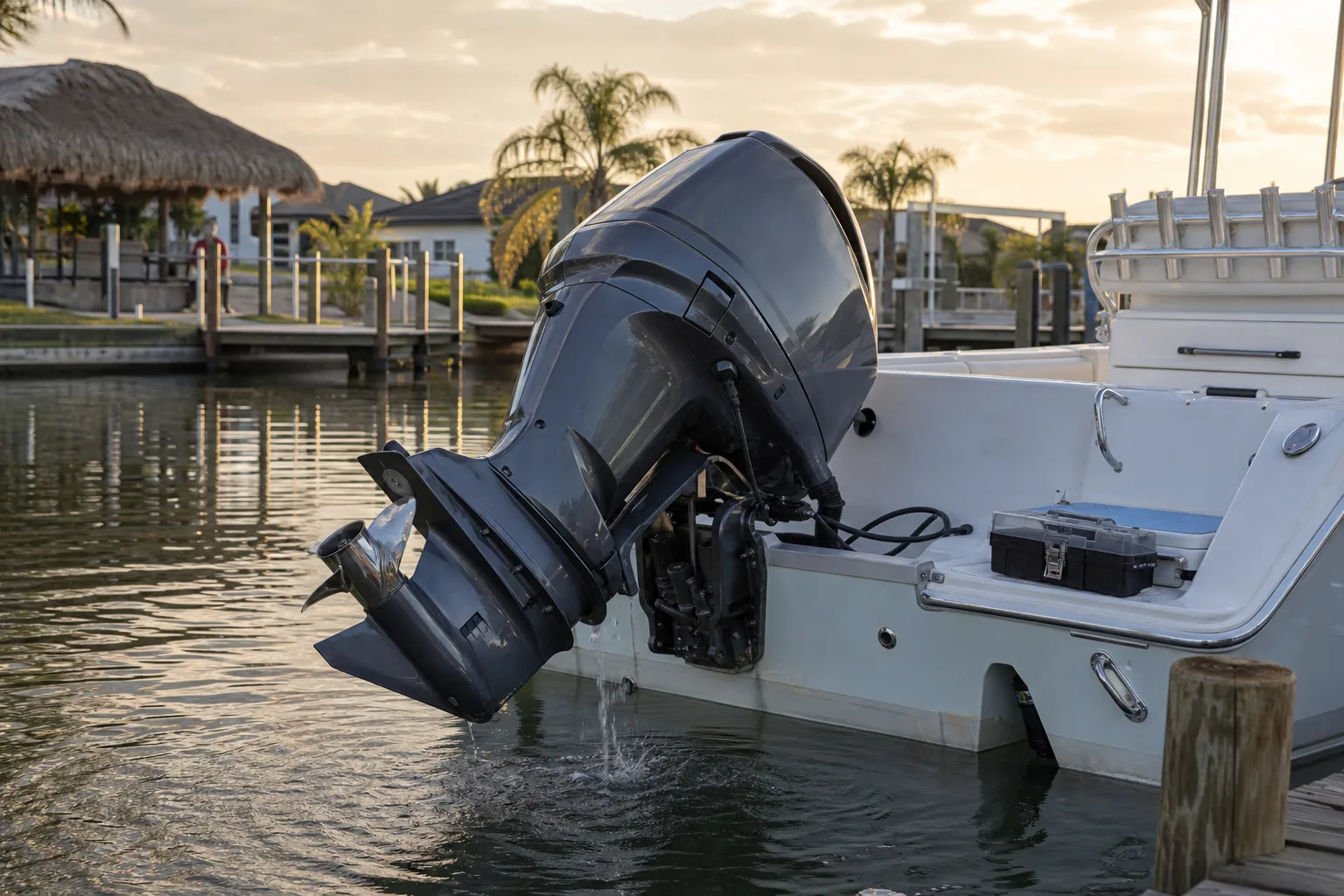
Outboard motor maintenance comes down to three rhythms: rinse and look it over after every trip, do a full service every year or every 100 hours (whichever your manual says comes first), and replace wear parts such as the water pump impeller on the maker's schedule. Done on time, these small jobs prevent most of the breakdowns that strand boaters.
The schedules below are general. Mercury, Yamaha and other makers publish service intervals for each engine, and the owner's manual for your exact model is the final word, including for warranty. Use this page as a checklist to organize the work.
The maintenance rhythm at a glance
| When | What to do |
|---|---|
| Before every trip | Check fuel, oil level (four-stroke), prop, steering, battery connections, kill-switch lanyard |
| After every trip | Flush with fresh water (always in saltwater), rinse and wipe down, check for fishing line on the prop |
| Every year or about every 100 hours, per the maker | Oil and filter, lower-unit gear lube, fuel filter, spark plugs, anodes, grease, inspect hoses and impeller |
| On the maker's schedule | Water pump impeller, timing belt where fitted, other model-specific items |
| End of season | Winterize or long-term storage prep (see how to winterize a boat) |
After every trip: flush and look it over
Saltwater is the big enemy. Salt dries into the cooling passages and corrodes aluminum, so flushing the engine with fresh water after each saltwater outing is the most valuable habit you can build. Most engines can be flushed with a set of flushing "ear muffs" or a built-in flush port connected to a garden hose; your manual says which, and says whether the engine must be run during the flush. Never run an engine out of water, because the impeller depends on water for lubrication and cooling.
While the engine is flushing, walk around it:
- Wipe the cowling and spray with a marine-safe corrosion protectant if your maker suggests it.
- Tilt the motor and look at the propeller for dings, bent blades and fishing line wrapped around the shaft. See boat propellers for what wear looks like.
- Check for leaks around the lower unit, a milky look in the gear lube, or drips under the cowl.
- Store the motor in its normal down position unless the maker says otherwise, so water drains.
Freshwater lake boaters can flush less often, but sand, weeds and silt still clog cooling passages, so flushing after a muddy day is sensible. If you launch from a busy ramp, check the cooling-water stream before you leave the dock. Public ramps for both states are listed on the Florida boat ramps and Texas boat ramps pages on Marinalo.
The annual or 100-hour service
Mercury's guidance for its outboards ties lower-unit gear lube to every 100 hours or once a season, and Yamaha's published service schedules likewise set larger inspections at about 100 hours or one year. Treat the first of those two milestones as your service date. Boats that run short hours still need a yearly service, because oil, fuel and rubber parts age even when they sit.
Engine oil and filter (four-strokes)
Use the oil grade and viscosity specified in your manual, and replace the filter at the same time. Warm the engine first so the oil drains well, and dispose of used oil at a recycling location.
Lower-unit gear lube
The lower unit holds gear oil that lubricates the gears and bearings. Drain it into a clean pan and look at what comes out. Milky or metallic-looking lube can mean water intrusion or wear, which points to a bad seal worth fixing before it fails. Refill from the bottom port, using the lube your manual specifies, and replace the plug gaskets.
Anodes
Sacrificial anodes (usually zinc, aluminum or magnesium) corrode so that the engine's metal does not. Check them at each service and replace them when they are visibly eroded, per your manual. Which metal you need depends on the water: saltwater, brackish and freshwater call for different anode metals, so ask your dealer, and do not paint them.
Fuel filters and fuel system
Replace the fuel filter and water-separating filter on schedule, and look for water in the bowl. Water and debris in fuel are leading causes of hard starts and stalling. Fresh fuel and a stabilizer help if the boat sits; read ethanol-free gas for boats for what ethanol does in small engines. Inspect the fuel line, primer bulb and connectors for cracks, softness and leaks.
Spark plugs
Remove the plugs, check the color and gap, and replace them on the maker's interval or if they are fouled or worn. Use only the plug type in your manual, and apply a small amount of anti-seize only if the manual calls for it. Fresh plugs make starting easier and can improve idle quality.
Grease and controls
Grease the steering, swivel bracket and any fittings the manual lists with marine grease. Check the throttle and shift cables, and make sure the steering moves smoothly lock to lock.
Impeller replacement
Inside the lower unit, a rubber impeller spins in the water pump housing and pushes cooling water up through the engine. It is a wear part, because the vanes flex with every revolution and can crack from age, heat, sand, or from running dry. Boat impeller replacement is a routine job on small outboards and a bigger job on larger lower units.
How often? The honest answer is "as your maker says." Intervals are model-specific: some manuals call for inspection at a year or 100 hours and replacement after a longer period or number of hours, and many mechanics suggest replacing it sooner if the boat is used in sandy, silty or saltwater conditions. Look up the water pump service line in your manual, and use that as your minimum. When in doubt, replace it when you have the lower unit apart anyway, because the labor to reach it is the expensive part.
When you do replace the impeller, also replace the gaskets and any worn plate or housing parts that come in the kit, and coat the new impeller with the lube the maker specifies before assembly. An impeller that has been stored bent or dry should not be reused.
Signs of trouble: the telltale stream
Most outboards have a small telltale outlet that squirts a stream of water when the cooling system is working. Look at it on every start. A weak, intermittent or missing telltale stream is a warning, and so are these signs:
- The engine overheating alarm sounds or the temperature gauge climbs.
- The telltale stream is weaker than usual or sputters.
- Steam or hot smell from the cowling.
- Rough idle, stalling or hard starts.
- Oil that looks milky, or gear lube that looks milky when drained.
- A new vibration at the propeller.
If the alarm sounds, stop the engine as soon as it is safe and check for a blocked water intake (weeds, plastic, mud) before restarting. If the intake is clear and the stream is still weak, the impeller is the likely cause and the engine should not be run hard until it is checked. A telltale that is clogged with salt or debris can be cleared with a thin wire, but check the manual first.
Which engine type needs what?
Four-stroke engines need oil changes; many two-strokes need oil mixed in or injected and a different storage routine. Both need the cooling, lower-unit, fuel and ignition checks above. If you are still choosing an engine layout, inboard vs outboard compares maintenance access.
Keep a simple log in the boat: date, engine hours, what you did, and the part numbers. A log makes resale easier, and it helps you spot a pattern, such as a plug that fouls every time.
FAQ
How often should an outboard be serviced?
Typically every year or every 100 hours, whichever comes first, but your owner's manual sets the exact schedule for your model.
Do I need to flush my outboard after freshwater use?
It is not as critical as after saltwater, but flushing after muddy, sandy or weedy water helps keep cooling passages clear. Follow your manual.
How often should I replace the impeller?
Follow the water pump interval in your manual, which varies by engine. Replace it sooner if the engine runs hot or the telltale stream is weak.
What does a weak telltale stream mean?
Often a blocked intake or telltale outlet, or a worn impeller. Stop the engine and check before you continue.
Can I do outboard maintenance myself?
Many owners handle oil, plugs, filters and flushing themselves. Lower-unit work and electrical diagnosis are jobs for a technician if you are not confident.
Sources
- Mercury Marine Dockline: 7 mistakes to avoid when winterizing your Mercury outboard (lower-unit gear lube every 100 hours or once a season)
- Mercury Marine Dockline: How to winterize your outboard
- Yamaha outboard owner's manuals and published maintenance schedules (model-specific; check yours)