
How to Winterize a Boat: Step-by-Step Checklist
How to winterize a boat: who needs it, steps for outboards, sterndrives and inboards, water systems, fuel stabilizer, battery, covers and storage, plus a printable checklist.
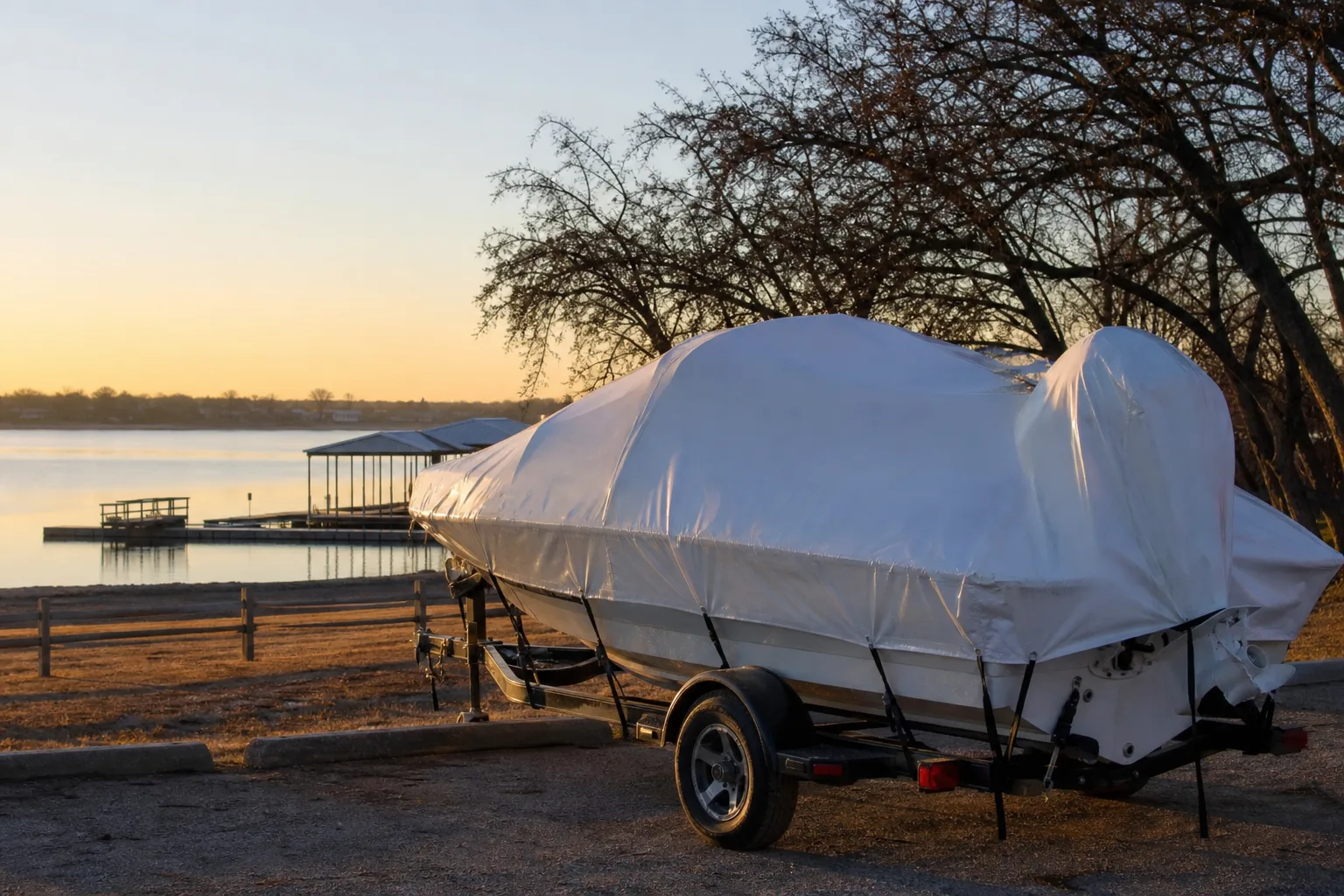
To winterize a boat, you stabilize the fuel, protect the engine's internal parts with fogging oil, change the oil and lower-unit gear lube, drain every place water can sit and freeze (or fill it with nontoxic antifreeze), disconnect or maintain the battery, and store the boat covered and out of the weather. The exact steps depend on your engine, so follow the winterization section of your owner's manual first and this checklist second.
This guide covers who really needs to winterize, then walks through outboards, sterndrive and inboard engines, fresh water and head systems, fuel, batteries, covers and storage. Where a maker such as Mercury publishes guidance, it is cited at the bottom of the page.
Who needs to winterize a boat?
Anyone whose boat will sit through a hard freeze, or sit unused for months, benefits from winterizing. The freeze risk is the biggest reason: water expands as it turns to ice, and it can crack engine blocks, water pumps, hoses, pipes and lower units that still hold water. Long storage is the second reason, because untreated fuel can go stale and unprotected metal parts can corrode even where it never freezes.
Freeze risk varies a lot across the places Marinalo covers. In north Texas, the National Weather Service Fort Worth office lists an average first freeze at Dallas-Fort Worth of roughly late November, with the earliest and latest first-freeze dates on record falling in October and early January. That is an average over more than a century, so a boat on Lake Ray Hubbard, Lewisville or Grapevine should be ready before the first cold front, not after it. In South Florida, hard freezes are uncommon, so many owners skip the full routine; the NWS Miami forecast office is the place to check how often cold snaps reach your area. Even in a warm climate, a boat that will sit unused for more than a few months still needs fuel treatment, a battery plan and a flushed engine.
| Your situation | What to do |
|---|---|
| Freezes are common where the boat is kept | Full winterization: drain or protect all water, treat fuel, fog engine, change fluids |
| Freezes are rare, but the boat sits for months | Fuel stabilizer, fresh oil, flush, battery care, clean and cover |
| Used all year in warm water | Normal maintenance; just watch for an occasional cold snap forecast |
Before you start: gather the manuals
Engine makers publish their own winterization procedures, and following them protects both the engine and the warranty. Mercury Marine's Dockline articles on winterizing cover fogging oil, fuel treatment and lower-unit gear lube. Other makers publish their own procedures too, and the owner's manual for your exact model always wins over general advice. Write down your engine model and year before you shop for supplies.
Typical supplies: marine fuel stabilizer, fogging oil, engine oil and filter, lower-unit gear lube, a flushing kit or ear muffs for the water intake, nontoxic propylene glycol antifreeze, marine grease, spark plugs, and a battery maintainer.
Step 1: Fuel and stabilizer
Fuel is the part most owners get wrong. Gasoline that sits for months can degrade, and ethanol-blended gas can pick up water. Add a marine-rated boat fuel stabilizer to the tank, following the product label for the dose, then run the engine long enough for the treated fuel to reach the carburetor or fuel injection system. Many makers, Mercury among them, advise storing with fresh fuel that has been treated with a stabilizer.
Whether to fill the tank or leave it low is a common debate. Filling it leaves less air space for moisture to condense, but follow your manual and fuel-system type. If your boat has a built-in tank with a vent, check that the vent is clear. For more on blends, read ethanol-free gas for boats. Replace the fuel filter or water-separating filter while you are at it, so the engine does not sit with a filter full of old fuel.
Step 2: Winterize an outboard
- Flush the engine. Run fresh water through the cooling passages with a flushing kit or on a flushing tank. This matters most in saltwater.
- Treat the fuel. Run the engine on stabilized fuel as described above.
- Fog the engine. Mercury recommends a fogging product designed for storage, such as its own Storage Seal, sprayed in while the engine is running (four-strokes and conventional two-strokes). Some direct-injected two-strokes call for a different method, so check the manual.
- Change the engine oil and filter on a four-stroke, so old combustion by-products do not sit in the crankcase all winter.
- Change the lower-unit gear lube. Mercury advises changing it every 100 hours or once a season, and water in the drained lube is a warning sign of a leaking seal that can freeze and crack the case.
- Grease fittings, pull the plugs, and check the propeller shaft. Take the prop off, inspect the shaft for fishing line, and grease it before reinstalling.
- Store the motor vertically. A tilted-up or lying-down motor can let water stay trapped in the lower unit.
Step 3: Winterize a sterndrive or inboard
Sterndrive and inboard engines have a cooling system and exhaust that hold a lot of water, so they have more to drain. See inboard vs outboard if you are still deciding which layout suits you.
- Change the engine oil and filter, then replace the transmission or drive lube per your manual.
- Drain the engine block, exhaust manifolds and risers using the drain plugs or petcocks specified by the maker. Clear any clogged drains with a thin wire, because a blocked drain gives a false sense of security.
- In many installations, you then circulate nontoxic antifreeze through the raw-water cooling system by drawing it in through a bucket or a winterizing kit, until it flows from the exhaust.
- Fog the engine through the carburetor or intake, following the maker's method.
- Inspect the sterndrive bellows and gimbal housing, and check hoses and clamps for cracks.
If you are unsure, hire a marine technician. A cracked block costs far more than a winterization service.
Step 4: Fresh water, washdown and head systems
Any pipe, pump or tank that holds water can split when it freezes. Use only nontoxic propylene glycol antifreeze (labeled for RV or marine potable systems) in anything connected to drinking water or a toilet. Do not put automotive ethylene glycol antifreeze into a potable system or into anything that discharges overboard.
| System | Winterizing action |
|---|---|
| Fresh water tank and lines | Drain, bypass the water heater, pump propylene glycol through each faucet until it runs pink |
| Water heater | Drain per the manual, bypass it before adding antifreeze |
| Washdown pump | Run antifreeze through it or drain the pump and lines |
| Marine head | Pump out the holding tank if you have one, flush with fresh water, then run antifreeze through intake and discharge lines |
| Shower sump and bilge pumps | Pour a little antifreeze into the sump; check the bilge is dry |
| Live well and baitwell | Drain completely and leave the plug out |
Pull all drain plugs and leave them out (a tag on the helm helps you remember them in spring). For more on bilge areas, see what is a bilge.
Step 5: Battery
Batteries slowly lose charge when idle, and a deeply discharged lead-acid battery can freeze and be ruined. Clean the terminals, charge fully, and then either keep it on a smart maintainer or disconnect and store it somewhere cool, dry and off the concrete as the battery maker advises. Lithium batteries have their own storage-charge guidance. Details by battery type are in marine batteries. Turn off the battery switch even if the battery stays aboard.
Step 6: Clean, cover and store
Wash the hull, scrub off any growth, and clean and dry the interior so mildew does not build up. Remove electronics, cushions and anything that may be damaged by heat, cold or critters, and prop the cushions up to air out.
- Fitted cover or canvas. Use a support frame or poles so water and snow do not pool, and leave vents so air can circulate.
- Shrink wrap. Common in northern climates; it seals the boat against weather, but still needs vents.
- Trailer care. Check tire pressure, grease the bearings, and put the trailer on blocks if it sits for months. If the boat will be on its trailer, also have the lights checked; see boat trailer lights not working for the common faults.
Where the boat stays is the final choice: a dry stack building, a yard, a garage or a slip. Compare them in boat storage options. Marina rates in your area are on the Texas marina page and the Florida marina page, and Marinalo's 30-ft Florida slip prices give a sense of what wet storage costs.
The complete winterization checklist
- Read the owner's manual winterization section.
- Add stabilizer to fresh fuel, run the engine, replace fuel filters.
- Flush the engine in fresh water.
- Fog the engine as the maker specifies.
- Change engine oil, filter and lower-unit or drive lube.
- Drain engine block and exhaust (inboard and sterndrive), or add antifreeze where specified.
- Drain the fresh water, washdown, head and live well; add propylene glycol where needed.
- Pull drain plugs and tag them.
- Charge the battery and maintain or store it.
- Clean, dry, cover and store the boat; service the trailer.
FAQ
When should I winterize my boat?
Do it before the first hard freeze is forecast and before the boat sits unused for a long stretch. Check your local National Weather Service forecast, because a first freeze can arrive earlier than the average.
Do I need to winterize a boat in Florida?
Usually not a full freeze-proofing, since hard freezes are uncommon in much of the state. But fuel treatment, a flush, a battery plan and a clean boat still help if it will sit unused for months.
Can I winterize a boat myself?
Yes for an outboard, if you follow the manual. For inboard and sterndrive engines with block drains and antifreeze circuits, many owners pay a technician, because a missed drain can crack an expensive part.
What antifreeze is safe for boat water systems?
Nontoxic propylene glycol antifreeze made for RV and marine potable systems. Automotive ethylene glycol is toxic and should not go into any water system.
Is fuel stabilizer really necessary?
Engine makers such as Mercury advise storing with fresh fuel treated with a marine stabilizer, especially with ethanol blends. Follow the label dose.
Sources
- Mercury Marine Dockline: 7 mistakes to avoid when winterizing your Mercury outboard
- Mercury Marine Dockline: How to winterize your outboard
- National Weather Service Fort Worth: DFW freeze dates
- Your engine's owner's manual and, for Yamaha owners, Yamaha's published winterizing guidance