
Snook Season in Florida: Open Months, Slot Limits and Tips
Florida snook season by region: open months on the Gulf and Atlantic coasts, the 28 to 32 and 28 to 33 inch slots, one-fish bag limit, snook permit and how tides help you catch them.
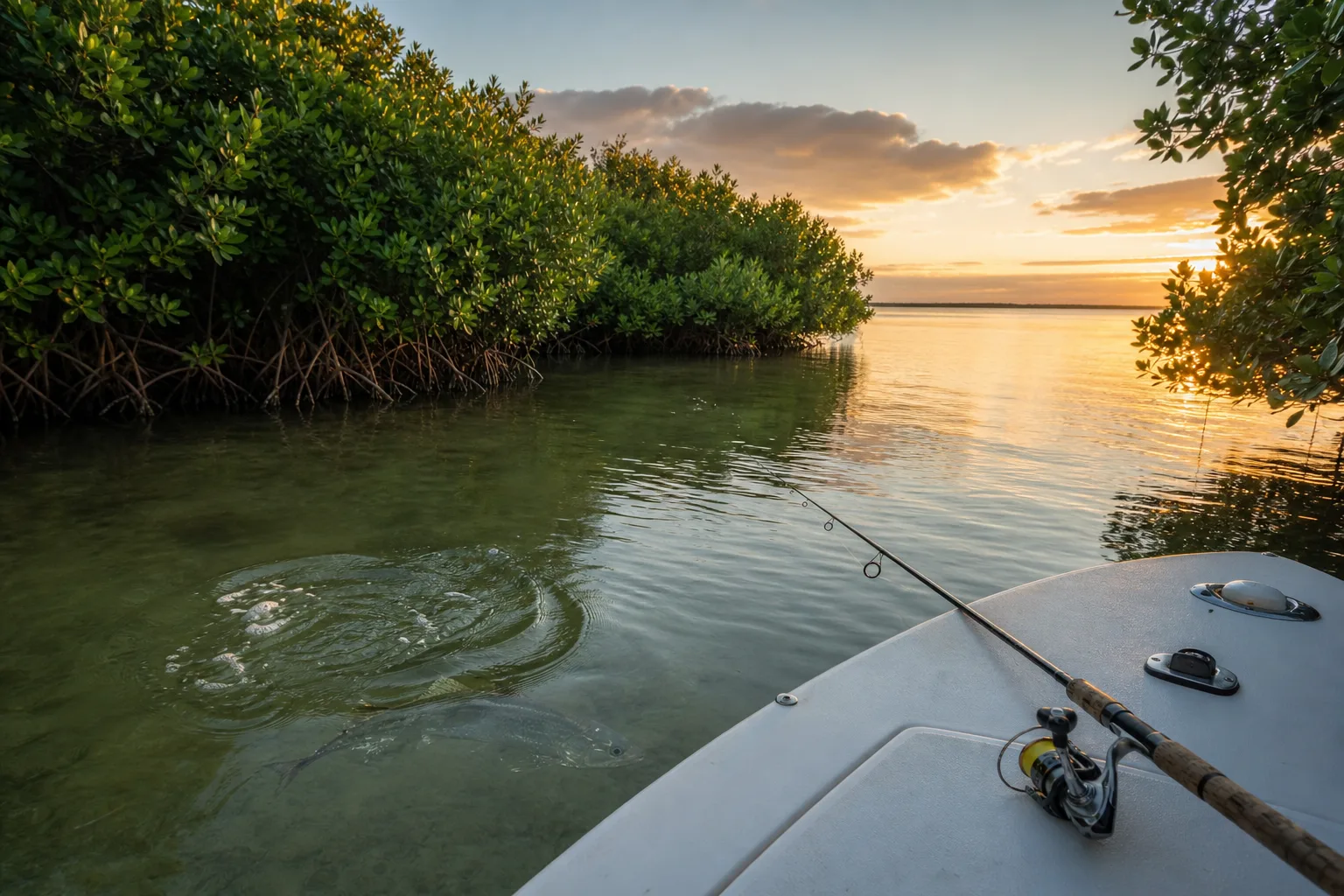
Florida snook season is open in two windows each year, with different dates on the Gulf and Atlantic sides. On the Atlantic coast, including the Indian River Lagoon, harvest is open February 1 to May 31 and September 1 to December 14; on the Gulf side it is closed December 1 to the end of February and May 1 to August 31. The daily limit is one snook per person, it must be within a slot size, and you need a snook permit on top of your fishing license unless exempt.
FWC manages snook by region and reviews the rules, so confirm the current table on the FWC snook page before you fish. Today's date is October 17, 2026, so both coasts are currently in the open fall window, with closures coming in December.
Snook seasons by region
| Region | Open seasons | Closed seasons | Slot (total length) |
|---|---|---|---|
| Atlantic: Northeast, Indian River Lagoon, Southeast | Feb. 1 to May 31 and Sept. 1 to Dec. 14 | Dec. 15 to Jan. 31 and June 1 to Aug. 31 | 28 to 32 inches |
| Gulf regions (most) | March 1 to April 30 and Sept. 1 to Nov. 30 | Dec. 1 to end of February and May 1 to Aug. 31 | 28 to 33 inches |
The Atlantic row is confirmed in FWC notices for the Indian River Lagoon and Northeast regions; we did not find the Southeast region's own dates in the sources we checked, so check FWC for that region. The Gulf row reflects the closed seasons and slot shown on FWC's snook page for the Gulf regions. The open months are simply the months outside the closures.
What the regions cover
- Northeast: runs north to the Georgia line and includes the St. Johns River and its tributaries. See our St. Johns River boating guide.
- Indian River Lagoon: from the Lytle Avenue/South Causeway area in New Smyrna Beach south to the Martin-Palm Beach county line, including the Kissimmee River and Lake Okeechobee. Our Indian River Lagoon guide and Lake Okeechobee guide cover the water.
- Gulf coast regions: several management regions share the same closures and slot on FWC's page. Check the map to see which region you are in.
Bag limit, slot and measuring
- Bag limit: one snook per person per day.
- Slot limit: not less than 28 inches and not more than 32 inches on the Atlantic, or 33 inches on the Gulf side. Fish outside the slot must be released.
- How to measure: total length, from the tip of the nose with the mouth closed to the tip of the tail, with the tail compressed or pinched together.
- Closed season: you may not possess snook caught during a closed season. Release any snook caught in a closed season immediately.
Permit, license and gear
To keep a snook you need a snook permit in addition to a saltwater fishing license, unless you are exempt from the license. Gear is limited to hook and line, and snagging is prohibited. On for-hire trips, the captain and crew may not keep a bag limit. Commercial harvest and sale of snook is prohibited. Our Florida fishing license guide explains how to buy a license, and the Florida boating license and registration page covers boat paperwork.
Handling snook you release
Most snook you catch will be released, either because they are out of the slot or the season is closed. A few habits help them survive:
- Use a wet hand or a wet rubberized net, and keep the fish in the water as much as possible.
- Use a lip-grip carefully and support the body when you lift a big fish.
- Remove hooks quickly; circle hooks and barbless hooks help.
- Revive the fish facing into the current until it swims off on its own.
Tides, structure and timing
Snook are ambush predators and favor mangroves, docks, bridges, inlets, jetties and beaches. They are strongly influenced by moving water, so fishing the tide is often more important than the time of day. Many anglers target a falling tide near inlets and passes, when bait is pulled out, and the first hours of an incoming tide in creeks. Read our ebb, flood and slack tide guide and the best time to fish article to plan around current, and check Florida tide times for your area. Dawn and dusk, warm nights and summer spawning aggregations near inlets are also well known to anglers, although summer is closed to harvest on both coasts; catch-and-release only.
The skiff, bay boat and flats boat comparison helps you choose a boat for backcountry mangrove shorelines.
Baits and tackle basics
Snook are often caught on live bait such as pilchards, pinfish or shrimp, and on artificial lures like soft plastic jerkbaits, paddle tails and topwater plugs. A medium spinning outfit with a fluorocarbon leader is a common setup because snook have sharp gill plates that can cut light line. Fish near structure, but be ready to turn the fish away from pilings, mangrove roots and oyster bars. Because snook can be strong and fight hard, give yourself time to land the fish and release it carefully.
Rules about the fish are not the only ones to check. Many snook spots sit in speed-restricted waters, so read our no-wake zones article and slow down near docks, manatee zones and marked shorelines.
Where to launch
Good snook water is near inlets and mangrove estuaries. On the Gulf coast, look at ramps in Tampa, Sarasota and Fort Myers. On the Atlantic side, try Stuart and Melbourne. Browse all Florida boat ramps or the kayak launches if you fish from a paddle craft. See also fishing kayaks for beginners.
Rules that apply every trip
Keep the fish's length in mind before you take any photo: a snook that is one inch over the slot is just as illegal to keep as one that is far too big. Carry a measuring board or a tape marked in inches, measure on a flat surface, and keep the snook wet. If you fish from a charter, ask the captain how the permit and bag limit work on board, because the crew cannot keep a bag limit on for-hire trips. When in doubt, release the fish and check the rule afterward.
Planning around the closures
Because the closures start in early winter and again in late spring, many anglers treat the fall window as the last chance to keep a fish for months. Remember that the closures are the same for everyone, even if you are fishing from a pier, a dock or the shore, and that a fish in a closed season has to be released. FWC can change snook rules, so check the snook page and recent FWC news releases before every trip.
FAQ
When is snook season in Florida?
Atlantic: February 1 to May 31 and September 1 to December 14. Gulf: open outside December 1 to the end of February and May 1 to August 31.
What is the snook slot limit in Florida?
28 to 32 inches total length on the Atlantic coast and 28 to 33 inches on the Gulf side. Release fish outside the slot.
How many snook can you keep?
One per person per day.
Do you need a snook permit?
Yes, to keep one, in addition to a saltwater fishing license unless you are exempt.
What are the Indian River Lagoon snook rules?
The Indian River Lagoon is its own FWC region with the same dates and 28 to 32 inch slot as the Atlantic list above, and the region includes Lake Okeechobee.
Can you keep snook in a closed season?
No. You may not possess snook caught during a closed season.