
Florida Fishing License: Who Needs One, Types, Exemptions
Who needs a Florida fishing license, which saltwater, freshwater, combo and shoreline licenses exist, who is exempt, and when the free reef fish designation applies.
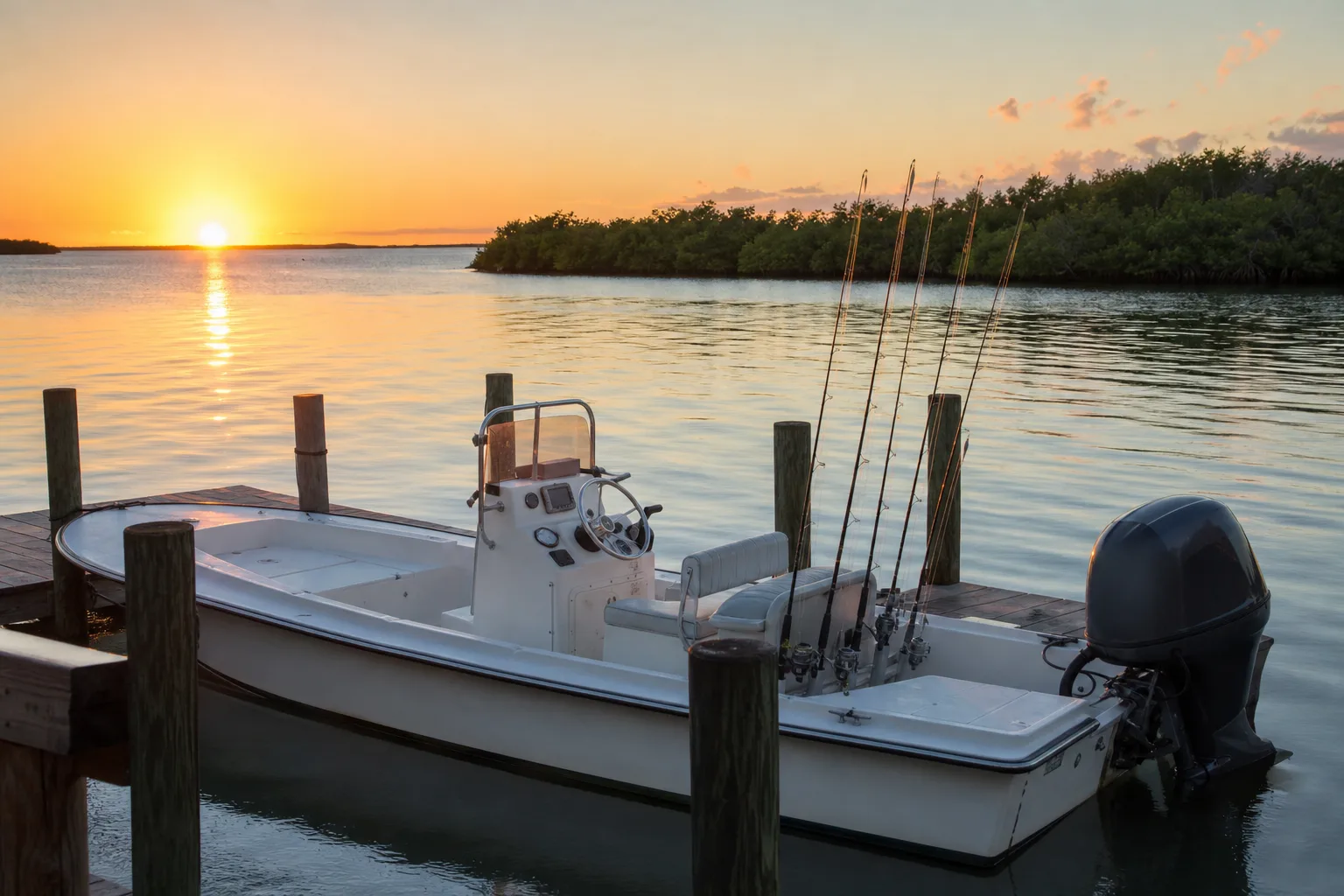
In Florida, anyone who fishes for saltwater species generally needs a saltwater fishing license, and anyone fishing in fresh water needs a freshwater license, unless an exemption applies. The Florida Fish and Wildlife Conservation Commission (FWC) sells licenses, and Florida's saltwater fishing license has several versions: resident, nonresident, short-term, and a free resident shoreline license for fishing from land.
This guide explains who needs which license, who is exempt, how boats and charters fit in, and the free reef fish designation that catches some anglers out. We leave prices to FWC: fees change, and the official page is the only reliable place to read them.
The Florida fishing license types
| License | What it covers | Who can buy it |
|---|---|---|
| Saltwater fishing license | Saltwater fishing from shore or a boat | Residents and nonresidents |
| Saltwater shoreline license | Saltwater fishing only from land or a structure attached to land; no boat fishing, and not an island you reached by boat. FWC lists it as no cost. | Florida residents only |
| Freshwater fishing license | Fishing in fresh water | Residents and nonresidents |
| Freshwater and saltwater combination | Both, in one license | Florida residents only |
| Short-term licenses | FWC lists 3-day and 7-day nonresident saltwater and freshwater licenses; check FWC for the resident short-term options | Varies |
| Annual and multi-year or lifetime | Annual licenses are the standard choice; FWC suggests avid resident anglers consider a lifetime license | Mainly residents; check FWC |
A saltwater license is required to take any native or nonnative marine organism, so it applies to crabs and lobsters as well as fish. Snook and spiny lobster also need separate permits on top of the license. Anyone holding a saltwater license, or a license that includes saltwater privileges, does not also need a shoreline license.
Who is exempt from the saltwater license
FWC's saltwater pages list these exemptions:
- Florida residents age 65 or older, who must carry proof of age and Florida residency such as a Florida driver license or ID. A free Resident 65+ certificate is available but optional.
- Children under 16.
- Qualifying Florida residents with disabilities.
- Active-duty military personnel home on leave.
- Anglers fishing from a licensed pier.
- Florida residents fishing with live or natural bait, with a pole or line without a retrieval mechanism, for noncommercial purposes in their home county. This does not cover cast nets, traps or hand-gathering shellfish.
- Anyone on a boat who is not fishing. FWC notes non-anglers must not help with fishing, for example by baiting hooks or netting fish.
Exemptions can change and have conditions, so confirm your own case on FWC's "Do I need a license or permit?" page. FWC also schedules license-free fishing days; see its free fishing days page for current dates.
Fishing from a boat, a charter or a pier
If you fish from your own boat, each angler who is not exempt needs their own license. A shoreline license does not cover you on a boat. FWC also sells recreational vessel and saltwater fishing pier licenses, which are designed to cover the anglers using a licensed vessel or pier; FWC's page on them is the place to see exactly who is covered. On a charter or a party boat, ask the captain whether the vessel or pier license covers customers before you pay for an individual license.
Nonresidents must buy a 3-day, 7-day or annual saltwater license unless they are covered by a charter or pier license. Residents who only fish from land can get the free shoreline license instead.
Reef fish anglers need a free designation
The State Reef Fish Angler designation is separate from a fishing license, and it is free according to FWC. Anglers 16 and older fishing from a private boat who plan to harvest, possess or land certain reef fish must sign up, and that includes anglers who are exempt from the license, such as residents 65 and older. FWC lists 13 species in the requirement, including red snapper, gag, red grouper and mutton snapper.
- It applies to the Gulf of America and the Atlantic, in state and federal waters for species such as Gulf red snapper and Gulf red grouper.
- For Atlantic red snapper, private anglers need a saltwater license (unless exempt) and the designation.
- For-hire vessels in the Atlantic must sign up for the free Atlantic For-Hire Reef Fish Registry; their captain and crew cannot keep red snapper on for-hire trips.
Species lists, seasons and bag limits change by year, so read FWC's State Reef Fish Survey pages before you go out.
Residents, nonresidents and visitors
Residency matters because several options are limited to Florida residents: the free shoreline license, the combination license and the 65-and-older exemption. Visitors can buy short-term or annual saltwater and freshwater licenses. If you are visiting and plan to fish only a few days, a short-term license is usually easier than an annual one, but compare the current prices on FWC's site. If you move to Florida, you will need to switch from a nonresident to a resident license once you qualify as a resident, so ask FWC how residency is defined for fishing.
Keep in mind that a saltwater license and a freshwater license are different things. Many Florida waters are brackish, where rivers meet the sea, and the rule that applies depends on the species and the water. If you fish in an area where both kinds of fish live, ask FWC or look at the regulations for that water body, or buy the combination license if you are a resident.
How to buy, and how to stay legal
- Buy through FWC's official license site, GoOutdoorsFlorida.com, or at a county tax collector or authorized retailer. Handling fees are extra on top of license fees.
- Carry proof of the license or exemption while fishing. Keep digital proof on your phone if you can.
- Check the prices on the official FWC page on the day you buy; this guide gives none because they change.
- Read species rules (seasons, size limits, bag limits) before you keep a fish. A license is not a harvest permit.
A fishing license is not a boating license either. For Florida's boater education and registration rules, see the Florida boating license and registration guide, or our answer to whether you need a license to drive a boat.
Where to launch and what to bring
Once you have the paperwork sorted, plan where to put in. Marinalo lists public Florida boat ramps, and Florida fuel docks to top off. If you fish from a small boat or a paddle craft, our guide to skiffs, bay boats and flats boats or fishing kayaks can help. If you plan to cast from the beach, read surf fishing for beginners.
FAQ
Do I need a license to fish in Florida from a pier?
Anglers fishing from a licensed pier are exempt from the saltwater license requirement, per FWC. Check that the pier is licensed.
Do I need a Florida saltwater fishing license if I am over 65?
Florida residents 65 and older are exempt if they carry proof of age and residency, but they still need the free State Reef Fish Angler designation for reef fish.
Do kids need a fishing license in Florida?
Children under 16 are exempt from the saltwater license. Check FWC for freshwater rules.
Does a shoreline license let me fish from a boat?
No. It covers only fishing from land or a structure attached to land, and it is for Florida residents.
Do passengers on my boat need a license?
Not if they are not fishing. They must not help with fishing either, according to FWC.
Can I get a combination license?
Yes, Florida residents can buy a freshwater and saltwater combination license. FWC does not list a nonresident combo.