
Surf Fishing for Beginners: Tides, Rigs and Timing
Learn surf fishing: how to read the beach, time the tide, pick basic rigs and gear, understand Florida and Texas license rules and stay safe from rip currents.
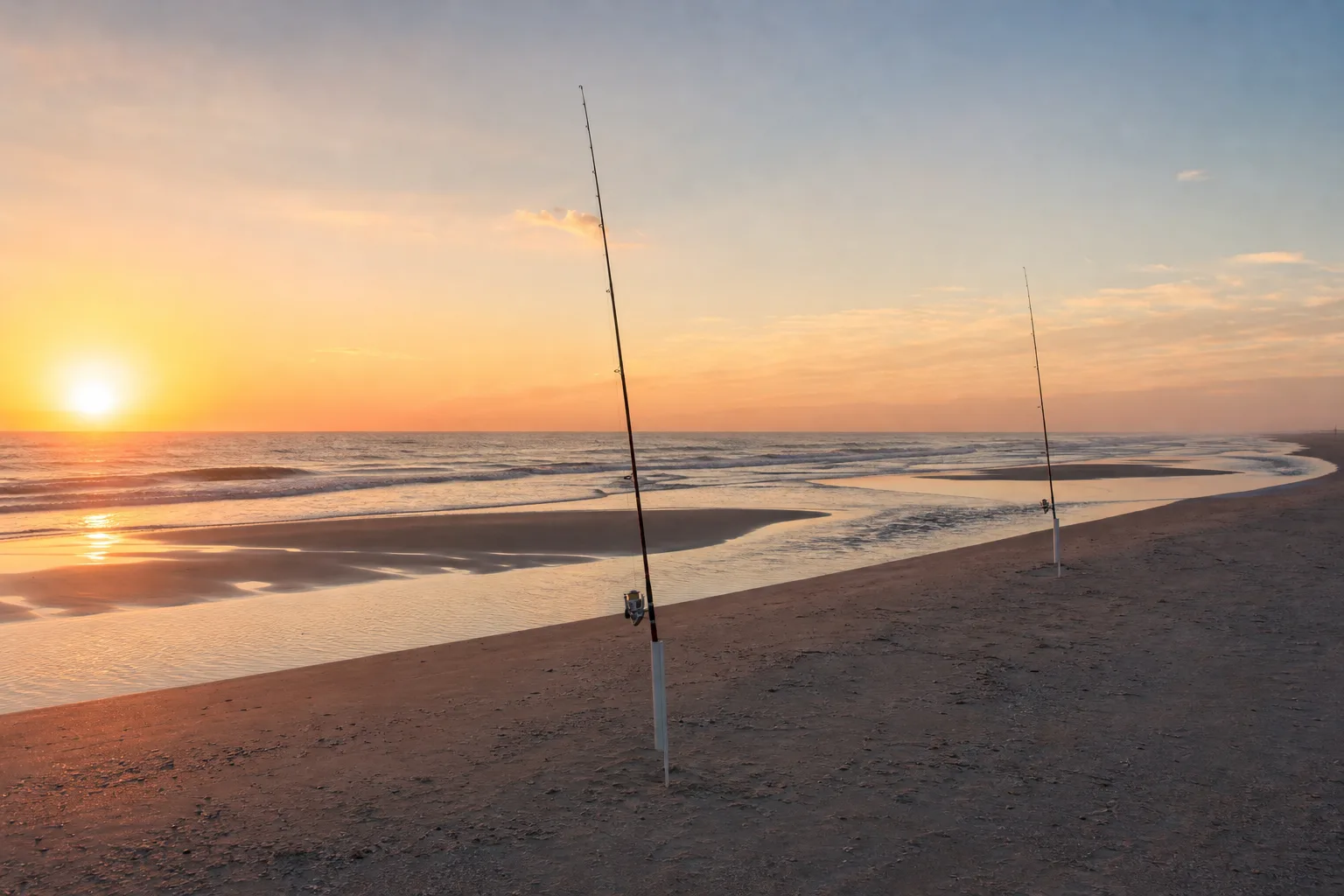
Surf fishing is fishing from the beach, casting past the breaking waves into the trough or cut where fish feed. To start, you need a long rod and reel, a simple bottom rig with a sinker and hook, fresh bait, and a read of the beach and tide. Fish the hours around a moving tide, look for troughs and gaps in the sandbars, and check Florida or Texas license rules before you cast.
Why the surf works
Waves churn up sand, shells and small creatures such as sand fleas and crabs. Baitfish and the fish that eat them follow that food to the shoreline, often within a short cast. You do not need a boat, and many beaches allow fishing from the sand. That said, the surf is a changing environment. The tide, wind and wave direction can turn a good spot into a poor one in a few hours.
Reading the beach
Before you rig anything, walk the beach, ideally at low tide when the sandbar and trough shapes are easiest to see. Look for:
- Troughs (sloughs): deeper channels of water that run parallel to the beach between the shore and a sandbar. Fish use them as lanes to patrol for food.
- Sandbars: ridges of sand where waves break. Fish often cruise just beyond them or hold in the deeper pockets on either side.
- Cuts and gaps: breaks in a sandbar where water flows back out. These can be great spots because bait and fish move through them.
- Rip currents: narrow channels of water pulling away from shore, often seen as a darker or choppy gap in the breaking waves, with foam or debris moving seaward. Anglers like the same features, but rips are dangerous for swimmers and waders.
- Points, jetties and structure: any change in the shoreline can concentrate food.
Water color and bird activity help, too. Diving birds often point to bait. Clear, calm days are easier to read, while stirred-up water after a storm can be hard to fish.
Tide timing
Moving water is what gets fish feeding. Many surf anglers like the stretch of time on either side of high tide, when water reaches into the trough and brings fish closer to shore. Others prefer a moving tide in general, rising or falling, and avoid slack water. The best choice depends on the beach, the species and the season, so keep notes.
- Check the tide table for your beach so you can plan the best window.
- Arrive early and fish through the change in tide.
- Remember that tide height and current are different things. Our guide to ebb, flood and slack tide explains the difference.
Use our Florida tide pages or Texas tide pages to find your beach's times. The tide pages also list the best fishing times based on the moon (solunar periods), which many anglers use as one more clue.
Basic gear
| Item | What it does | Beginner note |
|---|---|---|
| Surf rod | Long rod that casts a heavy sinker past the waves | Longer rods cast farther and lift the line over the surf |
| Spinning reel | Holds plenty of line and casts easily | Match the reel to the rod's rated line weight |
| Line | Braid or monofilament main line | Add a leader of heavier mono or fluorocarbon |
| Sinker | Holds your bait on the bottom in the current | Pyramid or sputnik styles dig in and hold in surf |
| Hooks | Circle hooks reduce gut-hooking and help release fish | Match the hook size to your bait |
| Sand spike | Holds your rod upright in the sand | Place it above the wave line |
| Bait bucket and cooler | Keep bait fresh and fish cold | Bring ice and water |
| Pliers, towel, knife | Handle fish and hooks safely | Needle-nose pliers help with hook removal |
You can get started with a modest outfit. Most local tackle shops will rig a surf outfit for your beach and tell you what is biting.
Basic rigs
Two simple rigs cover most beginner surf fishing.
Fish-finder (sliding sinker) rig
Slide a sinker slider onto your main line, tie on a swivel, then add a leader and hook. The line slides through the sinker, so a fish can pick up the bait and move without feeling much weight. It is the standard bottom rig for the surf, good for whiting, pompano, redfish and other species depending on region.
Two-hook bottom (high-low) rig
A rig with a sinker at the bottom and two short dropper loops with hooks above it presents two baits at once. It is a good choice for smaller panfish and bottom feeders. Avoid tangles by casting smoothly rather than snapping it hard.
Bait choices commonly include shrimp, cut bait, sand fleas and small crabs. Ask the local bait shop what is working. Live bait may be regulated in some places, so check the rules.
Casting and handling fish
- Check behind you for people, rods and lines before you cast.
- Cast past the breaking waves into the trough, and let the sinker settle.
- Tighten the line, set the rod in the sand spike, and watch the tip for taps.
- When the rod bends, lift and reel steadily, using the waves to help bring the fish in.
- Wet your hands before touching a fish you plan to release, and release it quickly.
Always check size and bag limits, closed seasons and gear rules for each species with FWC or TPWD. They change.
Licenses in Florida and Texas
Licensing is the part many beginners miss. Rules can change, so always confirm on the agency's site.
Florida
FWC says Florida residents who fish only from land, or from a structure attached to land, can get a no-cost resident shoreline license. It does not cover fishing from a boat or from an island you reached by boat. A regular saltwater license, or any license that includes saltwater privileges, means you do not need the shoreline license. Wading into the water counts as fishing from shore. Nonresidents need a regular nonresident saltwater license, from shore or boat. Certain people are exempt, including children under 16 and residents age 65 or older. See the FWC shoreline license FAQ for the full, current list, and our Florida boating and registration page for related boating rules.
Texas
TPWD says a saltwater fishing endorsement is required in addition to a valid fishing license if you take or attempt to take fish in the public salt water of Texas. If you are not required to hold a fishing license, you do not need the endorsement. Some anglers, such as children under 17, are exempt from the license. Check the TPWD fishing endorsements page and the TPWD Outdoor Annual for current exemptions and packages.
We do not list prices here because they change. The agencies' pages are the source.
Safety on the beach
- Rip currents. The National Weather Service advises checking the local beach forecast before you go and notes that rip currents often form on calm, sunny days. Do not wade deep to cast. Read the NWS rip current safety guidance before you fish.
- Never turn your back on the water. Waves can surge up the beach without warning.
- Handle hooks and fish carefully. Catfish and stingrays have spines, so use pliers and watch where you step. Shuffling your feet in shallow water can warn rays.
- Protect from sun and heat. Bring water, a hat and sunscreen.
- Check tides before you park. A rising tide can cut off access along a beach or flood a vehicle if you drive on sand where it is allowed.
- Respect closed areas. Sea turtle nesting areas and bird nesting zones are protected.
If you want to fish from a boat or kayak later, our fishing kayaks beginner's guide is a good next step. For launches, see the Florida boat ramps list.
FAQ
What is the best time to surf fish?
Many anglers like early morning and late afternoon, and the hours around a tide change or a moving tide. The best window depends on your beach and the fish you target.
Do I need a license to surf fish in Florida?
Generally yes. Residents fishing only from shore can use a shoreline license, others need a saltwater license, with exemptions. Check the FWC page for details.
Do I need a license to surf fish in Texas?
Generally yes. Texas requires a fishing license plus a saltwater endorsement for public salt water, with exemptions such as children under 17. Check TPWD.
What is the easiest rig for beginners?
The fish-finder rig, with a sliding sinker, swivel, leader and one hook, is simple and effective on a sandy bottom.
Is high tide or low tide better for surf fishing?
Many people prefer the hours around high tide, but a moving tide in either direction is usually better than slack water.