
Manatee Season in Florida: Where to See Them, How to Boat
Manatee season in Florida runs through the cooler months. Learn where manatees gather, how to watch them from a kayak or boat, and how to boat safely.
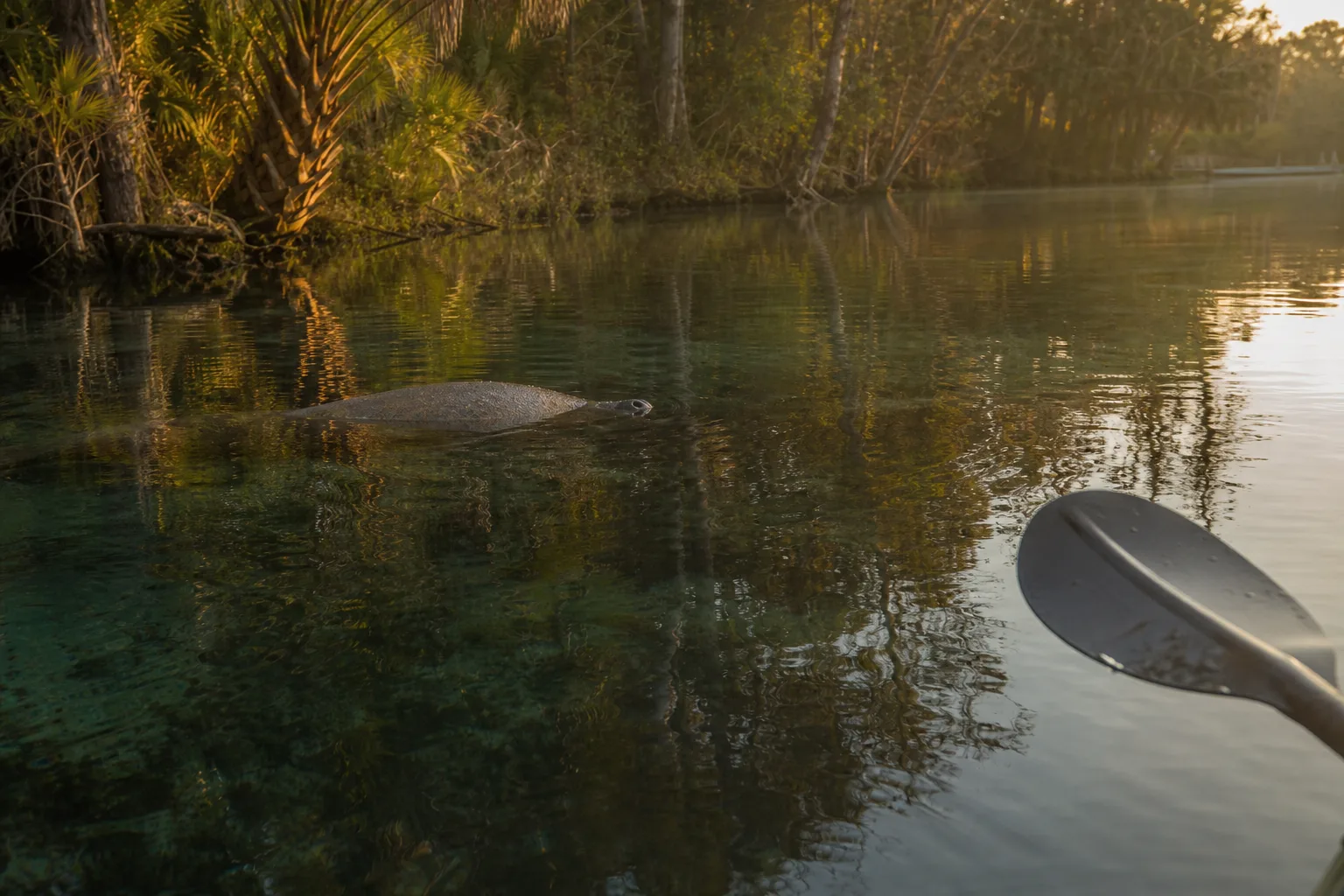
Manatee season in Florida is the cooler part of the year, when manatees crowd into warm springs and power-plant discharge areas, and the Florida Fish and Wildlife Conservation Commission (FWC) describes November 15 through March 31 as the winter manatee season. Boaters should slow down in posted zones, keep a lookout and never touch or feed a manatee.
This guide covers where manatees gather, what Blue Spring State Park and Crystal River offer, how seasonal protection zones work, what to do about an injured manatee, and how to watch them from a kayak. All rules change, so check the posted signs and the linked agency pages before you go.
When is manatee season in Florida?
Manatees cannot tolerate cold water for long, so they move to warmer sites in the cooler months. UF/IFAS Extension and the U.S. Fish and Wildlife Service both describe a winter period from November 15 through March 31. At Crystal River, the federal refuge's winter sanctuary period runs those same dates. Blue Spring State Park gives the same season dates, and adds that they may begin sooner or end later depending on how many manatees are present.
FWC also runs seasonal protection zones in the warmer months. FWC material describes a seasonal period from April 1 through November 15, when boaters must slow down in certain areas. In other words, "seasonal" can mean winter or summer depending on the waterway. Always follow the signs where you are boating.
Where to see manatees
| Place | What to know |
|---|---|
| Blue Spring State Park (Orange City) | A winter refuge on the St. Johns River. The park closes the spring run to swimming, tubing, diving and paddling during manatee season. Call (386) 775-3663 for current dates. |
| Crystal River and Kings Bay | A federal manatee refuge with seven sanctuaries and strict rules about touching and chasing manatees. |
| Three Sisters Springs | Part of the Crystal River area, where springs can be closed to in-water entry in cold weather or when manatees are crowded. |
| Power-plant outflows and canals | FWC lists viewing places across the state on its where-to-see page. |
Blue Spring manatees
Blue Spring State Park is one of the best-known manatee viewing spots in Florida. Manatees gather there in the cooler months to use the spring's warmer water. The park notes that swimming with manatees is not permitted, even when the spring run is open. We found conflicting dates on different park pages and a notice about the run opening on April 1, 2026, so call the park before you plan a visit. Marinalo's Orange City boat ramps page lists a French Landing boat ramp ($6, 1 lane, 3 trailer spaces) and a canoe and kayak launch ($6, 10 trailer spaces) at Blue Spring State Park in the FWC inventory.
Crystal River and Three Sisters Springs
The U.S. Fish and Wildlife Service describes Kings Bay as a federal manatee refuge. Its tearsheet bans chasing manatees, touching resting or feeding manatees, diving onto them, riding or poking them, feeding them, and separating mothers from calves. Slow speed applies throughout the refuge, and fishing is barred in the interior springs of Three Sisters Springs and in all established sanctuaries. Federal wildlife agencies update access rules for the springs often, so confirm on the refuge website. Marinalo's Crystal River boat ramps page counts 12 ramps and 8 paddle launches, and the marinas in Crystal River page lists local marinas. Homosassa is close by: see its ramps and Crystal River tide chart for timing.
East coast and Indian River area
Manatees also winter along the east coast, including Brevard County waters. Marinalo's Titusville boat ramps page lists 11 ramps and 8 paddle launches, and its Melbourne ramps page covers the next city south. We did not find a single official FWC list of "best" viewing spots on the east coast, so use FWC's where-to-see page.
Manatee protection zones and speed rules
FWC explains that seasonal manatee zones require boaters and personal watercraft users to reduce speed or avoid certain areas to prevent collisions that can injure or kill manatees. Waterway signs mark the zones, and maps are on the FWC manatee website. FWC points out that the force of a strike at 30 miles per hour is four times that of a strike at 15 miles per hour, all else being equal. Zone types include idle speed, slow speed and no-entry areas, and the rules apply to every vessel, from jet skis to kayaks near sanctuaries.
If you need a speed conversion, use the knots to mph converter. Our Beaufort scale guide and the special marine warning vs small craft advisory guide explain what else to watch on cold fronts, which often bring the cold snaps that send manatees to warm water.
How to boat safely around manatees
- Wear polarized sunglasses. FWC says they reduce glare so you can see manatees and the swirl they leave when they dive.
- Look for "manatee footprints" (large circles on the water) and for snouts.
- Stay in deep-water channels when you can and avoid boating over seagrass beds and shallow areas.
- Follow every posted speed zone.
- Do not feed, touch, chase or give water to a manatee.
- Trim the motor up and idle in canals and marinas, where manatees rest.
Make sure your boating education card is current. See the Florida boating license and registration page.
What to do if you see an injured manatee
Call the FWC Wildlife Alert Hotline at 888-404-FWCC (3922) to report a sick, injured, dead or tagged manatee. FWC warns people not to handle the animal themselves, since it can cause harm to the manatee and put you at risk of injury. Note the location, take a photo from a distance if you can, and stay with the animal until help comes only if it is safe.
Kayak and paddle viewing
A kayak is quiet and low, which makes it a good way to see manatees without a motor. Use a hand launch from the Florida kayak launches directory, which lists 845 hand launch sites. Keep your distance, let manatees come to you and never chase one. A sit-on-top is easier to re-board in cold weather; our sit-on-top vs sit-in kayak guide compares the two, and the fishing kayak guide covers gear. Wear a life jacket: see Coast Guard approved life jackets. Cold-water days need extra layers.
For ramps statewide, use Florida boat ramps near me or the Florida boat ramps directory.
FAQ
When is manatee season in Florida?
FWC and the U.S. Fish and Wildlife Service describe the winter season as November 15 through March 31. Some sites run on different dates, so check local signs.
Where can I see manatees in Florida?
Blue Spring State Park, Crystal River and Kings Bay, and warm-water sites on both coasts. FWC maintains a where-to-see page.
Can you swim with manatees?
At Blue Spring State Park, no. At Crystal River, in-water viewing is regulated and touching is banned. Check the refuge rules.
What is the manatee hotline number?
The FWC Wildlife Alert Hotline is 888-404-FWCC (3922).
Do manatee zones apply to kayaks?
Speed zones target motorized vessels, but sanctuary and refuge rules about touching, feeding and entry apply to everyone, including paddlers. Read the posted signs.
Sources
- FWC: Information for boaters and PWC operators (manatees)
- FWC: Where can I see manatees in Florida?
- Florida State Parks: Blue Spring State Park
- U.S. Fish and Wildlife Service: Crystal River National Wildlife Refuge tearsheet
- UF/IFAS Extension Hernando County: Manatee season
- Marinalo data, October 2026: Crystal River boat ramps