
Draft, Beam and Freeboard: Boat Dimensions Explained
Freeboard, beam and draft explained in plain English: what each boat measurement means, how to measure it and why it matters for ramps, tides, slips and bridges.
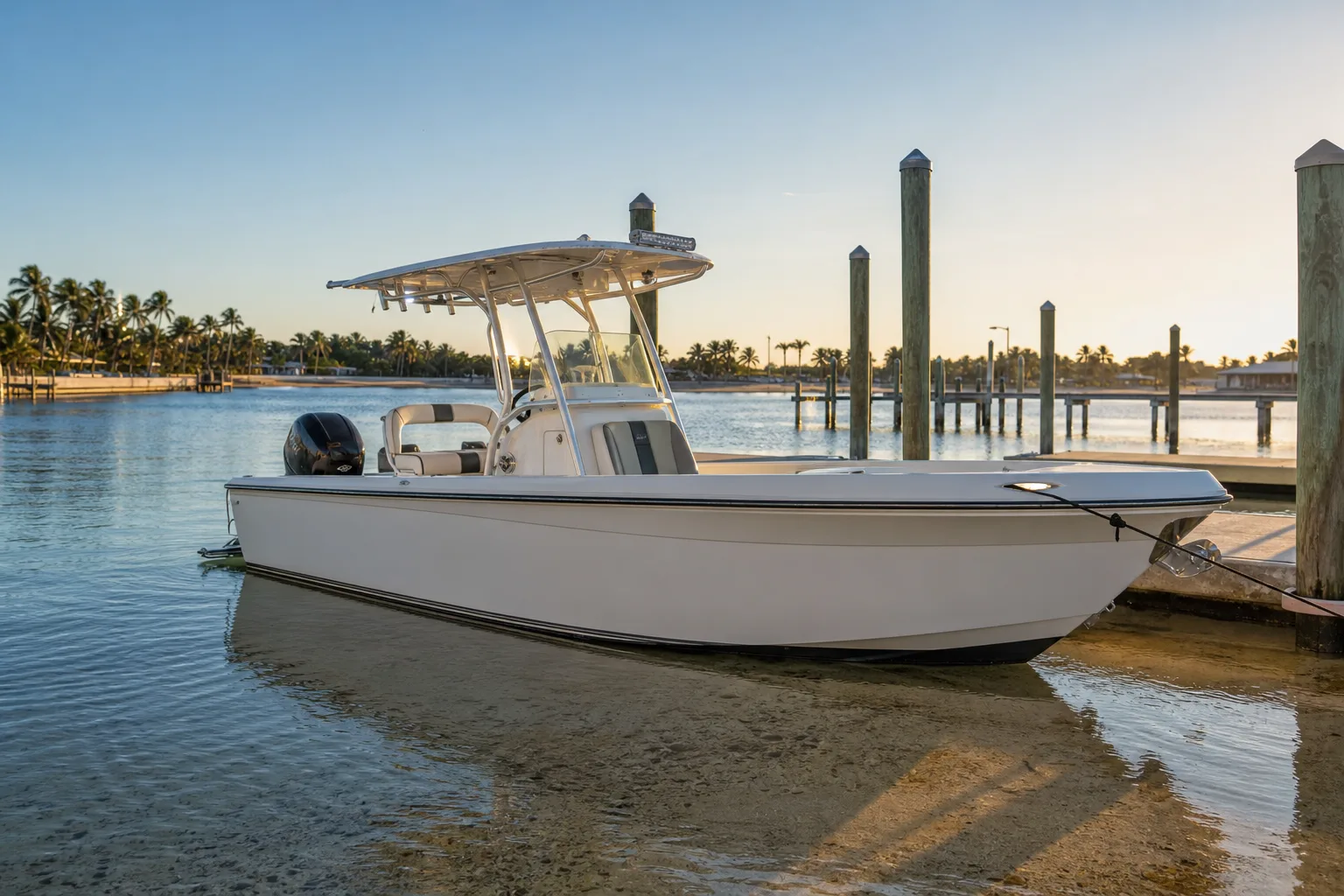
Freeboard is the vertical distance from the waterline to the lowest point on the boat's deck edge where water could come aboard. Beam is the boat's width at its widest point, and draft is how deep the boat sits in the water, measured from the waterline to the lowest part of the hull or running gear. These three numbers decide where you can go, where you can dock and how safe the boat is in waves.
Quick reference
| Measurement | What it is | Why you care |
|---|---|---|
| Beam | Width of the boat at its widest point | Slip width, trailering, stability, cabin space |
| Draft | Depth from the waterline to the lowest point under the boat | Shallow water, ramps at low tide, grounding |
| Freeboard | Height of the side above the waterline | Dryness, safety in waves, boarding height |
| Air draft | Height of the highest fixed point above the waterline | Bridge and power line clearance |
| LOA | Length overall | Slip length, storage, fees |
| LWL | Length at the waterline | Speed potential and ride |
If you need the front and back of the boat, see parts of a boat.
Beam of a boat
For federal boat-building rules, the Coast Guard defines beam as the transverse distance between the outer sides of the boat, excluding handles and other similar fittings, attachments and extensions (33 CFR 183.3). Builders often list "maximum beam" in their specs.
A wider beam usually means a roomier, more stable boat at rest, but it also takes up more of a trailer lane and may need a wider slip. Some states and roads require special permits for loads over a legal width, so check your state transportation agency before towing a wide boat.
Beam and slip width
Slips are rented by length, but beam matters too. Wide pontoons, catamarans and trawlers can need a wider slip or an end tie, and some marinas charge extra for wide boats. Always give a marina both your length and your maximum beam, including any fenders or swim platforms. Marinalo publishes slip rates by boat length. See Florida 30-ft slip prices, 40-ft prices and Texas 40-ft prices, and read how much a boat slip costs for the factors behind the price. Fenders protect your beam when the slip is tight.
Length: LOA vs LWL
Length overall (LOA) is the full length from the foremost to the aftermost part of the hull. The Coast Guard's measurement for boat-building rules runs end to end over the deck, excluding sheer, and does not include bowsprits, bumpkins, rudders, outboard motor brackets and similar attachments (33 CFR 183.3). That is different from what some marinas measure. Some measure the longest dimension, which can include swim platforms, anchors and bow pulpits, so ask how the marina measures.
Length at the waterline (LWL) is the length of the hull that is actually in the water at rest. A boat with a long LWL relative to its LOA is usually faster and smoother in a chop. Most trailerable power boats are described only by LOA.
Draft of a boat
Draft is how much water a boat needs in order to float. Measure it from the waterline down to the lowest fixed point of the hull, keel, skeg or propeller. Motor-driven boats often list two numbers: draft with the engine up and with the engine down. Sailboats with fixed keels have a single, deeper draft, while shoal-draft and centerboard boats can go into thinner water.
The boat's load changes the draft. More fuel, gear and passengers push the hull lower. Specs normally show the draft of a lightly loaded boat, so allow some margin.
Why draft matters with tides
NOAA charts show water depth measured from a low-water reference. In the United States, NOAA uses Mean Lower Low Water (MLLW) on all charts, except those of the Great Lakes and non-tidal inland waterways (US Coast Pilot 2, chapter 1). A charted depth is therefore a typical low-tide depth, not what you will find at every moment. On a rising tide the real depth is more than charted, and the Coast Pilot warns that extreme low levels can leave depths well below the chart.
A simple check, for illustration only: take the charted depth, add or subtract the predicted tide height relative to MLLW, then compare to your draft plus a safety margin. A boat that needs 2 feet of water over a 3-foot charted spot has room at high tide, but may touch at a very low tide. Learn how in our guide to reading a tide chart and our explanation of ebb, flood and slack tide. Marinalo publishes Key West tide times and other stations from its tides hub, and spring and neap tides explains why some low tides are lower than others.
Draft at boat ramps
Ramps are a common draft trap. On a tidal ramp, the end of the concrete may be well above the water at low tide, and the channel out may be shallow. Check the tide before launching a deeper-draft boat. Browse Marinalo's Florida boat ramps and Texas boat ramps for lake and coastal launch points, and check the local tide and any posted depth. Take care in lakes too: levels vary, and a ramp that works in spring may be dry later.
Freeboard and seaworthiness
Freeboard is measured at the lowest point of the gunwale or deck edge, usually near the stern or amidships. More freeboard keeps waves out and gives passengers a feeling of security. Less freeboard is easier for fishing, boarding and swimming, but a loaded low-sided boat takes water over the side in a chop.
Freeboard changes with load. Every person, cooler and anchor you add pushes the hull down and cuts freeboard. This is why the Coast Guard requires a capacity plate on many small boats. Under 33 CFR 183.23, monohull boats must be marked with maximum persons capacity, maximum weight capacity and maximum horsepower, and the safe loading rules apply to monohulls under 20 feet, excluding sailboats, canoes, kayaks and inflatables (33 CFR 183.31). Staying inside those limits keeps freeboard where the designer intended. See what to do if your boat capsizes if conditions turn bad.
- Look at the stern. The stern carries the engine weight and is often the lowest part of the boat, so check freeboard there first.
- Watch the bow. Weight too far forward can make the bow dig into waves.
- Different hulls, different freeboard. Jon boats and flats boats often sit low, while deep-V offshore boats have higher sides. Our types of boats guide compares them.
Air draft and bridge clearance
Air draft is the distance from the waterline to the highest fixed point on your boat, such as a T-top, antenna, radar arch or bimini frame. It decides whether you fit under bridges and power lines. NOAA charts and the Coast Pilot give bridge clearances, and these are typically referenced to mean high water, so at high tide your real clearance is less than at low tide (US Coast Pilot 2, chapter 1; NOAA tidal datums publication). Folding antennas and removing a top can solve a tight spot, but always leave margin for waves and wakes.
The Intracoastal Waterway has many fixed and opening bridges. Know your air draft before you plan a trip, and call the bridge tender on VHF for openings (see VHF marine radio).
FAQ
What is freeboard on a boat?
The vertical distance from the waterline to the lowest point on the edge of the deck or gunwale. It tells you how far water has to rise before it comes aboard.
What is the beam of a boat?
Its width at the widest point. It affects stability, trailering and the slip you need.
What is the draft of a boat?
The vertical distance from the waterline to the lowest part of the boat, such as the keel or propeller. It tells you how much water you need.
Is draft the same as depth?
No. Draft is how deep your boat sits. Depth is how deep the water is. You want depth to be greater than draft with a margin.
Does more freeboard mean a safer boat?
Usually it helps keep water out, but design, stability, load and weather matter too. Never exceed the capacity plate.