
What to Do If Your Boat Capsizes: Steps That Save Lives
If your boat capsizes, stay calm, put on life jackets, count heads, stay with the boat and signal for help. Learn cold water shock basics and how to prevent it.
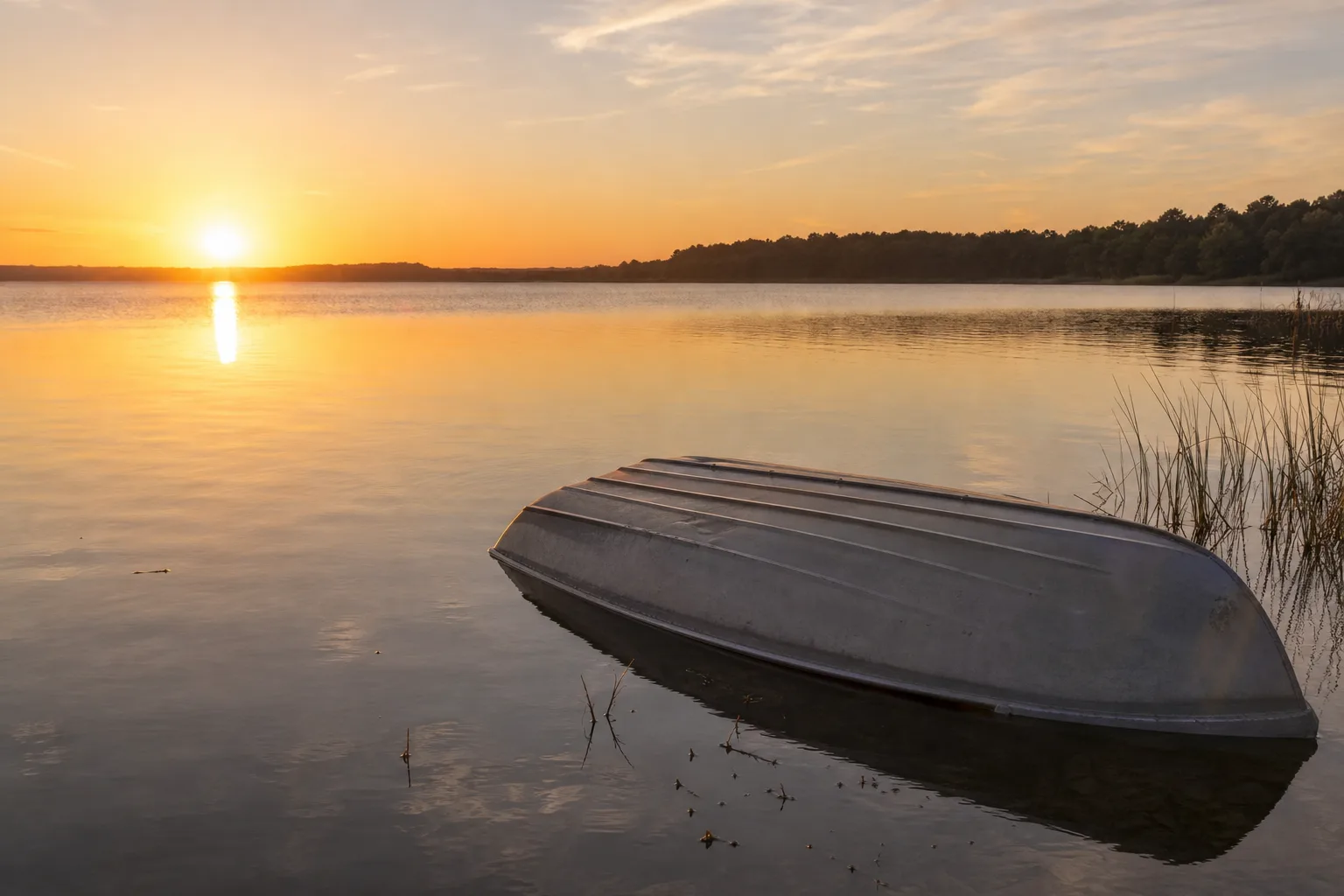
If your boat capsizes, stay calm, make sure everyone has a life jacket on, count heads, and stay with the boat. A capsized boat is bigger and easier to spot than a swimmer, and it will usually keep floating. Get as far out of the water as you can, signal for help, and do not try to swim to shore unless it is very close and you are sure you can make it.
The first minute: what to do right away
- Breathe and stay calm. Panic wastes energy. If you fell into cold water, the first reaction is an uncontrollable gasp, so wait for your breathing to settle before doing anything else.
- Get your life jacket on. If you are not already wearing one, grab any that float within reach. Help children and weaker swimmers first. See our guide to Coast Guard-approved life jackets for what to wear.
- Count heads. Call out names. Look for anyone trapped under the boat, tangled in a line or hurt. Everyone who was aboard should be accounted for before you do anything else.
- Stay with the boat. A boat is much easier for rescuers to see than a head in the water. The Coast Guard's boating guide notes that a capsized boat will likely float on or just below the surface, and that smaller outboard boats built after 1978 are designed to support you even when full of water or capsized.
- Get out of the water. Climb onto the hull or into a swamped boat. Your body loses heat faster in water than in air, so every inch above the surface helps.
- Signal for help. Use a VHF radio, a beacon, flares, a whistle, a mirror or a waterproof phone. More on each below.
Cold water: what makes the first minutes dangerous
Cold water kills people who could otherwise swim. The National Center for Cold Water Safety describes cold shock as the first threat: an involuntary gasp and rapid breathing when cold water hits the skin, which can lead to inhaling water. Swimming ability does not stop it, but a life jacket keeps your head up while the reaction passes.
You may have heard of the "1-10-1 rule": one minute to get breathing under control, ten minutes of meaningful movement, one hour before unconsciousness. The National Center for Cold Water Safety calls this a myth, because it is not based on the science of cold water immersion. It quotes physiologist Gordon Giesbrecht saying that cold shock can kill within seconds to two minutes, and that cold incapacitation occurs within two to thirty minutes. The takeaway is not to count on a fixed timer. Wear a life jacket, dress for the water temperature, and get out of the water quickly.
Florida and Texas waters are warm much of the year, but winter cold fronts cool lakes and bays. Check the water temperature as well as the air temperature before you go.
How to signal for help
Different devices work in different situations. A basic kit includes one electronic and one visual signal, plus a sound maker.
| Device | What it does | Notes |
|---|---|---|
| VHF marine radio | Distress call on Channel 16 and, on DSC radios, a digital distress alert | Handhelds can float and work if the boat's radio is underwater. See our VHF marine radio guide |
| 406 MHz EPIRB | Sends your position to rescuers by satellite | Must be registered with NOAA, and the Coast Guard says to test it at least monthly using the self-test function |
| PLB (personal locator beacon) | Same idea as an EPIRB but worn by one person | Attach it to your life jacket so it goes with you if you leave the boat |
| Flares or orange smoke | Visual distress signals | See the carriage rules below |
| Whistle, signal mirror, waterproof phone | Cheap backups | A phone only works where there is coverage, so it should not be your only plan |
Do not use a distress signal unless you need help. Federal rules (33 CFR 175.140) prohibit displaying a visual distress signal on waters where the rules apply, except when assistance is needed because of immediate or potential danger to the persons on board.
Visual distress signal rules
Under 33 CFR 175.110, a boat 16 feet or longer on coastal waters must carry visual distress signals, including devices suitable for day and night, or devices suitable for both. A boat under 16 feet must carry night signals between sunset and sunrise. Exceptions apply to manually propelled boats and certain open sailboats, but they must still carry night signals after dark. Signals must be readily accessible, in serviceable condition and not expired.
The regulation lists accepted signals. For example, hand-held red flares count as day and night signals, three are required, and an orange flag counts for day only. Check the table in 33 CFR 175.130 or the Coast Guard boating guide for the full list. "Coastal waters" includes the territorial seas and the bays, sounds and rivers connected to them whose entrance is wider than 2 nautical miles, plus the Great Lakes. Many Florida and Texas lakes are not coastal waters, but a signal kit is cheap insurance.
Staying with the boat, or swimming
The default is to stay with the boat. Swimming to shore is tempting, but distances over water are easy to underestimate. Only swim if the shore is very close, you are wearing a life jacket, the water is calm, and nobody else needs help.
If the boat has drifted away from you, or is sinking, stay together as a group. Huddling reduces heat loss, and a group is easier to find.
If you must wait, stay out of the water as much as possible. Anyone who inhaled water or became very cold needs medical care, even if they feel fine.
Self-rescue: righting and re-boarding a small boat
- Canoes, kayaks and small dinghies. Practice a rescue in warm, shallow water with a life jacket on before you need it. Many paddlers carry a paddle float or bilge pump for this.
- Small outboard boats. Re-entering over the stern is usually easier than the side. Swimming ladders help, and many boats have a transom ladder you can reach from the water. Use it.
- Boat floating upside down. Do not go under it to look for gear. Check for air pockets only if someone is known to be trapped, and never swim in tangled lines.
If your boat is swamped but upright, bail with a bucket or pump before the next wave, and keep everyone low and balanced. For more on pumps, see what a bilge is.
How to prevent a capsize
Most capsizes come from overloading, sudden weight shifts, bad weather and waves hitting the side of the boat. Prevention is mostly about habits.
- Read the capacity plate. Boats under 20 feet that are monohull and not sailboats, canoes, kayaks or inflatables must show a maximum weight capacity, persons capacity and horsepower rating (33 CFR 183.23 and 183.31). Staying under those limits matters most in small boats.
- Distribute weight. Keep weight low and centered. Do not stand in a small boat, lean over the side or let everyone crowd one side.
- Check the forecast. Read the marine forecast and any active advisory or warning. See special marine warning vs small craft advisory and the Beaufort scale for boaters.
- Take waves at an angle. Do not turn broadside to a large wave or wake. Slow down in rough water.
- File a float plan. Tell someone where you are going and when you will be back.
- Wear your life jacket. A life jacket on the boat does not help you if you are thrown into the water. Wear it.
When you plan a day on the water, check the ramp and the weather first. Marinalo lists Florida boat ramps and Texas boat ramps, and the Florida boating license and registration guide covers boater education.
FAQ
Should I stay with a capsized boat?
Yes, in most cases. A capsized boat usually floats and is much easier to spot than a person. Climb onto it if you can and keep your life jacket on.
What is cold water shock?
It is the involuntary gasp and rapid breathing that happens in the first moments after falling into cold water. It can cause people to inhale water, and a life jacket helps keep your airway clear while it passes.
Is the 1-10-1 rule real?
It is a popular shorthand, but the National Center for Cold Water Safety says it is a myth because it does not match the science. Plan to get out of the water as soon as possible.
Do I need flares on my boat?
On coastal waters, a boat 16 feet or longer must carry day and night visual distress signals, and boats under 16 feet must carry night signals after dark. Some exceptions apply, and only devices listed in the regulation count toward the requirement.
Can a PLB replace flares?
A PLB is a valuable safety tool, but it is not on the list of accepted visual distress signals in 33 CFR 175.130. Carry both if you boat on coastal waters.
Sources
- US Coast Guard: A Boater's Guide to the Federal Requirements for Recreational Boats
- eCFR: 33 CFR Part 175, Subpart C, Visual Distress Signals
- eCFR: 33 CFR Part 183, Boats and Associated Equipment (capacity marking and safe loading)
- National Center for Cold Water Safety: The 1-10-1 Myth
- US Coast Guard Navigation Center: Emergency Position Indicating Radiobeacon (EPIRB)
- BoatUS Foundation: Emergency Beacons (EPIRB)