
Red Tide in Florida: What Boaters Need to Know
What red tide is, how it affects boaters and shellfish, and where to check the current FWC red tide status map and NOAA forecast before you launch in Florida.
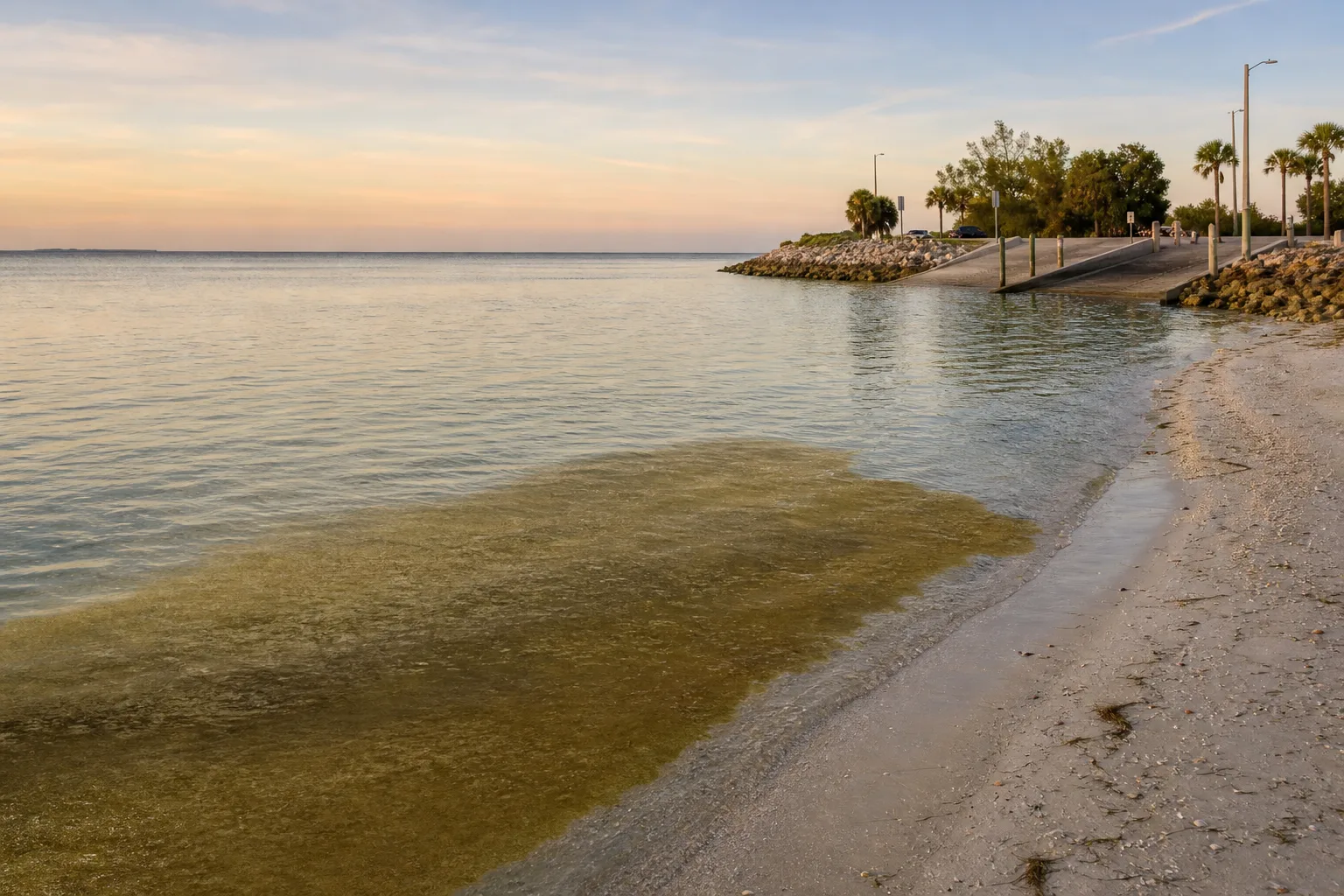
Red tide is a harmful algal bloom caused by the microscopic organism Karenia brevis, which occurs naturally in the Gulf of Mexico. Blooms can irritate your breathing, kill fish and make shellfish unsafe to eat. To check whether there is red tide in Florida right now, look at the FWC red tide status map and the NOAA Gulf Coast harmful algal bloom forecast, both updated regularly; this article does not state a current status because conditions change week to week.
Below you will find what red tide is, what it does, where to see the red tide map for Florida, and how to plan a boating day around it.
What red tide is
Red tide is the common name for blooms of Karenia brevis, a single-celled alga that lives in the Gulf of Mexico. According to the Florida Fish and Wildlife Conservation Commission (FWC), the organism produces toxins called brevetoxins. Low background levels are normal in the Gulf. A bloom happens when cells concentrate in large numbers, and winds and currents can then push them toward shore. The name can mislead: the water does not always look red. It may appear green, brown or simply normal.
Red tide is mostly a Gulf coast issue in Florida. Blooms are typically sampled and reported by region, such as the Southwest and Northwest coasts, and the East Coast table covers the Atlantic side.
How it affects people, fish and shellfish
FWC's status reports describe three main impacts, and its concentration key links them to cell counts per liter:
| Level (cells per liter) | Possible effects according to FWC |
|---|---|
| Very low: 5,000 and above | Possible respiratory irritation and possible shellfish harvesting closures |
| Low: 10,000 to 100,000 | Fish kills become possible |
| Medium: 100,000 to 1,000,000 | Fish kills probable |
- Breathing: Wind and waves can break up cells and put toxins into the air near the shore. Many people notice coughing, sneezing and eye or throat irritation. People with asthma or other lung conditions may be affected more.
- Fish and wildlife: Blooms can cause fish kills and affect marine animals such as manatees and sea turtles.
- Shellfish: Oysters, clams and other filter feeders can concentrate toxins. The Florida Department of Agriculture and Consumer Services (FDACS) regulates approved shellfish harvesting areas, so check its status before harvesting any shellfish. Do not harvest from a closed area.
Skin contact with water during a bloom may irritate skin and eyes in some people. If you feel symptoms, leave the area and rinse off.
Where to check current status
Do not rely on social media or an old photo. Use these official sources:
- FWC red tide current status: FWC publishes a statewide status page with a map and regional tables, typically updated on a regular schedule. Check the date on the page before you trust it.
- NOAA Gulf Coast HAB forecast: NOAA issues harmful algal bloom forecasts for the Gulf coast that predict where surface water may move over the next few days, along with a respiratory irritation outlook for some beaches.
- FDACS shellfish status: For harvesting rules and area openings or closures.
- Local county health departments and beach reports: For beach-level reports.
If you are comparing a "red tide map" with real life, check the date and sample count. A map shows where water samples were taken, not every stretch of coast, so conditions may differ between samples.
Boating precautions
- Check before every trip: A bloom can move or fade within days. A quick look at the status map and forecast the morning of your trip is worth the time.
- Stay offshore of the worst shoreline air: Respiratory irritation is usually strongest near shore with onshore wind. Tell passengers with asthma or lung disease to bring medication or skip the trip.
- If irritation starts, move away from the bloom area, upwind if you can.
- Do not eat or collect shellfish from areas that FDACS lists as closed.
- Rinse your gear: Rinse your boat, trailer and hands after a day in affected water. Before eating fish caught during a bloom, check current FWC and FDACS guidance.
- Do not handle dead fish: Report suspected red tide fish kills to FWC through its hotline or online reporting.
Planning around a bloom
Blooms are patchy. If red tide is reported on one stretch of the Gulf coast, another stretch can be clear. Marinalo's ramp pages for Gulf cities make it easy to pick a different launch: for example Tampa, Sarasota, Naples or Fort Myers. Estuaries and inland waters are often less affected than open beaches, though not always. The Atlantic coast generally has far fewer blooms; FWC reports East Coast samples separately. See all Florida boat ramps to find alternatives, and Florida tide times to plan your day.
Red tide can change your fishing plans too. Fish may leave an area or die off, and you must still follow the rules on size and season. Our guides to Florida scallop season and the Florida fishing license cover rules that apply once conditions are good. See also best time to fish.
Quick pre-launch checklist
- Open the FWC status page and note the date of the latest update and the region closest to your ramp.
- Look at the NOAA forecast for the direction the surface water is expected to move.
- Check the wind: onshore wind pushes airborne irritants toward the coast, offshore wind pushes them away.
- If you plan to harvest shellfish, check the FDACS area status for that exact spot.
- Pick a backup ramp in case your first choice is affected, and bring any medication your passengers need.
Red tide versus other blooms
Not every green water problem is red tide. Freshwater blue-green algae blooms are a different issue, mostly in lakes and canals, and they have their own advisories from the Florida Department of Environmental Protection and county health departments. If you are boating on Lake Okeechobee or the Caloosahatchee system, check those advisories rather than the red tide map.
What a bloom means for the rest of your day
If you do run into discolored water or dead fish, there is no need to panic, but there is also no reason to stay. Turn around, head to cleaner water and keep passengers away from the spray. Back at the dock, rinse down the boat and any gear that touched the water, and wash your hands before eating. Marinas, bait shops and local fishing reports can be a useful extra source of conditions on the water, but treat them as a supplement to the official FWC and NOAA information rather than a substitute.
FAQ
What causes red tide?
A bloom of the naturally occurring alga Karenia brevis in the Gulf of Mexico.
Is there red tide in Florida right now?
Check the FWC red tide status page and the NOAA Gulf Coast HAB forecast; both show the latest sampling date. Conditions change weekly, so we do not state a current status here.
Where is the red tide map for Florida?
On FWC's statewide red tide status page, which includes a map and regional tables for the Southwest, Northwest and East Coast regions.
Is it safe to boat during red tide?
Boating itself is usually possible, but the air near shore may irritate your breathing, and you should avoid dead fish and closed shellfish areas. People with respiratory conditions should be careful.
Can you eat fish caught during red tide?
Shellfish from closed areas must never be eaten. For finfish, check current FWC and FDACS guidance before you eat your catch.
How long does red tide last?
Blooms can last from days to many months. FWC and NOAA updates show whether a bloom is growing or fading.