
Haulover Sandbar: Tides, Access and Rules
How to reach the Haulover sandbar in Miami-Dade by boat, when the tide matters, where to launch, and the anchoring rule near ramps and marinas.
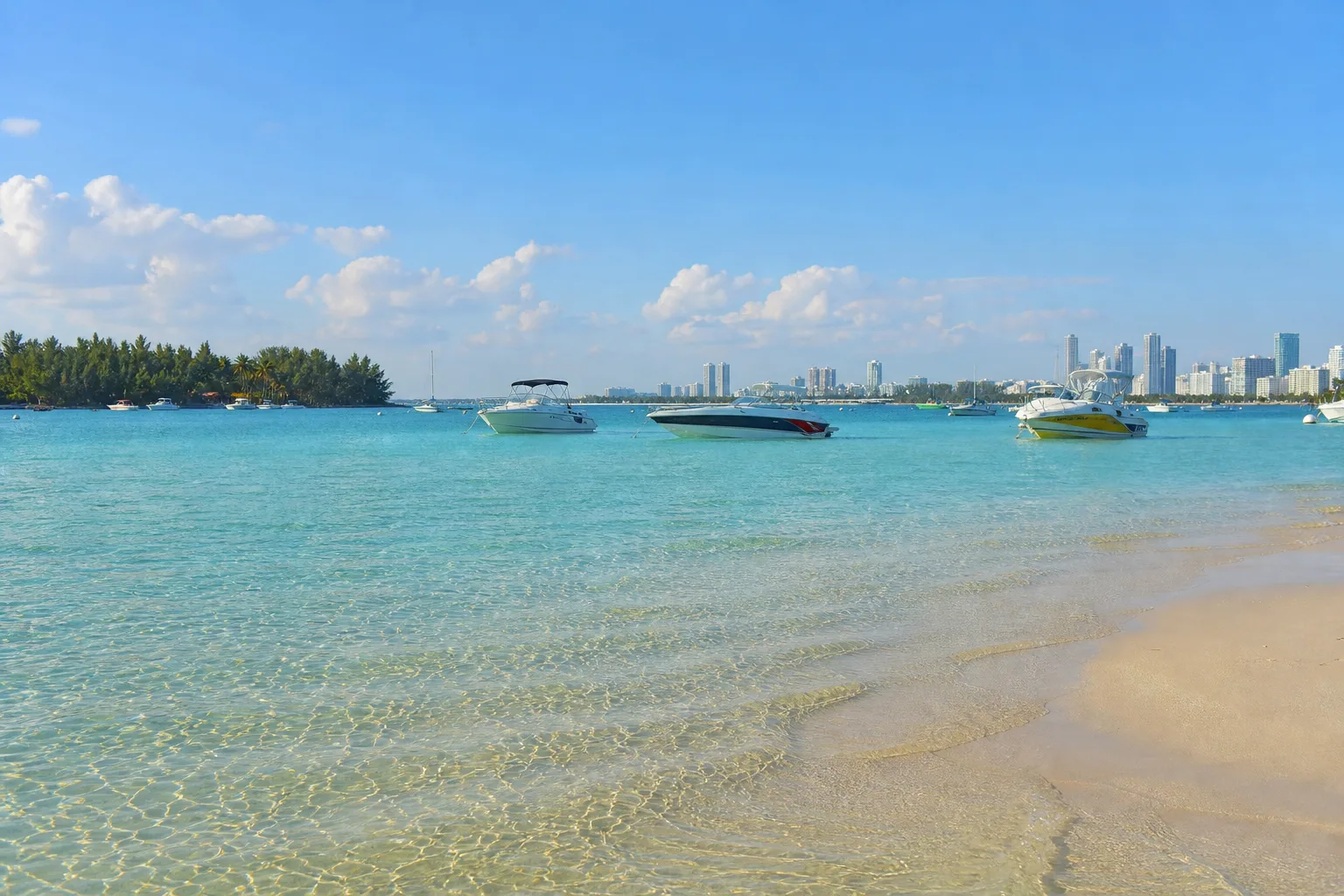
The Haulover sandbar is a shallow sand flat between the Intracoastal Waterway and the Haulover Inlet channel in Miami-Dade County, next to Haulover Beach Park. You reach it by boat from the Intracoastal side, and the tide decides how much of it stays above or just under the water, so check the tide before you go and anchor in water you have sounded yourself.
This guide covers where the sandbar is, how to get there, what the tide changes, one state anchoring rule that matters because the sandbar sits close to a marina and a big boat ramp, and the ramps and marinas around it. Where a rule could not be confirmed from an official source, we say so and tell you who to call.
Where the sandbar is
Miami-Dade Parks describes Haulover Beach Park as a 1.4-mile beach park a few miles north of Miami Beach, between Bal Harbour and Sunny Isles Beach. The county's page for Bill Bird Marina, the park's marina, sits on the east side of the Intracoastal Waterway at statute mile 1079 and states that "a sandbar lies between the ICW and the Haulover Inlet Channel." The same page tells boaters coming from the north to leave ICW marker 5 to port and stay close to the shore and docks. Approach depth to the marina is listed as 8 to 10 feet.
That last detail is the practical lesson: the marina approach is dredged and marked, and the sandbar next to it is not a place to cut corners. Use a current NOAA chart or a chartplotter, move at idle speed, and treat the edge of the flat as a hazard until you have seen it with your own eyes.
Getting there by boat
Most people reach the sandbar from the Intracoastal Waterway, either from the Miami-Dade side to the south or from Broward County to the north. The nearest large public ramp is the one at the Haulover Marine Center (Bill Bird Marina), which Marinalo data from October 2026 lists with 11 lanes and 160 trailer spaces on Biscayne Bay. Marinalo data shows a $17 fee for that ramp. Miami-Dade Parks posts its own schedule on the marina page: $7 per car and $20 per boat trailer on weekdays, and $10 per car and $30 per boat trailer on Fridays through Sundays and holidays, plus tax. Fees change, so confirm before you go. The county adds that ramps and ramp lots are open 24 hours, but the entrance may close on weekends and holidays when the lot is full.
Other launch options within reach of the Intracoastal include the ramps in Miami and Miami Beach. See the Miami Beach boat ramps page (it lists the Haulover ramp and a paddle launch at Pine Tree Park) and the Miami boat ramps page, which counts 18 ramps in Marinalo data, including Pelican Harbor Park with 8 lanes.
| Launch | Water | Lanes | Trailer spaces | Fee (Marinalo data, Oct 2026) |
|---|---|---|---|---|
| Bill Bird Marina / Haulover Marine Center ramp | Biscayne Bay | 11 | 160 | $17 |
| Pelican Harbor Park ramp | Biscayne Bay | 8 | 120 | $17 |
| Regatta Park, Seminole ramp | Biscayne Bay | 6 | 40 | $10 |
| Morningside Park ramp | Biscayne Bay | 4 | 24 | Free |
Tides and timing
A sandbar is only as deep as the water over it. Because the Haulover flat sits beside an ocean inlet, the water level and the current in the channel both follow the tide. If you do not know the difference between the stages, read our guide to ebb, flood and slack tide and the how to read a tide chart explainer first.
For a local reading, use the Miami Beach tide chart on Marinalo, which is built from harmonic constants published by NOAA. As an example of the size of the swing, the page showed a tidal range of 1.8 feet between high and low water on October 17, 2026. That is not much, but on a flat that is only inches to a few feet deep, a foot and a half decides whether you float or ground. Marinalo's tide pages are not for navigation, and the Haulover Inlet tide can differ from the Miami Beach reading, so confirm with NOAA before you rely on a specific number.
Spring tides, around new and full moon, widen the range, which can mean a deeper bar at high water and a bigger drop at low. Our spring and neap tides page explains the pattern.
- Arrive on a rising tide, so you float off easily if you touch bottom.
- Leave before the tide has dropped far enough to trap your boat.
- Watch the channel, because inlet current is strongest between slack periods.
- Keep an anchor line long enough for the tide to rise while you are there.
Anchoring: the rule near ramps and marinas
Florida Statute 327.4109 prohibits anchoring or mooring within 150 feet of a marina, a boat ramp, a boatyard or any other vessel launching or loading facility, public or private. It also sets a 300-foot limit outward from a public mooring field. Violations are a noncriminal infraction. Recreational fishing vessels whose occupants are actively tending hook-and-line gear or nets are exempt, and so are a few other categories such as government vessels. The statute allows closer anchoring for mechanical failure or dangerous weather.
The sandbar sits right beside Bill Bird Marina and its large ramp. We could not find an official Miami-Dade or FWC document that draws a line for the sandbar itself, so measure your distance from the marina and ramp yourself. If you are unsure, anchor farther away, and call Miami-Dade Parks at the marina (305-947-3525) or FWC before a first visit.
What we could not verify
Some web guides claim a rule that forbids landing a dinghy or walking ashore, or quote fines. We found no official source for those claims at the sandbar, so we do not repeat them. Local ordinances for a county park can differ from state boating law, and posted signs override a blog. Beach rules also differ: the county's page states that no flotation devices are allowed on its beaches, which is a beach rule rather than a boating rule.
Safety basics for a busy sandbar
Crowds mean tight spacing and lots of wake. Keep your speed to idle near the marina and inlet, keep a lookout, and make sure everyone aboard has a life jacket that fits. Our guide to Coast Guard approved life jackets covers the types and labels. If you are not sure whether you need a boater education card, see the Florida boating license and registration page. If thunderstorms build over the mainland, leave early, and learn the difference between the alerts in special marine warning vs small craft advisory.
Fenders matter when boats raft up, so read our fender guide before you tie alongside a stranger.
Marinas near the sandbar
Marinalo data from October 2026 lists the following marina pages in the area:
- Marinas in Miami Beach: 2 marinas, 1 with a fuel dock (Miami Beach Marina).
- Marinas in North Miami Beach: 1 marina (Marina Palms Yacht Club & Residences), rates on request.
- Marinas in Aventura: 1 marina (Loggerhead Marina Aventura), rates on request.
- Marinas in Miami: 12 marinas, 3 with fuel docks and 3 with posted rates. The median for a 40-foot boat is $151 per night.
Bill Bird Marina itself is operated by Miami-Dade Parks, with 152 wet slips for vessels 35 to 120 feet, a fuel dock and a pump-out station, according to the county's page. Marinalo does not carry that marina's rates, so call 305-947-3525. For fuel across the state, use the Florida fuel docks page, and for general rates see Florida 40-foot slip prices.
FAQ
Where is the Haulover sandbar?
It lies between the Intracoastal Waterway and the Haulover Inlet channel in Miami-Dade County, beside Haulover Beach Park and Bill Bird Marina.
What is the best tide for the Haulover sandbar?
A rising tide is the safest time to arrive, because the water is deepening. Check the Miami Beach tide chart, then confirm with NOAA, and leave before the water drops.
Can you anchor at the Haulover sandbar?
Yes, subject to Florida law. Anchoring within 150 feet of a marina or boat ramp is prohibited by Florida Statute 327.4109, and the sandbar is close to both, so keep your distance and watch for posted signs.
Where can I launch near the Haulover sandbar?
The closest large ramp is at Haulover Marine Center (Bill Bird Marina), with 11 lanes in Marinalo data. Miami-Dade posts parking and trailer fees on its marina page.
Do I need a boating license to go to the sandbar?
Florida requires a boating safety education ID for operators of boats with 10 horsepower or more who were born on or after January 1, 1988, with exceptions. See our Florida boating license page for details.