
Boat Tubing: Safety Rules, Gear and Hand Signals
Boat tubing safety for Florida and Texas: observer or mirror, life jackets, daylight hours, hand signals, tow rope and tube choice, and keeping riders clear of the prop.
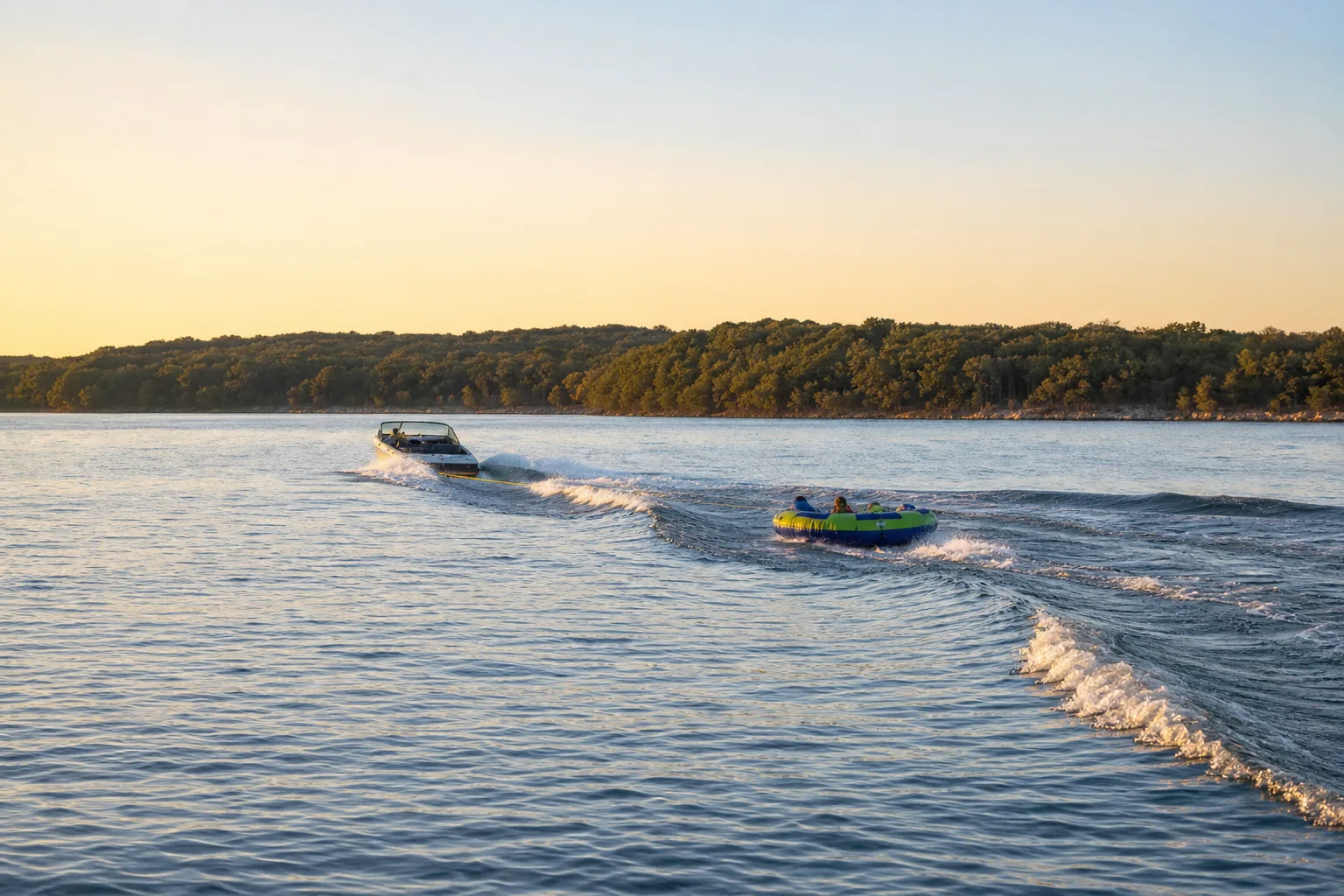
Boat tubing is safest with a trained driver, a second person watching the rider, and every rider in a properly fitting, Coast Guard-approved life jacket. In Florida, state law requires an observer or a wide-angle rear-view mirror when you tow someone on skis, an aquaplane or a similar device, and bans towed activities from half an hour after sunset to half an hour before sunrise. In Texas, rules differ by boat type, so check TPWD before you tow.
Florida rules for towing a person
Florida Statutes section 327.37 sets the basic rules for towing a person on water skis, an aquaplane or a similar device. Tubes are not named in the main towing sentence, so check with the Florida Fish and Wildlife Conservation Commission (FWC) if you are unsure how a rule applies to your setup. In practice, most boaters treat tubing the same as skiing.
| Rule | What the statute says |
|---|---|
| Observer or mirror | You need a second person aboard in a position to observe the towed person, or a wide-angle rear-view mirror that lets the operator see them |
| Life jacket | People skiing, parasailing, aquaplaning or doing a similar activity must wear a noninflatable U.S. Coast Guard-approved life jacket used according to its label |
| Hours | Prohibited from one-half hour after sunset to one-half hour before sunrise |
| Collisions | You may not operate a vessel or tow rope so that a towed person or device collides, or is likely to collide, with a vessel, bridge, dock, buoy or other object |
Exemptions exist for professional exhibitions and organized events. They do not apply to a family afternoon on the water. Our Florida boating license and registration page explains the other basic requirements for operators.
Texas rules
The Texas Parks and Wildlife Department (TPWD) has specific wording for personal watercraft (PWC). A PWC used to tow someone with water skis, a tube or a similar device must have seating for at least two people. It must have a rear-view mirror at least four inches wide and high, unless an observer who is not the operator and is 13 or older is on board. Life jackets must be worn by everyone aboard, including the person being towed.
For a regular boat, we could not confirm the exact wording of the Texas observer and mirror rule, so check the Texas Parks and Wildlife Code, chapter 31, or contact TPWD before you tow. These Texas points are confirmed:
- Children under 13 must wear a U.S. Coast Guard-approved life jacket on a recreational vessel under 26 feet while underway.
- Inflatable life jackets are not approved for people taking part in towed sports such as tubing, skiing and wakeboarding, so use an inherently buoyant foam jacket.
- Some local jurisdictions require a skier-down flag, so check the rules for your lake.
Lake rules can differ from state rules. Look for lake-specific notes, for example on the Lake Ray Hubbard boating guide and the Lake Livingston boating guide. You can also find Texas boat ramps and the Florida boat ramps for launching.
Life jackets for tubing
Choose a life jacket made for towed sports. Both Florida and Texas materials point to a noninflatable jacket. Check the label: some inflatables carry warning icons that say they are not approved for water skiing, tubing or towed sports. The jacket must fit snugly, with no riding up over the chin or ears when you lift the shoulders. Read more in our guide to Coast Guard-approved life jackets.
The crew: driver, observer and rider
- Driver. Watches the water ahead and the traffic around. Never looks back for long.
- Observer. Faces the rider at all times, tells the driver right away if the rider falls or lets go, and holds up the skier-down flag when someone is in the water.
- Rider. Holds on, keeps hands and feet on the tube and knows the signals.
Brief everyone on board before you start. Do not tow anyone while impaired by alcohol or drugs.
Standard hand signals
Agree on signals before the rider leaves the boat. These are the signals listed by the Maryland Department of Natural Resources, which are widely used.
| Signal | Meaning |
|---|---|
| Thumb up | Faster |
| Thumb down | Slower |
| Slashing motion across the neck | Cut the motor and stop |
| Circling arm overhead, then pointing | Turn, in the direction pointed |
| Pat on the head | Return to the dock |
| OK sign | Speed and path are good |
| Hands clasped overhead | The rider is fine after a fall |
The driver and observer should repeat each signal back so the rider knows they were seen.
Speed
We do not give a single "safe speed" for tubing, because no official state figure applies to every tube, rider and water. Start slowly, increase speed in small steps, and slow down for a younger or lighter rider. Make sure the rider is comfortable before speeding up, and slow down in chop. To compare units, our knots to mph converter may help if your boat shows speed in knots.
Tow rope and tube choice
- Match the tube to the riders. Check the manufacturer's rider count and weight limits on the tube and the tow rope, and stay within them.
- Use a tow rope rated for tubes. Follow the maker's guidance on length and strength. A rope that floats is easier to see and keeps clear of the propeller.
- Attach to a tow point. Use the tow eye or tow bar designed for the job, not a cleat or a rail, unless the boat maker says it is rated.
- Inspect gear. Check the tube for leaks, the handles for damage and the rope for fraying before each trip.
- Do not pass the rope over another boat or cross between the boat and the person being towed.
Propeller and water safety
- Shut the engine off when anyone is getting on or off the boat or in the water near it. Do not just put it in neutral.
- Pick up a fallen rider by approaching slowly and from the upwind or upcurrent side, and keep the propeller away from the person.
- Stay away from docks, piers, moored boats, swimmers and shallow water. Florida law bans towing so that a collision is likely.
- Keep the rope clear of the propeller when turning, and bring it in before you approach someone in the water.
- Watch the weather. See special marine warning vs small craft advisory.
- Know your boat: the deck boat vs pontoon guide explains why some boats are better for towing than others.
FAQ
Do you need an observer to tow a tube in Florida?
Florida law requires a second person aboard to watch the towed person, or a wide-angle rear-view mirror, for water skis, aquaplanes and similar devices. Most boaters use an observer for tubing.
Can you go tubing at night?
In Florida, towed activities such as skiing and aquaplaning are prohibited from half an hour after sunset to half an hour before sunrise.
Do tubers have to wear life jackets?
In Florida, the statute requires a noninflatable Coast Guard-approved life jacket for water skiing and similar activities. In Texas, PWC rules require them for everyone, including the towed rider, and children under 13 must wear one on small boats.
What does a thumb up mean when tubing?
Faster. A thumb down means slower, and a slashing motion across the neck means cut the motor.
Can I use an inflatable life jacket for tubing?
TPWD says inflatable life jackets are not approved for towed sports participants. Use a foam jacket.
Sources
- Florida Statutes, section 327.37: towing requirements
- Texas Parks and Wildlife Department: life jackets
- Texas Parks and Wildlife Department: personal watercraft required safety equipment
- Maryland DNR: Deep Creek Lake boating safety fact sheet (hand signals)
- U.S. Coast Guard: state boating laws, Texas
- Ace Boater: towed water sports in Florida